A newly released report by Human Rights Watch (HRW) has cast a glaring spotlight on the human costs of intensified counter-narcotics efforts in Ecuador. The document details a series of four high-profile military interventions—conducted through a partnership between the United States and the Ecuadorian government—that have resulted in allegations of torture, the use of lethal drone strikes, and the mysterious disappearance of civilian fishing crews.
The HRW investigation, released this past Tuesday, suggests that the pursuit of "narco-terrorists" has blurred the lines between legitimate military engagement and the violation of international human rights law. While the US Department of Defense and the Ecuadorian administration under President Daniel Noboa have hailed these operations as essential to regional stability, critics argue that the lack of transparency and the aggressive use of air power have placed innocent civilians directly in the crosshairs.
The Anatomy of the Allegations: A Pattern of Aggression
The HRW report focuses on four distinct incidents occurring between January and March 2026. The most harrowing account concerns a March operation in the San Martín region, which the report identifies as a site of egregious human rights abuses. According to witness testimony and forensic evidence gathered by HRW, Ecuadorian soldiers detained four men, subjected them to torture, and incinerated three separate properties. Two of these sites were subsequently leveled by air-dropped munitions.
Despite the severity of these claims, the men were later released without charge after a local prosecutor refused to move forward with the military’s case, suggesting a profound disconnect between the government’s rhetoric and the reality on the ground.
The Missing and the Struck: Maritime Operations
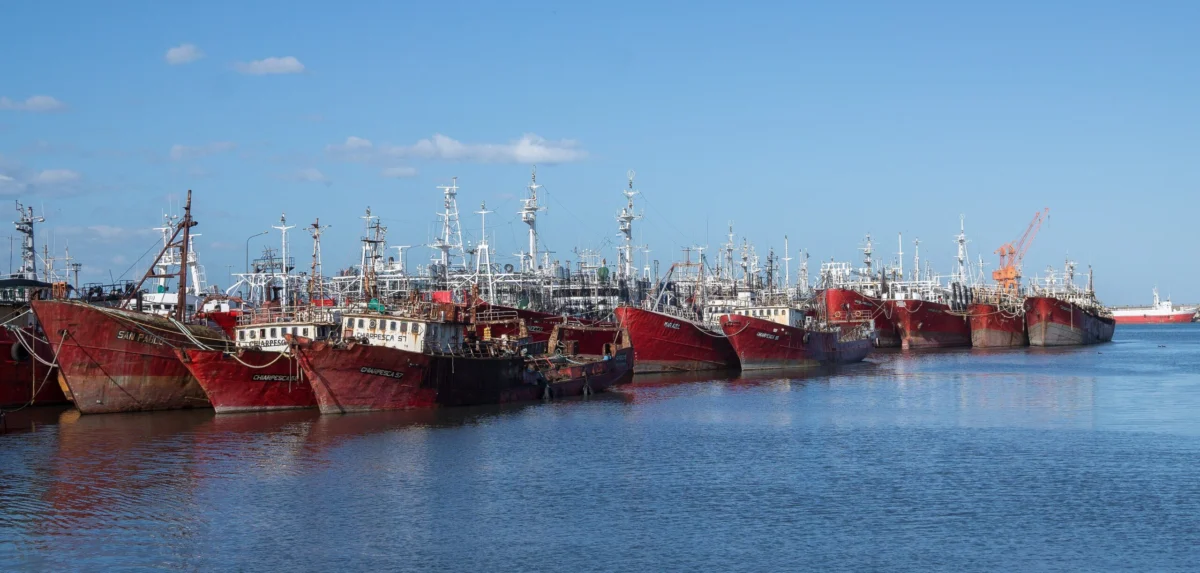
Beyond land-based raids, the report highlights a disturbing trend at sea. On January 20, 2026, the fishing vessel Fiorella vanished in international waters after departing from the Ecuadorian port of Jaramijó. Radio intercepts suggest that the crew was in distress while being monitored by aircraft and maritime vessels bearing US insignia. A secondary skiff, separated from the Fiorella, reported witnessing a massive column of smoke in the direction of the main vessel—the final sign of the eight crew members who remain missing.
In a separate incident on March 17, two other vessels, La Negra Francisco Duarte II and Don Maca, were reportedly targeted by armed drones. Crew members allege that following the drone strikes, they were hooded, handcuffed, and apprehended by personnel from boats exhibiting characteristics of US military origin, before being transferred to Salvadorian custody.
Chronology of Escalation (2026)
The surge in aggressive counter-narcotics operations follows a broader shift in regional security policy. The following timeline outlines the major events identified in the HRW report:
- January 13, 2026: The fishing vessel Fiorella departs Jaramijó, Ecuador, for a standard fishing excursion.
- January 20, 2026: The Fiorella disappears in international waters. A nearby skiff reports distress signals and a subsequent explosion, marking the start of the crew’s disappearance.
- March 2026 (Early): The San Martín farm incident. Ecuadorian military forces conduct an operation against suspected drug traffickers, resulting in the torture of four detainees and the destruction of civilian property via airstrikes.
- March 17, 2026: Armed drone strikes target the fishing vessels La Negra Francisco Duarte II and Don Maca. The surviving crews are detained and transferred to Salvadorian custody.
Official Responses and the "Southern Spear" Controversy
The US and Ecuadorian governments have largely framed these operations as a necessary, robust response to the rise of criminal organizations like the Comandos de la Frontera (CDF). Secretary of Defense Pete Hegseth has publicly lauded the San Martín operation, specifically praising the use of air power to "bomb narco-terrorists on land."
The "Southern Spear" Connection
The controversy is further fueled by the existence of "Operation Southern Spear," a Department of Defense initiative designed to target small vessels suspected of smuggling narcotics in the Caribbean and the Eastern Pacific. While the US government has officially denied direct involvement in the specific sinking of the Fiorella or the drone strikes on the fishing vessels, the operational profile—lethal airstrikes against small watercraft—mirrors the stated objectives of Southern Spear.
Since its inception in September 2025, Southern Spear has been presented as a surgical tool to dismantle the logistics of drug trafficking. However, HRW argues that the intelligence used to identify targets is often flawed, leading to the catastrophic targeting of innocent fishers who happen to be in the wrong place at the wrong time.
Ecuador’s Security Bloc
In Ecuador, President Daniel Noboa has doubled down on his administration’s hardline approach. Working through a "Security Bloc" led by Defense Minister Gian Carlo Loffredo and the head of the Joint Command of the Armed Forces, Henry Delgado Salvador, the government has prioritized the eradication of criminal activity at all costs. This policy has effectively granted military forces broader latitude in conducting operations in both rural and maritime zones, often bypassing the oversight typically required by civil judicial processes.
Implications for Human Rights and International Law
The implications of the HRW report extend far beyond the borders of Ecuador. If the accusations of torture and extrajudicial strikes are verified by international bodies, they could signal a significant regression in the human rights standards applied to international counter-narcotics cooperation.
The Erosion of Due Process
The San Martín incident represents a dangerous precedent. When military units operate with the authority to burn properties and detain civilians without the backing of a functioning judicial system—evidenced by the prosecutor’s refusal to charge the men—the rule of law is effectively suspended. This environment of impunity encourages further abuses, as soldiers feel shielded from the consequences of their actions under the banner of "national security."
Accountability and Transparency
The disparity between US denials and the visible evidence—such as the presence of US-marked assets near the Fiorella—demands a formal inquiry. Members of the US Congress, including representatives like Joaquin Castro, have begun to demand transparency regarding the nature of US involvement in these strikes. As the US increases its footprint in Latin America to combat the flow of narcotics, the tension between tactical efficiency and human rights protections will likely remain a central point of contention.
Regional Stability vs. Security
Finally, there is the question of long-term stability. While the eradication of groups like the CDF is a stated goal, the collateral damage—missing fathers and brothers, destroyed livelihoods, and the trauma of targeted communities—may foster long-term resentment. Critics of the current policy argue that militarizing the drug war has historically failed to address the root causes of addiction or trafficking, instead creating a cycle of violence that destabilizes the very nations the programs are intended to assist.
As the international community reviews the HRW report, the pressure is mounting for both Washington and Quito to provide a full accounting of their joint operations. Without a commitment to transparency, the "Total Extermination" of criminal groups risks becoming an extermination of the trust and safety of the populations caught in the crossfire.