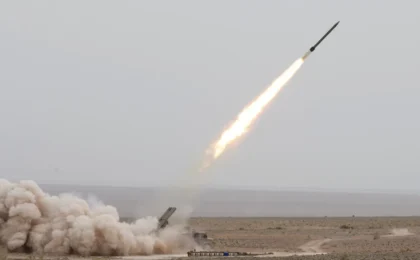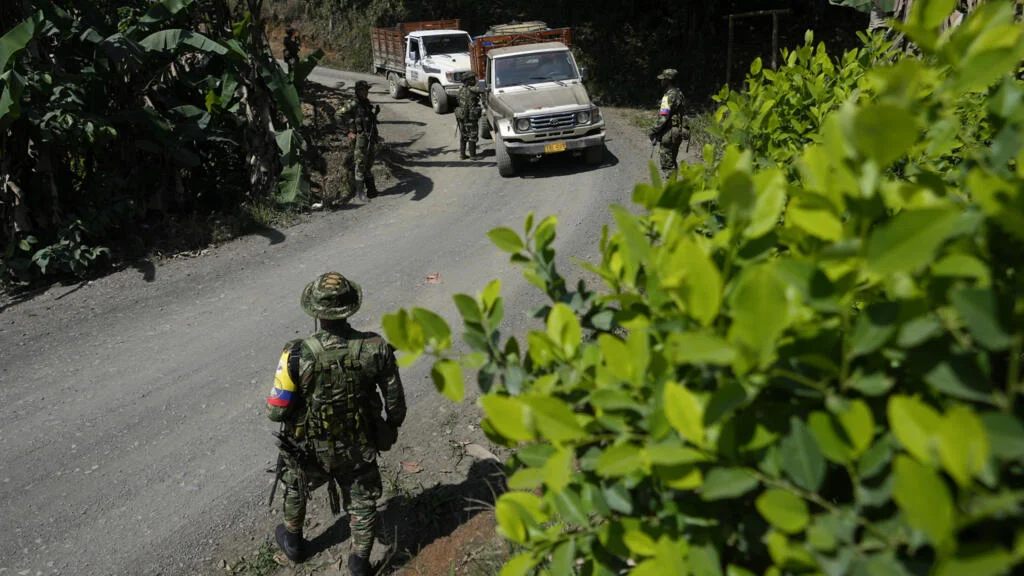
BOGOTÁ — In a dawn offensive that signals a sharp departure from previous administrations’ tentative approaches to peace, the Colombian military launched a precision bombardment against rebel-held territories in the southern department of Guaviare on Monday. The strike, which the government says resulted in the "neutralization" of 20 members of the Central General Staff (EMC) dissident group, marks a violent escalation in the state’s effort to reassert control over lawless regions of the country.
President Abelardo de la Espriella, a self-styled hardliner and outspoken ally of U.S. President Donald Trump, took to the social media platform X to announce the operation. In a video statement, the President confirmed that the mission successfully targeted insurgent positions associated with "Ivan Mordisco," the alias of the country’s most-wanted rebel leader.
"We neutralized 20 narco-terrorists, captured five individuals, and—most importantly—rescued two minors who were being held within their ranks," de la Espriella declared. The operation, which follows a string of similar air strikes throughout August, underscores a new "peace through strength" doctrine that is currently redefining Bogotá’s security policy.
Chronology of the Conflict: From Peace Accords to Renewed Air Strikes
To understand the current carnage in Guaviare, one must look at the fractured legacy of the 2016 peace agreement. The Revolutionary Armed Forces of Colombia (FARC) was once the continent’s most formidable guerrilla insurgency. When the group signed a historic peace deal with the Colombian state, it was intended to signal the end of a half-century of internal conflict.
However, the splintering of the FARC led to the emergence of the Central General Staff (EMC). Composed of former combatants who refused to lay down their arms and new recruits lured by the lucrative illicit economies of the Amazonian and Andean frontiers, the EMC has become the primary antagonist of the current government.
- 2016–2022: A period of post-accord fragility, characterized by fluctuating violence as dissident groups scrambled to claim former FARC territories.
- August 2026 (Early): Following the inauguration of President de la Espriella, the government signaled a pivot away from dialogue, initiating a series of surgical air strikes against EMC command centers.
- Late August 2026: Reports from forensic authorities emerge, revealing that four minors were among those killed in a strike earlier in the month, sparking a fierce debate over military ethics.
- September 7, 2026: The dawn operation in Guaviare. Military intelligence identifies the targets as members of the EMC’s inner circle, though the whereabouts of Ivan Mordisco himself remain a subject of intense speculation.
Supporting Data: The Anatomy of a Nation Under Siege
Colombia is currently grappling with its most significant surge in violence in over a decade. The resurgence of armed groups is not merely ideological; it is fueled by a complex web of illicit industries that have turned the countryside into a battleground.
The Economics of Insurgency
The EMC and similar groups operate as shadow governments in regions where the Colombian state has historically struggled to project power. Their funding streams are diversified:
- Drug Trafficking: The primary engine of the conflict. Despite multi-billion dollar eradication efforts, cocaine production remains at near-record highs.
- Illegal Mining: Illegal gold mining has ravaged the rainforests of southern Colombia, providing rebels with a steady stream of capital that is often harder to track than narcotics shipments.
- Extortion: Known locally as "vacunas," or vaccines, these protection payments are levied on local farmers, businesses, and transit routes, effectively taxing the local economy to fund the insurgency.
The Human Cost: The Crisis of Child Recruitment
One of the most harrowing aspects of the current conflict is the systematic recruitment of minors. Rights groups have warned that armed groups are increasingly using sophisticated social media campaigns to lure teenagers into their ranks. The military’s report of "rescuing" two minors in Monday’s raid is being framed as a humanitarian success by the government, yet it highlights the tragedy of a generation growing up in the crosshairs. Forensic evidence from recent strikes confirms that children are being integrated into combat roles, effectively turning them into human shields for insurgent commanders.
Official Responses and Political Repercussions
The rise of Abelardo de la Espriella has polarized the Colombian political landscape. A firebrand who has frequently voiced admiration for the populist rhetoric of Donald Trump, de la Espriella ran on a platform of "Total Order."
The View from the Presidential Palace
For the de la Espriella administration, the air strikes are not acts of aggression but necessary interventions to restore constitutional order. "We are not negotiating with terrorists who exploit the vulnerable," a government spokesperson stated. The administration argues that the $1 billion in security aid pledged by the Trump administration in August is the validation they needed to pursue a policy of direct military confrontation rather than the "failed" negotiation models of the past.
The Opposition and Human Rights Concerns
Civil society organizations and political opposition figures have expressed profound alarm at the government’s tactics. The use of heavy aerial bombardment in areas where civilians and child combatants are present has drawn criticism from international human rights monitors.
"The government is trading the lives of children for a statistical victory in the ‘war on drugs,’" said a representative from a leading Bogota-based rights group. Concerns are mounting that the administration’s hardline approach will mirror the "false positive" scandals of the past, where military success was prioritized over the protection of non-combatants.
Implications: A New Era for the Andean Region
The trajectory of the Colombian conflict has significant implications for the stability of South America.
The U.S.-Colombia Security Partnership
The $1 billion aid package represents a major geopolitical commitment by the United States. By backing de la Espriella, the Trump administration is signaling a desire to treat the Colombian insurgency as a primary front in the war on drug cartels. This partnership is expected to involve increased intelligence sharing, tactical training, and potentially the deployment of U.S. advisors to support the Colombian military’s operational capacity.
Regional Instability
The displacement caused by the recent escalation is beginning to spill across borders. Neighboring countries, already burdened by the regional migration crisis, are wary of the increased military activity near the borders. The EMC, for its part, has proven highly resilient; historically, such groups have adapted to military pressure by retreating deeper into the jungle, diversifying their cells, and intensifying their propaganda efforts.
The Future of the Peace Process
As the government continues its offensive, the prospect of a negotiated peace has effectively vanished. The administration has made it clear that they do not recognize the EMC as a legitimate political entity, but as a criminal organization. This stance forces the conflict into a binary cycle: the state attempts to eradicate the threat through force, while the insurgents respond with asymmetric warfare, kidnappings, and attacks on critical infrastructure.
As the smoke clears over the Guaviare jungle, the message from Bogotá is clear: the gloves are off. Whether this strategy will lead to the collapse of the EMC or simply deepen the cycle of trauma and violence that has haunted Colombia for generations remains the central question of the de la Espriella era. For the people living in the crossfire, the promise of "order" remains a distant, and increasingly lethal, prospect.