As the legislative session in Sacramento draws to a close, two pivotal bills—AB 2694 and SB 960—have moved to the center of a high-stakes debate that could fundamentally reshape the landscape of California’s higher education system. The proposed legislation seeks to expand the authority of community colleges to grant bachelor’s degrees, a move that supporters argue is essential for workforce development and equity, but which critics fear threatens the established hierarchy of the state’s public university system.
For over a decade, California’s community colleges have operated under a pilot framework, granting a limited number of baccalaureate degrees in specialized fields. However, if the current bills pass, these institutions could soon offer a broader array of four-year programs, effectively blurring the long-standing, distinct roles of two-year and four-year institutions.
The Legislative Landscape: Current Proposals
The two bills currently under consideration represent a calculated effort to modernize the state’s approach to career-focused education:
- AB 2694: Championed by Democratic Assemblymember David Alvarez, this bill would institutionalize the expansion of bachelor’s degree programs. It establishes performance standards for colleges seeking to launch these programs, ensuring that any expansion is rooted in academic quality and regional economic necessity.
- SB 960: This proposal seeks to manage the scale of these programs by imposing a cap. Under its provisions, a community college could not grant more than 15 percent of its total degree volume in the form of bachelor’s degrees, ensuring that the community college mission of associate degree and certificate attainment remains the primary focus.
The pressure is mounting as the legislative deadline approaches. The fate of these bills remains uncertain, particularly given Governor Gavin Newsom’s history of skepticism; in 2024 and 2025, the Governor vetoed similar legislation that would have authorized nursing-specific bachelor’s degrees at the community college level.
Chronology: A Decade of Incremental Change
The path to this moment has been paved with years of trial and error. The California Community College system first dipped its toes into four-year programming over ten years ago, under strict legislative parameters designed to prevent unnecessary duplication of existing programs at California State University (CSU) or University of California (UC) campuses.
- 2014-2015: California authorizes the first pilot programs for community college baccalaureate degrees, focusing on niche, high-demand technical fields.
- 2024-2025: A wave of momentum builds to expand these offerings to include nursing and other critical workforce roles. Governor Newsom vetoes several key bills, citing concerns over mission creep and systemic duplication.
- 2026: The current legislative session introduces AB 2694 and SB 960, reflecting a more mature, data-driven approach to the expansion, emphasizing performance standards and caps rather than unrestricted growth.
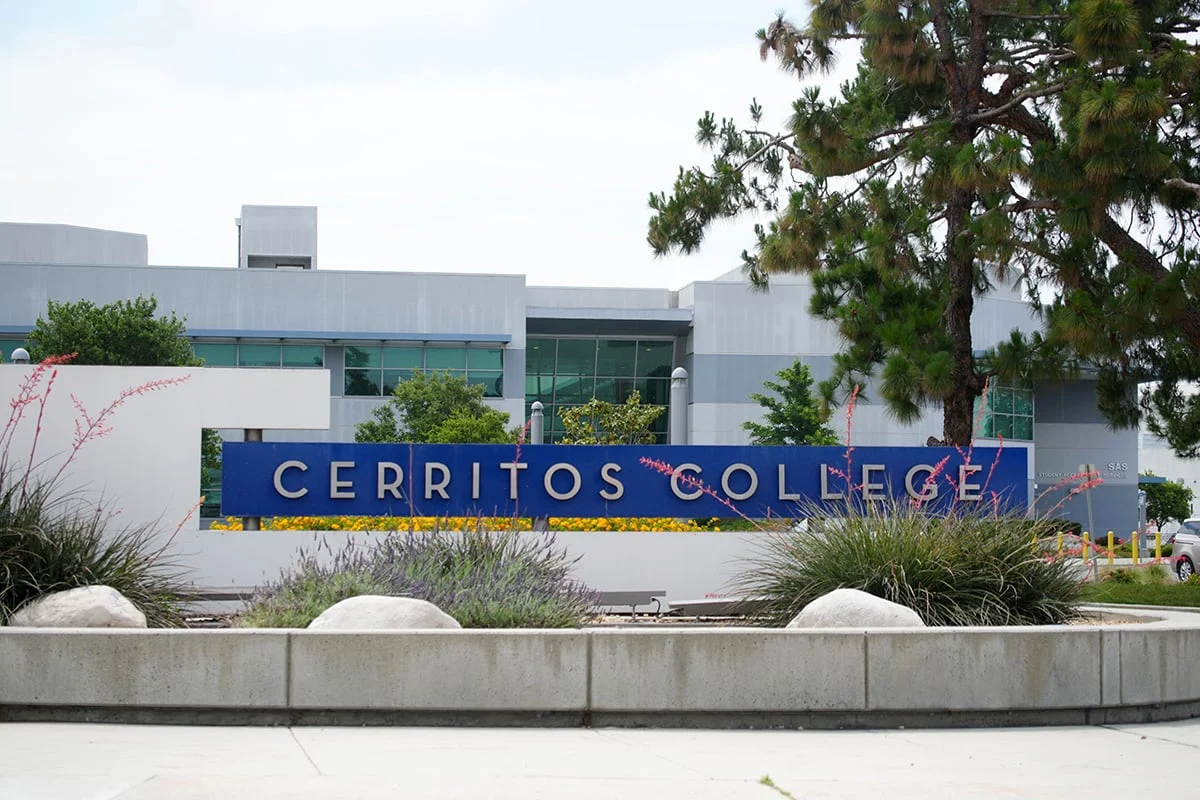
- Spring 2027: Cerritos College is slated to launch a bachelor’s degree in field ironworker supervision, marking one of the most specialized and industry-aligned programs to date.
Supporting Data: Addressing the Workforce Gap
The push for these degrees is not merely academic; it is driven by demographic and economic shifts. According to the Community College Research Center (CCRC) at Teachers College, Columbia University, at least 24 states have already moved to permit community college-based bachelor’s degrees.
Despite this national trend, the footprint remains small. Last spring’s enrollment data indicated that only about 2 percent of all community college students in the U.S. were enrolled in these bachelor’s programs. Thomas Brock, director of the CCRC, notes that the success of these programs is heavily dependent on the quality of the partnership between the community college and the public four-year university.
The primary argument for the expansion, as stated by Assemblymember Alvarez, is accessibility. Many students—specifically those who are working, parenting, or acting as caregivers—are geographically and economically "rooted." They lack the mobility to relocate for a traditional four-year degree at a distant CSU or UC campus. By offering these degrees at the local community college, the state can address critical labor shortages in fields ranging from dental hygiene to specialized construction supervision.
Official Responses and Philosophical Divisions
The debate has created a distinct fissure between those who view community colleges as "engines of social mobility" and those who view them as "foundational partners" in a stratified system.

The Case for Empowerment
Rowena M. Tomaneng, deputy chancellor of the California Community College system, has expressed support for the legislation, emphasizing the need for flexibility. "As our state’s economy continues to evolve, students need flexible and affordable options that prepare them for in-demand careers and the future of work," Tomaneng stated.
Jose L. Fierro, president of Cerritos College, provides a practical perspective. His institution began offering a bachelor’s degree in dental hygiene last fall and is preparing to launch a program in field ironworker supervision. Fierro argues that the "overlap" concern raised by four-year universities is often overstated. His ironworker program is designed specifically for working adults already embedded in labor unions—a demographic that is unlikely to enroll in a traditional four-year university program hundreds of miles away.
The Case for Caution
Conversely, former community college chancellor Eloy Ortiz Oakley has emerged as a prominent critic of the expansion. Now the president and CEO of the College Futures Foundation, Oakley argues that community colleges are "twisting themselves into pretzels" to mirror universities rather than doubling down on their core strengths.
"I think we’re missing the point in California," Oakley said. He contends that the future of workforce preparation lies in shorter-term, high-intensity credentials and strategic partnerships with private, nonprofit colleges, rather than the overhead-heavy process of building four-year degree departments within two-year institutions.
Implications: A Shifting Higher Education Paradigm
The broader implications of this debate suggest that the "binary" model of higher education—where one attends a community college for two years and a university for four—is becoming an artifact of the past.
Carlo Salerno, managing director of education insights at the Burning Glass Institute, notes that the tension is a symptom of a larger, systemic shift. As traditional four-year universities begin to offer professional certificates and short-term credentials, they are encroaching on the "territory" of community colleges. In turn, when community colleges reach upward to offer baccalaureate degrees, it is a response to the blurring of these institutional boundaries.
"There are only so many students out there that can be trained," Salerno observes. "Both school structures are trying to make the case that if you want us to abide by our traditional roles, then let us abide by our traditional roles, but stay out of my student pool."
Ultimately, the resolution of this conflict will signal how California prioritizes its limited educational resources. If the state leans into the expansion, it risks alienating its four-year partners, who fear a dilution of the prestige and enrollment potential of their institutions. If it rejects the expansion, it risks leaving a significant portion of its workforce—specifically those who cannot access traditional university pathways—without the skills necessary to compete in a rapidly evolving, high-tech, and specialized economy.
As the legislature heads into its final weekend, the decision will not just affect the course catalogs of Cerritos College or its peers; it will define the philosophy of California’s educational future. Will the state continue to honor the rigid distinctions of the Master Plan for Higher Education, or will it embrace a more fluid, career-centric model that meets the student where they live and work? The answer to that question rests in the hands of the legislature and, ultimately, the Governor’s pen.