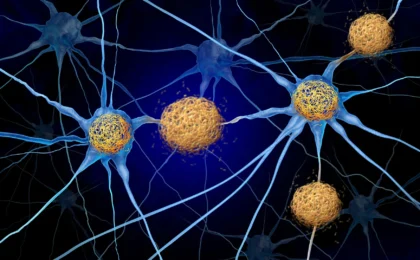
For the millions of people living with chronic neuropathic pain, the sensation is not merely a physical discomfort; it is an intrusive, life-altering experience. Whether stemming from diabetes, viral infections, or nerve compression, neuropathic pain arises when injured fibers transmit faulty, relentless signals to the brain. For decades, the medical community has relied heavily on systemic opioids to manage this agony—a strategy that, while effective for some, comes with a heavy toll of side effects, tolerance, and the ever-present shadow of addiction.
However, a groundbreaking study published August 17 in the journal Current Biology has unveiled a potential paradigm shift in pain management. Researchers at the Washington University School of Medicine in St. Louis have identified a "biological brake" located deep within the brain’s locus coeruleus—a discovery that could pave the way for precise, localized therapies that alleviate chronic pain without the widespread risks of traditional medication.
The Anatomy of the Pain Generator
To understand the magnitude of this discovery, one must first look at the locus coeruleus. Often referred to as the brain’s "alert and stress center," this small cluster of neurons is vital for physiological regulation. Under normal conditions, this region helps coordinate the body’s response to external stimuli and plays a key role in suppressing pain signals as they travel through the spinal cord.
Yet, in the context of chronic neuropathic pain, this protective mechanism falters. The research team, led by Dr. Jordan McCall, an associate professor in the Center for Clinical Pharmacology at WashU Medicine, found that nerve injury can fundamentally reconfigure the locus coeruleus. Instead of serving as a moderator of pain, this region becomes a "pain generator," maintaining and amplifying the transmission of agonizing sensations.
"Millions of adults live with chronic neuropathic pain caused by nerve damage," said Dr. McCall. "The pain is difficult to treat, and traditional opioid medications bind to receptors throughout the entire body and brain, often leading to side effects, tolerance, and addiction risk."
Chronology of the Discovery: From Hypothesis to Breakthrough
The journey to this discovery began with a fundamental question: Why does the brain lose its ability to "turn off" pain signals after a nerve is damaged?
1. Identifying the Locus Coeruleus as the Source
The research team, which included co-first authors Dr. Chao-Cheng Kuo and former graduate student Makenzie R. Norris, began by observing mice models of neuropathic pain. Their first objective was to confirm the role of the locus coeruleus. By temporarily silencing neurons in this specific region, the researchers observed a marked reduction in pain sensitivity—the mice became less responsive to heat and touch, suggesting that the region was indeed driving the pain signal.
2. The Role of Mu Opioid Receptors
With the "generator" identified, the team shifted their focus to the biological mechanisms regulating these cells. They zeroed in on mu opioid receptors (MORs). These receptors are the primary targets for both the body’s naturally occurring opioids and synthetic ones like morphine and fentanyl.
The researchers hypothesized that if these receptors were located in the locus coeruleus, they might act as the "gatekeepers" of the pain signal. To test this, they utilized a genetic approach to remove mu opioid receptors specifically from the neurons within the locus coeruleus of mice suffering from neuropathic pain. The result was stark: the mice became hypersensitive to stimuli, confirming that these receptors were essential for keeping the "pain generator" in check.
3. Reversing the Switch
The final phase of the experiment was the most promising. When the researchers restored the mu opioid receptors to the locus coeruleus neurons in the injured mice, the hypersensitivity disappeared. The biological brake had been reapplied, and the pain-producing circuit was effectively quieted. This sequence proved that chronic pain is not just a signaling error in the nerves, but a functional failure of the brain’s own internal regulatory systems.
Supporting Data and Technical Implications
The study provides a wealth of data that underscores the precision of this mechanism. By focusing on the locus coeruleus, the researchers have moved beyond the "systemic" view of pain management—the idea that one must flood the body with chemicals to reach the brain.
- Precision Targeting: Unlike systemic opioids, which interact with receptors throughout the entire central nervous system, this study highlights the efficacy of localized intervention.
- Reversibility: The ability to "switch off" the pain response by manipulating receptors in a confined brain region suggests that chronic pain is potentially reversible if the correct molecular levers are pulled.
- Neural Plasticity: The findings imply that chronic pain alters the brain’s neurochemistry, specifically interfering with the function of mu opioid receptors. This shift in understanding moves chronic pain from a static condition to a dynamic, treatable neurological state.
Official Responses and Expert Perspective
The implications of this research have drawn significant attention from the scientific community. The project was bolstered by a diverse array of funding, including the National Institutes of Health (NIH), the National Science Foundation (NSF), and the Rita Allen Foundation, reflecting the high level of confidence in the study’s potential for translational medicine.
Dr. McCall’s perspective highlights the urgent need for this research: "Understanding how localized receptors in the locus coeruleus act as gatekeepers could lead to more targeted, effective pain therapies with fewer risks." By targeting these specific receptors within the locus coeruleus, clinicians may one day be able to "turn off" the pain signal at its source without inducing the respiratory depression, sedation, or addictive behaviors associated with current pharmacological standards.
The research team is already looking ahead to the next stage of development. They are currently investigating pharmacological methods to influence the activity of the locus coeruleus directly. The goal is to develop therapies that act like a "surgical strike" on the pain-generating circuitry, bypassing the rest of the nervous system entirely.
The Future of Pain Management
The significance of this discovery cannot be overstated. As the global medical community continues to grapple with the opioid crisis, the pressure to develop non-addictive, highly effective pain relief has never been greater.
If therapies can be developed that specifically target the locus coeruleus, we may be looking at the dawn of a new era in neurology. Patients who currently rely on systemic medications could transition to treatments that respect the delicate balance of the brain while offering the relief they desperately need.
While the study was conducted in mice, the biological conservation of the locus coeruleus across mammals provides a strong foundation for future human clinical trials. The path from the lab bench to the pharmacy shelf is long and fraught with challenges, but by identifying the "biological brake" for pain, the WashU researchers have provided the clearest roadmap yet for a future free from the limitations of traditional pain management.
Study Details
- Mu opioid receptors gate the locus coeruleus pain generator
- Journal: Current Biology (Published Aug. 17, 2026)
- Key Authors: Chao-Cheng Kuo, Makenzie R. Norris, Jordan G. McCall, et al.
- Funding: Supported by the National Institutes of Health (R01NS117899, R01NS135401, F31NS124301, F31DA065440), the National Science Foundation (DGE-2139839), the McDonnell Center for Systems Neuroscience, the Department of Anesthesiology at Washington University School of Medicine (COSTAR award), and the Rita Allen Foundation.
As research continues, the scientific community remains cautiously optimistic. This discovery serves as a powerful reminder that the most effective solutions to our most complex medical challenges often lie in the hidden, intricate circuitry of the human brain. By mastering the controls of this internal gatekeeper, medicine may finally be able to silence the chronic, phantom screams of neuropathic pain.