In the high-stakes world of automotive engineering, consistency is often prized, but agility—the ability to pivot when technology and consumer sentiment align—is what defines a market leader. For Porsche, the past few years have represented a fascinating internal debate regarding the soul of the electric vehicle (EV). Once a vocal skeptic of artificial engagement, the Zuffenhausen-based manufacturer has officially embraced the "E-Shift" era, fundamentally altering the Taycan experience to bridge the gap between pure electric performance and the visceral, mechanical connection of internal combustion.
The Evolution of Porsche’s Philosophy
Just a few short years ago, Porsche’s stance on simulated gear changes was definitive. When asked about the prospect of mimicking the shift patterns of a dual-clutch transmission (DCT) in the Taycan, company executives were dismissive. The prevailing argument was that the electric motor, with its instant torque and wide power band, rendered the concept of shifting redundant. Porsche argued at the time that the electric powertrain was inherently superior to the internal combustion engine (ICE), and introducing artificial limitations was seen as a regressive step—an attempt to fix a problem that didn’t exist.
However, the automotive landscape is shifting as rapidly as the cars themselves. As manufacturers struggle to maintain brand identity in an increasingly homogenized EV market, the "experience" of driving has become the new premium commodity. Porsche’s recent pivot acknowledges a simple truth: for many driving purists, the absence of tactile feedback and the lack of a "rhythm" to acceleration can make a high-performance EV feel sterile, no matter how fast it might be.
The 2026 Shift: Introducing E-Shift
Fast-forward to the 2026 model year, and the Taycan has undergone a transformation that would have seemed unlikely only 24 months ago. Porsche has introduced "E-Shift," a sophisticated software-driven feature designed to inject the drama of traditional sports cars into the Taycan lineup.
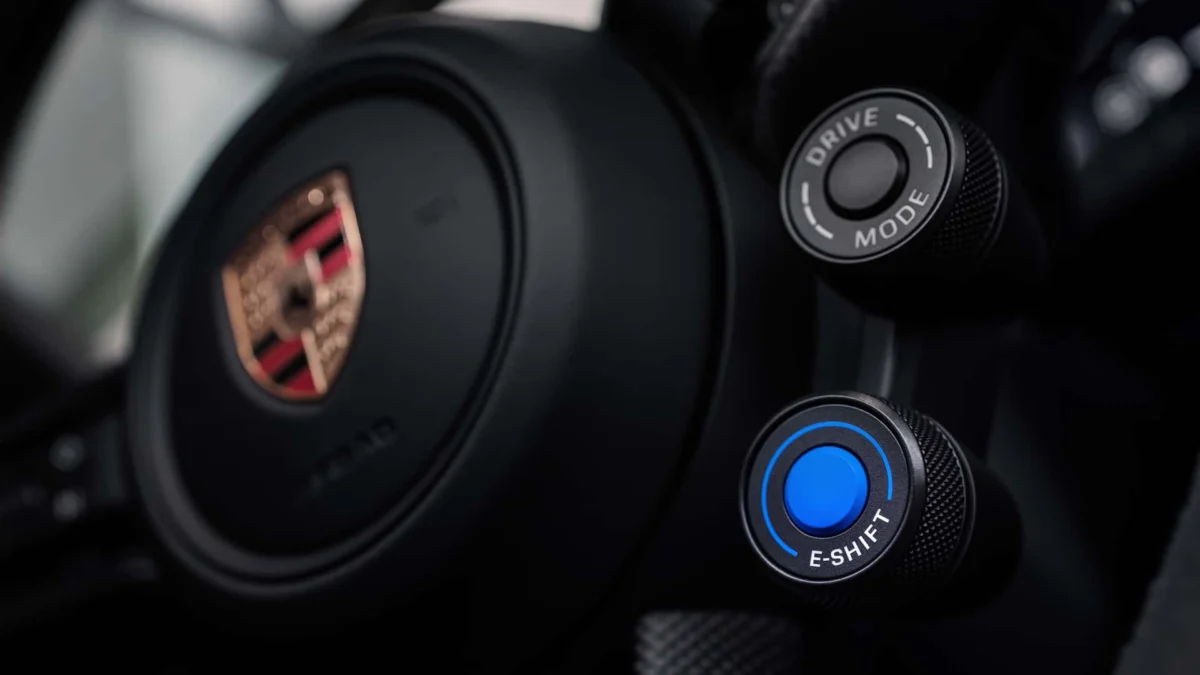
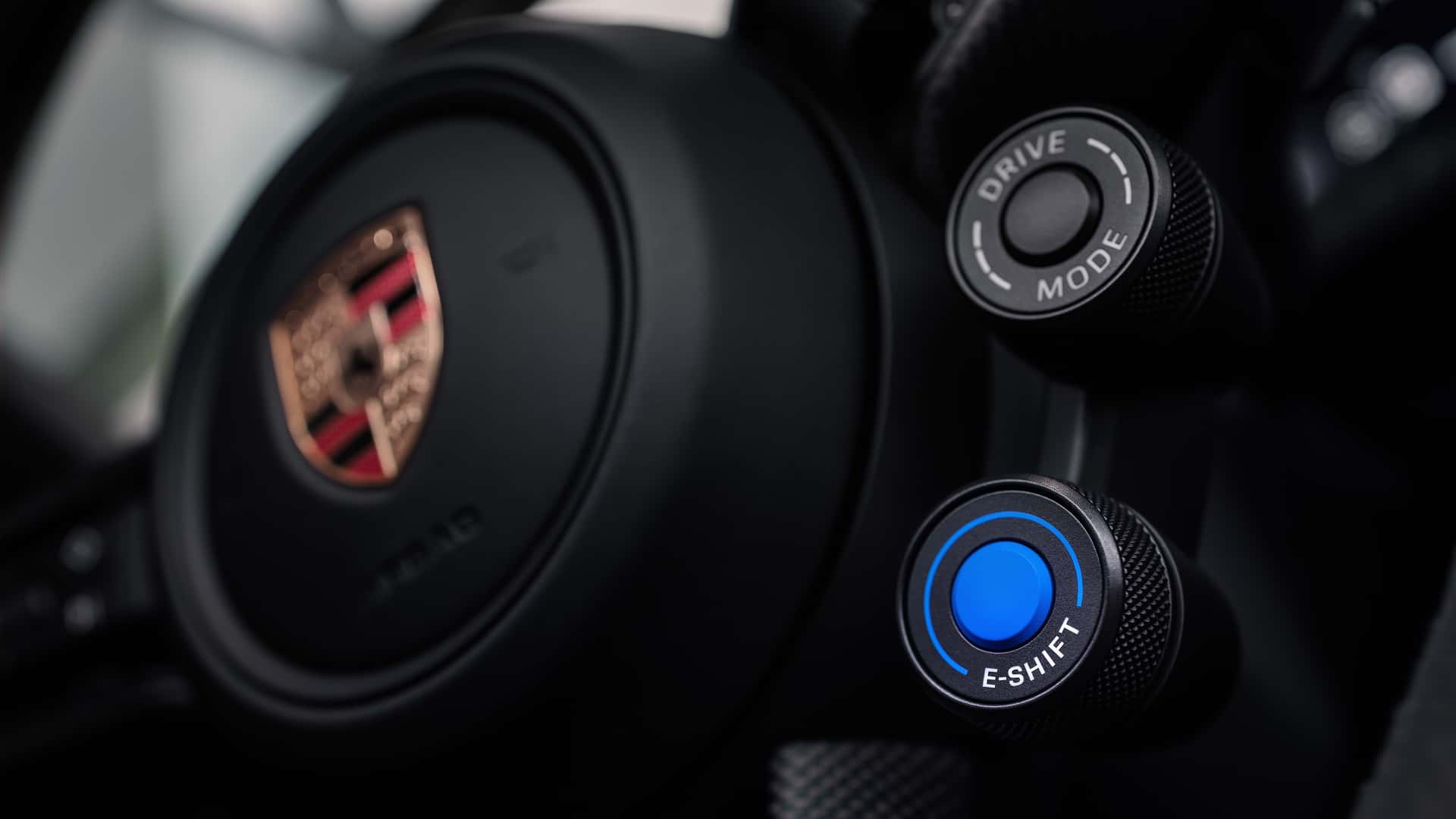
The system is activated via a distinct blue button on the steering wheel, signaling to the driver that they are entering a different performance mode. Once engaged, the vehicle simulates eight distinct gear ratios. Drivers can cycle through these "gears" using the steering-wheel-mounted paddles, providing a level of engagement that was previously exclusive to Porsche’s gasoline-powered stable, such as the 911 or the Panamera.
To ensure the illusion is convincing, Porsche has gone to great lengths to "mold" the shifting process. It is not merely a digital blip; the car’s software manages torque delivery to mimic the slight hesitation and surge associated with a physical transmission shift. Furthermore, the driver’s instrument cluster features a virtual rev counter and a shift light, providing visual cues that mirror the experience of redlining a flat-six engine. The system even incorporates a virtual rev limiter, preventing the "engine" from over-revving, further deepening the sensory deception.
The "Porsche-Typical" Standard
The decision to implement E-Shift did not happen in a vacuum. It follows a period of intense industry scrutiny, particularly directed at Hyundai’s N e-Shift system found in the Ioniq 5 N. Last November, Frank Moser, Vice President of the 718 and 911 model lines, offered rare public praise for a competitor, noting, "They made it really, really good."
This sentiment was echoed recently by Ben Weinberger, a spokesperson for the Cayenne and Macan lines. Weinberger hinted at the inevitability of this technology, stating, "We’ll see what happens, but it is not a technology that we do not look at. It’s very interesting… If we do it, it will definitely be a Porsche-typical solution."
For Porsche, the "Porsche-typical" solution means ensuring the simulation is not just a gimmick but a functional, high-fidelity experience. By linking the artificial sound—which adapts dynamically based on the specific Taycan trim—to the gear shifts, Porsche is attempting to create a cohesive sensory package that feels authentic to the brand’s heritage.
Beyond the Shift: 2027 Model Year Updates
While E-Shift has dominated the headlines, the 2027 Taycan updates encompass a broader suite of mechanical and technological refinements. Recognizing the changing infrastructure in North America, Porsche has moved to standardize the larger 105-kWh battery pack across the Taycan, Taycan 4, and Taycan 4S trims. This move is designed to combat range anxiety and ensure that the entry-level models remain competitive in a market where range is king.
Additionally, the transition to the North American Charging Standard (NACS) port is now largely complete across the lineup, excluding only the specialized Turbo GT with the Weissach Package. This shift aligns the Taycan with the broader charging ecosystem in the U.S., simplifying the ownership experience for daily drivers.
Inside the cabin, the updates are more subtle but impactful. The infotainment system has received a software overhaul for snappier performance, and the center console now features an upgraded smartphone tray. The new tray includes a magnetic ring mount and 25-watt wireless charging, addressing user feedback regarding phone placement and power delivery during spirited driving.
The Market Challenge
Despite these updates, the Taycan faces an uphill battle. The initial hype surrounding the car’s 2019 launch—which established it as the first series-production EV with a legitimate two-speed transmission—has faded. Market demand has cooled significantly, with sales figures dropping from a 2021 peak of 41,296 units to just 16,339 in 2025.
Industry analysts suggest that the cooling demand is a result of both market saturation and a shift in consumer interest. Those looking for the quintessential Porsche experience still gravitate toward the internal combustion 911, while those seeking a grand tourer often find the Panamera to be a more "complete" vehicle in terms of emotional engagement. The question remains: can software-simulated gears convince a skeptical demographic to reconsider an EV?
Industry Implications: The Rise of the Artificial
Porsche is not alone in this endeavor. The industry is witnessing a trend where performance EVs are being "re-engineered" to feel less like appliances and more like sports cars. Mercedes-AMG has introduced its own version, the AMGFORCE Sport+ drive mode, which utilizes steering wheel paddles to deliver simulated shifts in the new GT 4-Door Coupe. Meanwhile, BMW is poised to integrate similar technology into its highly anticipated electric M3, slated for release next year.
This collective move toward simulated engagement suggests a broader realization among luxury manufacturers: the raw performance of an electric motor is, by itself, no longer enough to differentiate a brand. As the EV market matures, the "human" element—the feedback, the noise, and the tactile sensations that define the classic driving experience—is being painstakingly recreated in the digital realm.
Conclusion
Porsche’s pivot to E-Shift represents more than just a software update; it is a profound recognition of the limits of purely digital performance. By embracing the very technology it once dismissed, Porsche is attempting to preserve the emotional essence of its heritage while charging headlong into an electric future. Whether this "digital mimicry" will be enough to revitalize the Taycan’s market performance remains to be seen. However, one thing is clear: the war for the "soul" of the electric car has officially begun, and the battlefield is no longer just about horsepower or range—it’s about how that power is felt.