In a move that underscores the insatiable global appetite for artificial intelligence infrastructure, Amazon and Nvidia have announced a massive expansion of their strategic partnership. During Nvidia’s latest quarterly earnings call, the two tech titans confirmed a deal that will see the deployment of 2 million additional Nvidia GPU chips into Amazon Web Services (AWS) data centers. This agreement—representing tens of billions of dollars in hardware investment—signals a deepening of ties between the world’s largest cloud provider and the undisputed king of AI silicon.
The Scope of the Agreement
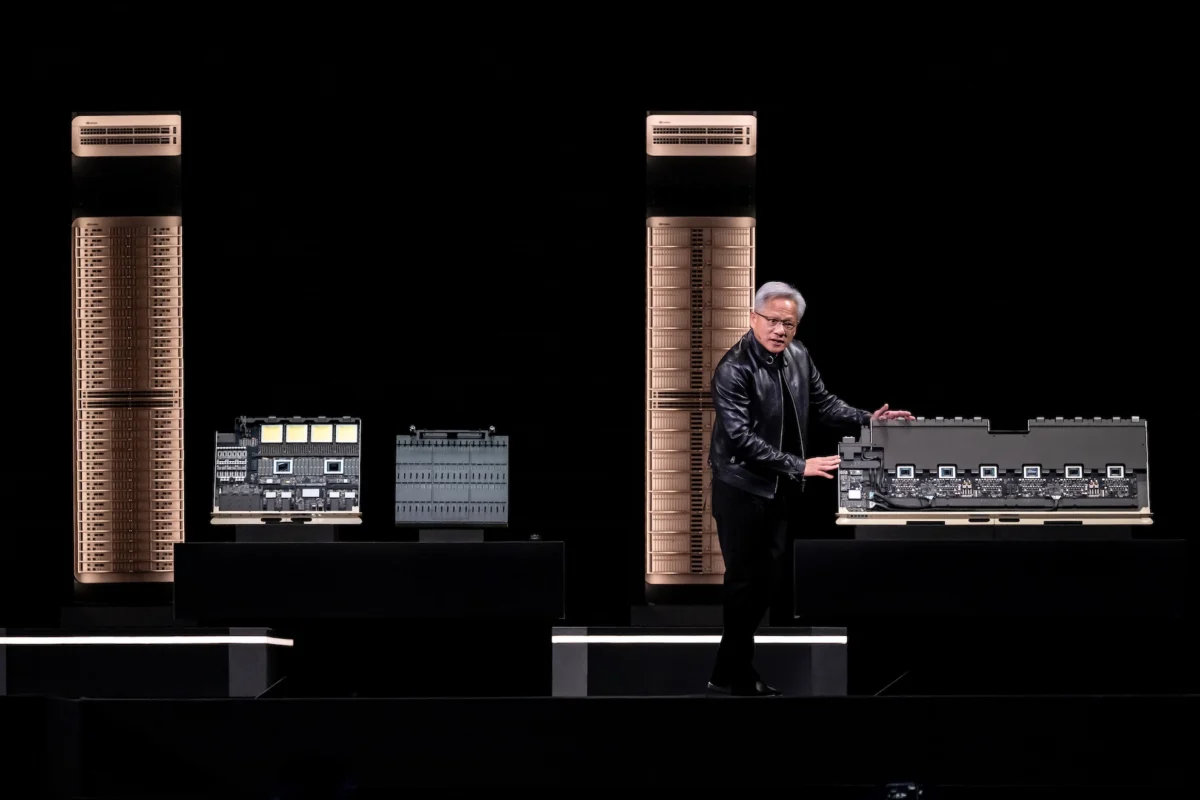
The deal is vast in both scale and ambition. The 2 million units slated for delivery in 2027 and 2028 are not mere commodity chips; they comprise Nvidia’s most cutting-edge hardware, including the Blackwell Ultra, Rubin, and Rubin Ultra GPUs. These processors are engineered specifically to tackle the massive, high-latency compute demands required to train and deploy the next generation of Large Language Models (LLMs).
Beyond the GPUs, the partnership encompasses a holistic integration of Nvidia’s "full-stack" ecosystem. This includes Nvidia’s proprietary networking hardware, designed to link thousands of GPUs into unified, high-performance systems, as well as its CPUs, data processing software, and robotics platforms. By embedding this technology deep within the AWS fabric, the companies aim to create an end-to-end environment that can support everything from generative AI startups to large-scale government research projects.
A Chronology of Escalating Demand
To understand the magnitude of this week’s announcement, one must look at the rapid acceleration of the Amazon-Nvidia relationship over the past year:
- Early 2024: Market demand for compute begins to shift from experimental AI to production-scale infrastructure.
- Spring 2024: Amazon agrees to deploy over 1 million Nvidia GPUs across its AWS infrastructure, a move intended to shore up capacity for its most demanding clients.
- Mid-2024: Nvidia reports that demand for the initial 1 million chip deployment has significantly "exceeded expectations," forcing both companies to negotiate for higher volumes earlier than anticipated.
- August 2024: The current announcement, confirming the addition of 2 million more chips and the expansion of the deal into robotics, enterprise software, and networking hardware.
This rapid cycle of procurement highlights a fundamental reality of the current AI era: companies are no longer just buying chips; they are entering multi-year "arms races" to secure supply chains, betting billions of dollars that the current surge in demand for AI tokens is a permanent shift in the global economy rather than a temporary bubble.
The Paradox of Co-Opetition
Perhaps the most intriguing aspect of this partnership is that it occurs while Amazon simultaneously pursues a path of silicon self-sufficiency. Amazon has been aggressively building its own custom AI chips, such as the Trainium series—designed to compete directly with Nvidia’s H100 and Blackwell offerings—and its Arm-based Graviton CPUs, which aim to displace traditional server chips from Intel and AMD.
During its last earnings call, Amazon noted that its custom chip business had reached a $25 billion annualized revenue run rate. This growth is underpinned by massive long-term commitments from industry leaders like Anthropic and OpenAI, who are eager to diversify their hardware dependencies.
However, the fact that Amazon is doubling down on Nvidia hardware while simultaneously scaling its own competitors suggests a two-pronged strategy. For Amazon, custom silicon offers a way to optimize specific, high-volume workloads at a lower cost, while Nvidia’s hardware remains the "gold standard" for the cutting-edge, general-purpose AI research that AWS must provide to maintain its market dominance. As Amazon AI chief Peter DeSantis recently hinted, AWS is even exploring selling its proprietary Trainium chips to third parties, positioning itself as both a massive customer of Nvidia and a potential rival in the data center market.
Supporting Data: The Financial Landscape
Nvidia’s financial performance continues to provide the necessary backdrop for this deal. The company recently reported $96.2 billion in sales for the second quarter, a figure that comfortably beat analyst estimates. The data center segment alone generated $89 billion, representing a staggering 117% increase year-over-year.
To meet this demand, Nvidia has committed a massive $279 billion to secure supply and manufacturing capacity for current and future data-center projects. This represents a significant jump from the $119 billion commitment reported just one quarter prior. Nvidia is clearly planning for a multi-year horizon, with $92 billion earmarked for spending through the end of the current fiscal year and another $87 billion projected for fiscal year 2028.
For Amazon, the investment is equally significant. While financial terms of the 2 million chip deal were not disclosed, industry analysts estimate the total cost to be in the range of tens of billions of dollars. This is part of a larger, capital-intensive trend where the biggest cloud players are pouring hundreds of billions of dollars into infrastructure to remain competitive.
Implications for Robotics and Edge Computing
The partnership extends well beyond the data center. A critical, often overlooked element of the deal is the integration of Nvidia’s physical AI stack into Amazon’s robotics and enterprise software offerings.
Amazon plans to utilize Nvidia’s Omniverse for simulation and digital twin creation, Cosmos for world modeling, and the Isaac platform for robotics development. By standardizing its warehouse robotics fleet on Nvidia’s Jetson hardware, Amazon is looking to make its massive fulfillment network faster and more autonomous. Nvidia’s recent introduction of a more accessible Jetson Orin Nano version specifically targets this "entry-level edge AI" market, proving that the synergy between the two companies is intended to permeate every layer of Amazon’s operations, from the cloud to the warehouse floor.
Official Perspectives and Industry Impact
During the earnings call, Nvidia CEO Jensen Huang framed the massive capital expenditure not as a speculative cost, but as a necessary investment in productivity. "The thing that matters for the industry is that AI is now doing productive and useful work," Huang stated. "AI is generating profitable tokens. If we had more compute, we could generate more profitable tokens, which results in more profit for all of the services. This is the exact phase where we’re at."
This sentiment is echoed by the inclusion of Nvidia’s new Vera CPUs in the deal. Nvidia CFO Colette Kress noted that Vera will be adopted by every major hyperscaler and AI lab, with shipments already reaching key partners like Oracle and SpaceXAI. By bundling these CPUs with their GPUs, Nvidia is attempting to capture a greater share of the server rack, moving from a chip supplier to a total system architect.
Future Outlook: The Question of Profitability
The central question hanging over this partnership is whether the massive investment in "compute" will yield proportional returns. Investors are carefully watching the "AI token economy" to see if the massive infrastructure spend will eventually translate into sustainable, long-term profit margins.
For now, the strategy is clear: demand for AI capacity is outpacing supply, and the only way to win is to secure as much hardware as possible, as fast as possible. By locking in 2 million of Nvidia’s most advanced chips, Amazon is signaling to the market that it intends to remain the primary destination for the world’s most compute-intensive workloads.
As the 2027 and 2028 rollout approaches, the industry will be watching closely to see if this marriage of Amazon’s massive cloud reach and Nvidia’s silicon prowess creates a new tier of AI capability—or if the sheer scale of the investment will force a re-evaluation of the economics of artificial intelligence. For the moment, however, the "GOAT" of the AI chip world and the titan of cloud computing have never been closer.