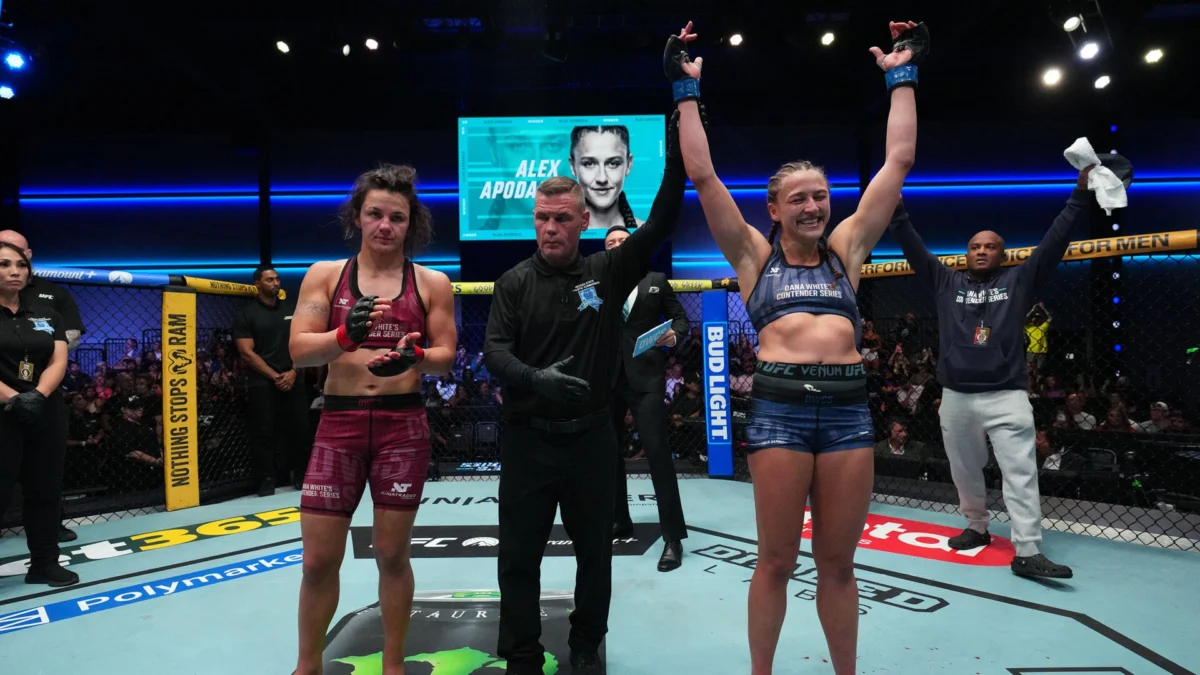
The Meta Apex in Las Vegas serves as a crucible for aspiring mixed martial artists, a place where the dreams of elite prospects are either solidified or shattered under the watchful gaze of UFC CEO Dana White. On Tuesday night, Week 3 of the 2026 Dana White’s Contender Series (DWCS) delivered one of the most improbable narratives in the history of the promotion. In a main event that defied the logic of oddsmakers and the expectations of the combat sports world, Alex Apodaca secured a career-defining victory over Bella Mir, turning a lopsided betting favorite into a footnote in a night of historic resilience.
The Context: A David vs. Goliath Narrative
Entering the cage on Tuesday, the spotlight was firmly fixed on Bella Mir. As the daughter of former UFC heavyweight champion and legendary submission specialist Frank Mir, she carried the weight of a famous surname and the immense backing of the UFC brass. The betting lines reflected this narrative, with Mir opening as a staggering -2000 to -3000 favorite. In the world of professional fighting, such odds suggest a foregone conclusion—a "tune-up" fight designed to showcase a rising star before her inevitable transition to the UFC roster.
Alex Apodaca, however, had no interest in playing the role of the sacrificial lamb. Dismissing the external noise and the "bullshit" numbers attached to her name, Apodaca stepped into the cage with a calm, clinical focus. What followed was not a contest, but a masterclass in composure, as Apodaca dismantled the game plan of her opponent from the opening bell.
Chronology of a Masterclass
The fight began with Mir attempting to impose her will, seeking early takedowns to transition into her preferred ground game. It was here that the trajectory of the night shifted. Apodaca’s takedown defense proved to be a impenetrable wall, forcing Mir to engage in striking exchanges where she found herself significantly outclassed.
As the first round progressed, Apodaca’s precision striking began to pay dividends. A series of crisp, calculated combinations left Mir bloodied and visibly frustrated. By the middle rounds, it was clear that the underdog was not merely surviving; she was dictating the pace of the contest. Apodaca’s ability to remain "present and in the moment"—as she would later describe her mindset—prevented her from becoming overwhelmed by the high stakes of the evening.
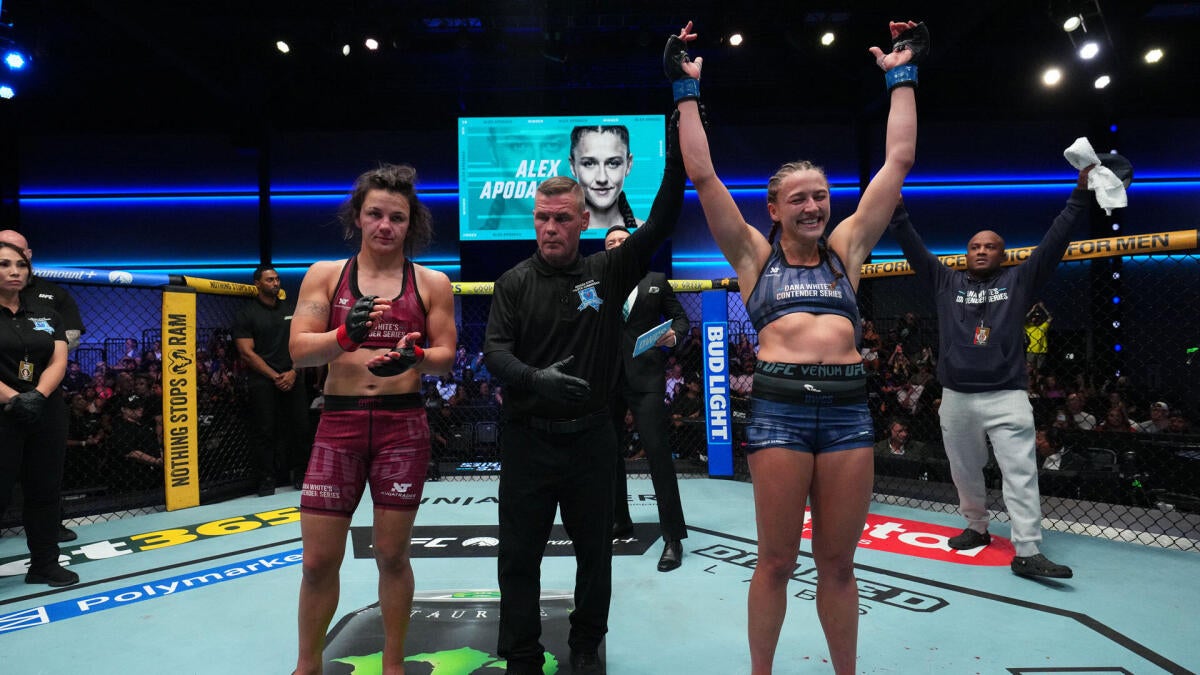
By the final bell, there was no ambiguity. Apodaca had dominated the exchanges, neutralized the wrestling threats of a legacy prospect, and earned a victory that will undoubtedly go down as one of the most significant upsets in the history of the Contender Series.
Supporting Data: A Night of Dominance
While Apodaca’s upset was the headline, it was part of an exceptionally high-performing card. Tuesday night saw a perfect 5-for-5 sweep in terms of contract awards, a rare feat that underscores the sheer talent level of this year’s prospect pool.
- Guilherme Uriel’s Redemption: Perhaps the most compelling secondary narrative belonged to Guilherme Uriel. Having previously suffered a demoralizing defeat at the hands of heavyweight sensation Josh Hokit last year, Uriel entered Tuesday with a point to prove. He did exactly that against Mario Piazzon. The bout ended in the first round when Uriel secured a standing guillotine choke against the cage. It was a display of raw opportunism; the moment Uriel grabbed the neck, the outcome was inevitable. His victory served as a poignant reminder of the volatility of the sport and the importance of the "second chance" afforded by the Contender Series.
- The Violence of Ronald Humphrey: The card also featured a standout performance from Ronald Humphrey, who squared off against Alexis Miranda. Humphrey showcased a refined striking arsenal, dropping Miranda with a sharp jab before transitioning into a brutal ground-and-pound display. The finish was clinical: after opening a cut on Miranda, Humphrey maneuvered to the back and locked in a rear-naked choke, forcing the tap and cementing his own claim for a roster spot.
Official Responses and the Dana White Factor
Perhaps the most telling reaction of the evening came from Dana White himself. Known for his candidness and his willingness to reward heart over pedigree, White was visibly impressed by Apodaca’s performance.
Despite his admitted personal bias toward Mir—due to his long-standing professional relationship with the Mir family—White did not hesitate to award Apodaca a UFC contract. "That’s crazy, I didn’t look at the odds before, I knew it was bullshit," Apodaca remarked during her post-fight interview. Her confidence was palpable, and White’s decision to sign her proved that in the Contender Series, performance remains the ultimate currency.
White’s decision to award all five winners on the night a contract highlights the depth of the talent on display. It was a rare night where every fighter on the card left with their career trajectory permanently altered for the better.

Implications: The Changing Face of the UFC
The events of Week 3 carry profound implications for the UFC’s scouting process and the future of its divisions.
- The Death of the "Tune-up" Myth: Apodaca’s victory is a sobering reminder that betting odds are often a reflection of marketing and historical expectation rather than raw athletic capability. Moving forward, matchmakers may approach "prospect showcases" with increased caution, recognizing that the hunger of an underdog can bridge a significant gap in pedigree.
- The Rise of the Technical Specialist: Apodaca’s emphasis on being "technical and strong" mirrors a broader trend in modern MMA. The era of the "one-dimensional" fighter is effectively over. The success of the night’s winners suggests that the current generation of prospects is increasingly well-rounded, capable of shifting seamlessly between striking and grappling disciplines.
- The Pipeline remains Strong: By awarding five contracts in a single night, the UFC has demonstrated that the talent pool globally is wider than ever. The Contender Series continues to serve as the most effective filter for identifying high-level talent, and the performances of Uriel and Humphrey prove that the platform is successfully rehabilitating fighters who have faced early-career setbacks.
Conclusion: A Night for the History Books
As the lights dimmed at the Meta Apex, the narrative of Week 3 was clear: meritocracy remains the bedrock of the sport. While Bella Mir entered the cage as the face of a legacy, Alex Apodaca left as the face of a new reality. Her performance was a masterclass in ignoring the external pressures of the fight game and focusing entirely on the technical execution required to secure a win.
For the UFC, the night was an unmitigated success. By securing five high-level prospects, the organization has bolstered its ranks with fighters who have proven they can perform under the most intense pressure imaginable. For the fans, Tuesday night provided a gripping reminder of why we watch: to see the impossible happen, to witness the rise of new heroes, and to see the established order challenged by those who refuse to accept the odds placed against them.
As we look toward the remainder of the Contender Series, one thing is certain: the bar has been set. The fighters who step into the cage in the coming weeks have a tall task ahead of them if they hope to match the intensity, the skill, and the sheer grit displayed on this unforgettable Tuesday in August. The road to the UFC is long and unforgiving, but for Alex Apodaca and her peers, the journey has officially begun.