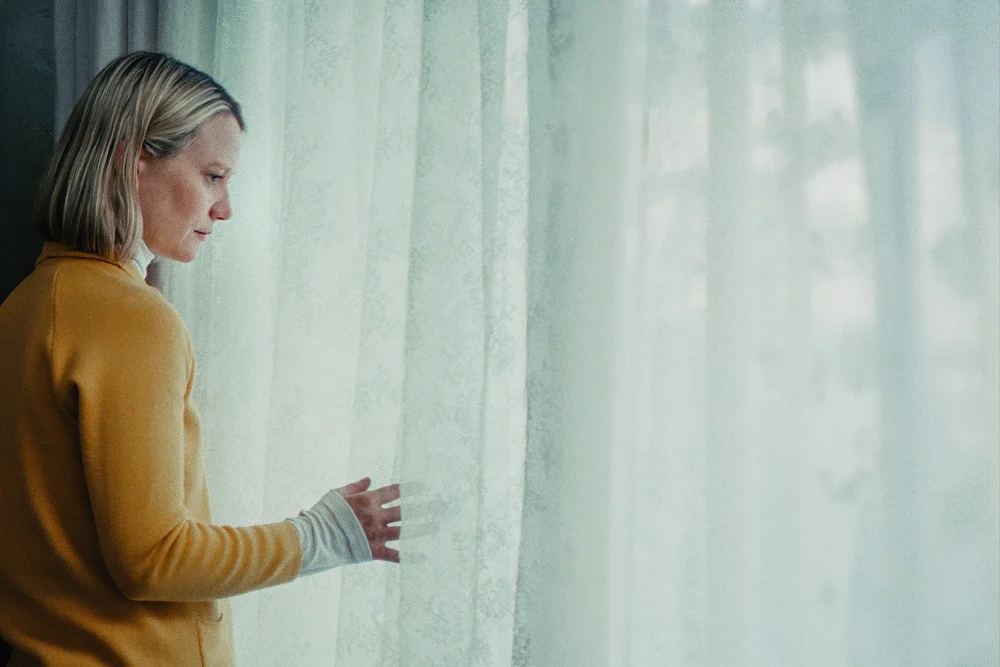
In a significant move ahead of the 81st Venice Film Festival, French powerhouse MMM Film Sales has secured the international distribution rights to the highly anticipated Australian drama Agata the Writer. The film, which marks the feature directorial debut of acclaimed artist and filmmaker Kuba Dorabialski, is slated for a world premiere in the prestigious Venice Days (Giornate degli Autori) section, where it will compete for top honors.
Starring the globally recognized Mia Wasikowska, the project represents a high-profile collaboration between international sales expertise and Australian independent production. With a narrative that spans continents and probes the ethical complexities of historical storytelling, the film is already positioning itself as a centerpiece of this year’s festival circuit.
A Narrative of Conflict, Identity, and Artistic Responsibility
Agata the Writer follows its titular protagonist, a Polish-Australian novelist who leaves the comfort of Sydney to journey to Sarajevo. Her objective is ambitious: to pen a definitive novel concerning the region’s war-torn history. However, upon her arrival, Agata finds that the reality of the landscape is far more imposing than the pages of her manuscript.
The film serves as a meta-textual examination of the outsider’s gaze. As Agata gathers material, she is confronted by local residents who challenge her motives, questioning her right to interpret their trauma and her proximity to the history she seeks to document. The tension escalates into a strange, atmospheric mystery when a series of provocative and obscene artworks begin to vanish, forcing Agata to reckon with the moral weight of her creative pursuits.
Rather than offering a straightforward war drama, Dorabialski’s script pivots toward the quieter, lingering echoes of trauma. The film posits that true resilience is found not in the grand spectacle of conflict, but in the persistent human moments that survive in its shadow. For Agata, the journey becomes an existential interrogation: what responsibility does a storyteller hold when they step into the wounds of others?
The Creative Team: Building on a Proven Pedigree
The production is helmed by Alex White, a producer whose reputation for championing bold, emotionally resonant Australian cinema is firmly established. White is perhaps best known for the critical and commercial success of Babyteeth (2019), a film that similarly navigated the delicate balance between tragedy and levity.
The pedigree of the team behind Agata the Writer provides a strong indicator of the film’s potential impact. Babyteeth, which also debuted in competition at the Venice Film Festival, went on to secure the Marcello Mastroianni Award and dominated the Australian Academy (AACTA) Awards with nine wins, including Best Film, Best Director, and Best Screenplay. The film’s international trajectory—garnering a BAFTA nomination for Best Director and a British Independent Film Award nod for Best International Film—sets a high bar for Dorabialski’s debut.
For Kuba Dorabialski, the transition from the art gallery to the feature film set is a natural evolution. Born in Wrocław, Poland, and now based in Sydney, Dorabialski has spent years cultivating a visual language characterized by conceptual depth. A former winner of the John Fries Award (2017) and the Fisher Ghost Art Prize (2019), his work often explores the friction between history and memory. His 2021 solo exhibition at Carriageworks, Connection of the Sticks, and his long-form video work at the Sydney Film Festival (2023) demonstrated his mastery of narrative pacing, qualities he has now translated into the feature format.
Official Responses and Strategic Vision
The acquisition by MMM Film Sales signals a strong vote of confidence in the project’s artistic and commercial viability. In a joint statement, the MMM Film Sales team articulated their enthusiasm for the film’s complex themes:
"We were immediately drawn to Agata the Writer for its unique voice and its fascinating reflection on how we engage with history and memory. Mia Wasikowska perfectly embodies the role of Agata, a writer returning to her home continent, seeking to understand and reconnect with the wounds of the recent past, and with the ways in which unresolved conflicts continue to echo in the present. Kuba Dorabialski has crafted a film that is both playful and thought-provoking, questioning the relationship between storytelling, identity, and responsibility."
The casting of Mia Wasikowska is particularly strategic. Having established herself as one of the most versatile actors of her generation—with roles ranging from Tim Burton’s Alice in Wonderland to the searing, intimate dramas of Park Chan-wook and Guillermo del Toro—Wasikowska brings a gravitas that is essential for a character-driven piece of this nature. Her involvement ensures that the film will attract significant attention from both arthouse distributors and global audiences.
Financial Foundations and Institutional Support
The production of Agata the Writer is a testament to the robust support system for independent film in Australia. The project is a collaboration between Whitefalk Films and Produktion Productions, benefiting from a well-rounded financial structure.
Principal production funding was provided by Screen Australia, the federal government agency that serves as the primary engine for the local film industry. Additional financing was secured through Creative Australia and the Adelaide Film Festival Investment Fund. This combination of government backing and festival-supported investment highlights the film’s status as a "cultural priority" project, one intended to showcase Australian talent on the global stage.
Implications for the Industry: The "Venice Effect"
The decision to launch Agata the Writer in the Venice Days section of the Venice Film Festival is a calculated move to establish the film’s "prestige" credentials. Venice Days, which operates independently of the main competition, has historically served as a launchpad for innovative, director-driven works that challenge the status quo.
For a debut feature, the exposure gained at the Lido is invaluable. It provides a platform to court international sales agents, festival programmers, and critical tastemakers. Given the success of Babyteeth—a film that also utilized the Venice platform to jumpstart its international awards campaign—there is palpable excitement regarding whether Agata the Writer can replicate that momentum.
Furthermore, the film highlights a growing trend in global cinema: the return to "micro-histories." Rather than attempting to depict the entirety of a war, contemporary filmmakers are increasingly focusing on the psychological impact of history on the individual. By centering the narrative on a novelist—a proxy for the filmmaker himself—Dorabialski creates a self-reflexive structure that invites the audience to participate in the act of interpretation.
A New Voice in Australian Cinema
As the industry prepares for the Venice premiere, all eyes are on the transition of Kuba Dorabialski from the visual arts sector into the competitive world of feature filmmaking. The success of the film will not only depend on the strength of its narrative but on its ability to transcend the specificities of its Polish-Australian backdrop to touch upon universal truths regarding the burden of memory.
With MMM Film Sales leading the charge in international territories, the stage is set for a wide release strategy that aims to place Agata the Writer in front of audiences who value challenging, intellectually stimulating cinema. Whether the film ultimately garners the same accolades as the production team’s previous efforts remains to be seen, but the industry consensus is clear: Agata the Writer is one of the most intellectually ambitious projects to emerge from the Australian independent sector in recent years.
As Mia Wasikowska walks the red carpet in Venice, she does so as the face of a project that asks uncomfortable questions about the world we live in. It is a film that dares to suggest that the greatest stories are not those we invent, but those we are brave enough to confront within ourselves.