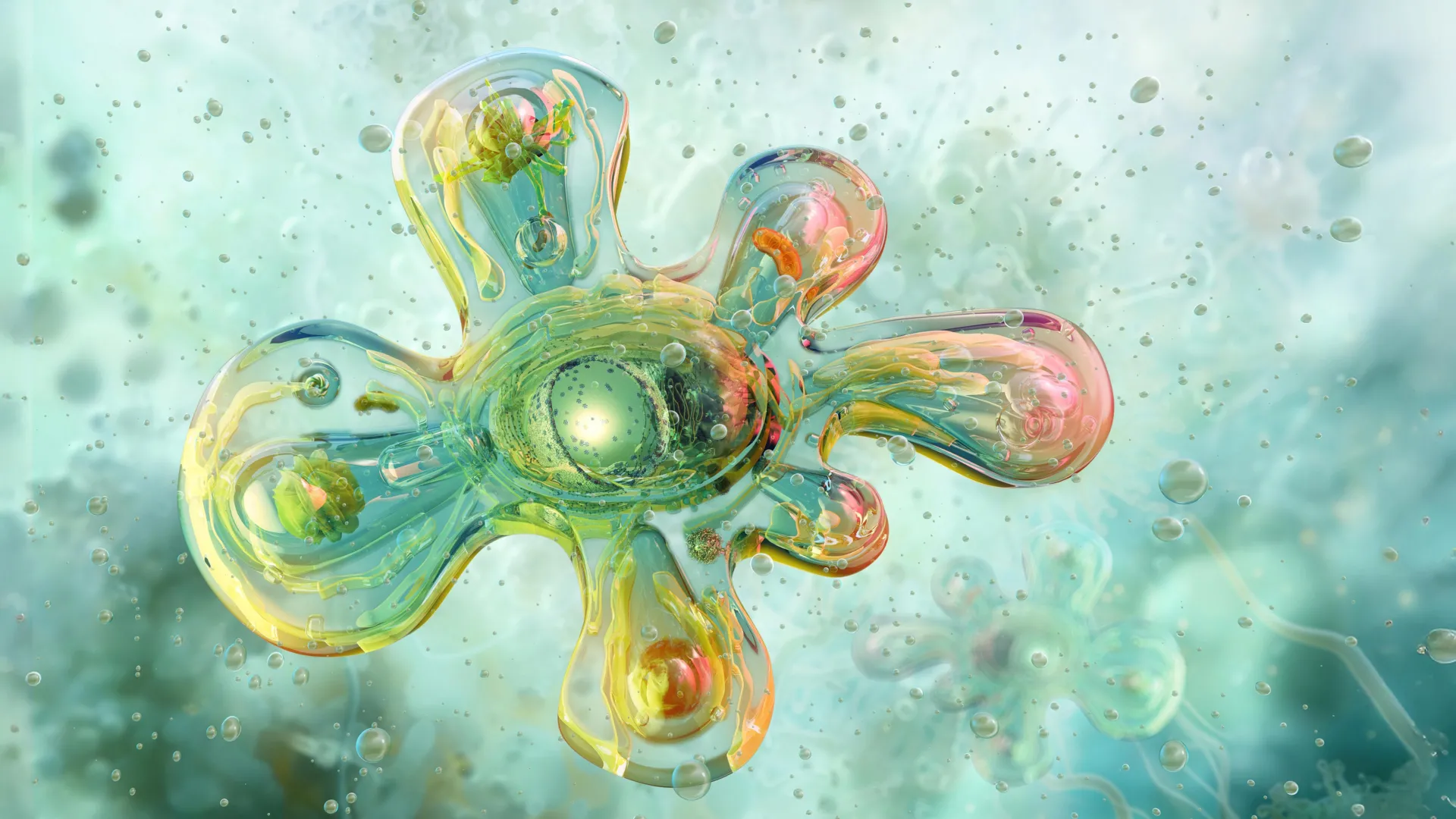
While the public gaze is often fixated on the crimson horizons of Mars or the plumes of water erupting from the icy crusts of Enceladus, the most profound mystery of astrobiology remains tethered to our own planet. For nearly four billion years, Earth was a world ruled by the unseen. It was a microbial dominion—a silent, single-celled kingdom—until a transformative evolutionary event occurred that shattered the status quo.
Scientists are currently engaged in a high-stakes detective story, racing to understand the precise moment when the first eukaryotes—organisms with complex, nucleated cells—emerged. By deciphering this transition, researchers are not merely reconstructing Earth’s biography; they are drafting a blueprint for what complex life might look like across the cosmos.
The Microbial Monopoly: A 90 Percent Dominance
To appreciate the significance of the eukaryotic revolution, one must first grasp the sheer scale of the microbial era. For roughly 90 percent of Earth’s history, life was exclusively microscopic. During this vast epoch, the planet was a laboratory of biochemical innovation, yet it remained devoid of the complex, multicellular structures we recognize today.
Reconstructing the shift from a world of solitary cells to one of vibrant, complex ecosystems is the "Holy Grail" of paleobiology. Ross Anderson, a prominent paleontologist at the University of Oxford, emphasizes that this transition is the prerequisite for all modern terrestrial life. "If we want to understand the likelihood of complex life elsewhere," Anderson notes, "we must first master the timeline of how it stumbled into existence here."
A Chronology of Complexity: The Long Road to Multicellularity
The timeline of life on Earth is a testament to the slow, painstaking nature of evolution. According to paleontological consensus, the story begins roughly 3.5 billion years ago, shortly after the planet’s cooling.
The Milestones of Life:
- 3.5 Billion Years Ago: The origins of life appear in the fossil record, likely as simple, prokaryotic organisms.
- 2.3 Billion Years Ago: Cyanobacteria emerge, fundamentally changing the atmosphere through oxygen-producing photosynthesis.
- 1.7 Billion Years Ago: The earliest definitive evidence of eukaryotes appears.
- 1.0 Billion Years Ago: The first algae emerge, signaling a move toward more organized, multicellular forms.
- 570 Million Years Ago: The dawn of the animal kingdom.
The path to the "Crown Eukaryotes"—the common ancestors shared by the plant and animal kingdoms—is estimated to have diverged roughly 1.6 billion years ago. These organisms represent the first true complex life, functioning as the biological scaffolding upon which all subsequent diversity was built.
Defining the Eukaryotic Difference
What separates a eukaryote from its humbler, prokaryotic cousins? The answer lies in architecture. Eukaryotic cells are defined by a nucleus that encapsulates their genetic material, acting as a command center. Perhaps even more revolutionary are the organelles—specialized, compartmentalized structures within the cell.
Chief among these is the mitochondrion, the powerhouse of the cell. By outsourcing energy production to these specialized units, eukaryotes gained the metabolic surplus required to fuel larger, more demanding biological structures. This energy efficiency was the key that unlocked the possibility of multicellularity, eventually leading to every fungus, plant, and animal that inhabits the modern Earth.
The Forensic Challenge: Why Evidence is Scarce
If eukaryotes are the ancestors of all visible life, why are they so difficult to find in the fossil record? The answer lies in the "soft-bodied" nature of these early organisms.
Before the advent of mineralized shells or complex skeletons, which began appearing roughly 500 million years ago, life was ephemeral. These soft cells rarely survived the crushing weight of geological time. Fossils from the pre-Cambrian era are not found in abundance; they are rare, microscopic ghosts trapped in specific, high-pressure environments.
"We are dealing with a record that has been subjected to billions of years of geological degradation," says Anderson. "When you search for something as tiny as a cell that has been compressed, heated, and chemically altered for over a billion years, you are effectively looking for a needle in a haystack—if the needle had dissolved into dust."
Searching for the "Fingerprints" of Life
The search for these microfossils is a global endeavor. Because the fossils are so rare, scientists must identify geological "sweet spots"—locations where delicate biological material had a unique chance of escaping the ravages of tectonic activity.
The Svalbard Expedition
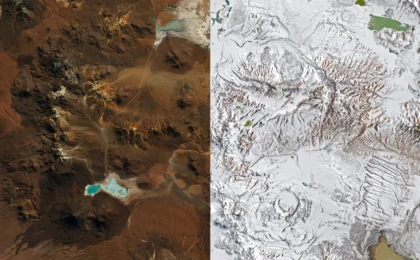
One of the most promising sites for discovery is a 100-square-kilometer region near Svalbard, Norway. Located 80 degrees North, this Arctic wasteland was once a shallow, nutrient-rich sea. The frigid, remote nature of the region has kept the ancient rock layers relatively pristine, providing a window into the past that is less obscured by human activity or excessive erosion.
The Australian Evidence
Australia continues to be a frontier for paleontological breakthroughs. Researchers working in the region recently uncovered microfossils dating back 1.75 billion years—some of the oldest evidence of eukaryotic life ever documented. These findings, often found in ancient clay deposits, suggest that coastal environments served as the "cradles" of early complexity, providing the necessary nutrients for organisms to experiment with multicellularity.
The Ediacaran/Cambrian Turning Point
The trajectory of life shifted dramatically during the transition between the Ediacaran and Cambrian periods, approximately 540 million years ago. This era, often called the "Cambrian Explosion," saw a rapid diversification of life forms. It was the moment when evolution moved from soft-bodied, slow-moving organisms to creatures with shells, skeletons, and the ability to hunt and navigate.
Anderson argues that this transition was not an isolated event but the culmination of a billion years of eukaryotic experimentation. By studying the chemistry of ancient rocks, researchers are trying to determine if this explosion was triggered by environmental changes—such as shifting oxygen levels—or if it was an inevitable consequence of the biological complexity built up during the preceding billion years.
Implications for Astrobiology: The Universal Search
The motivations for this research extend far beyond the history of our own planet. The methodologies developed to detect microfossils in ancient Earth clay are now being adapted for planetary exploration.
If we seek life on Europa or Enceladus, we cannot expect to find dinosaurs or complex trees. We will be looking for chemical signatures, microscopic traces, and the preserved vestiges of cellular life. By understanding which environments on Earth favor the preservation of ancient eukaryotes, astrobiologists are learning to prioritize where to look on other moons and planets.
"If we don’t understand the transition to complex life on Earth, we are essentially flying blind in our search for life in the universe," Anderson notes. "We need to know if the transition to eukaryotes is a common evolutionary step or a freak occurrence."
Conclusion: Bridging the Biological Divide
The quest to understand our origins is a work in progress. While the fossil record is sparse, advances in geochemistry, micro-imaging, and the strategic selection of pristine geological sites are providing new, sharper insights into the first billion years of complex life.
Every microfossil identified is a victory over the entropy of time. Each discovery helps bridge the gap between the chaotic, single-celled beginnings of our planet and the breathtaking biodiversity we see today. As researchers continue to probe the silent, ancient rocks of Svalbard and the Australian outback, they are doing more than digging for the past; they are mapping the fundamental rules of life itself. Whether that life exists on a rocky planet in a distant galaxy or in the subsurface oceans of a Jovian moon, the lessons learned from our own history remain the most critical map we have.