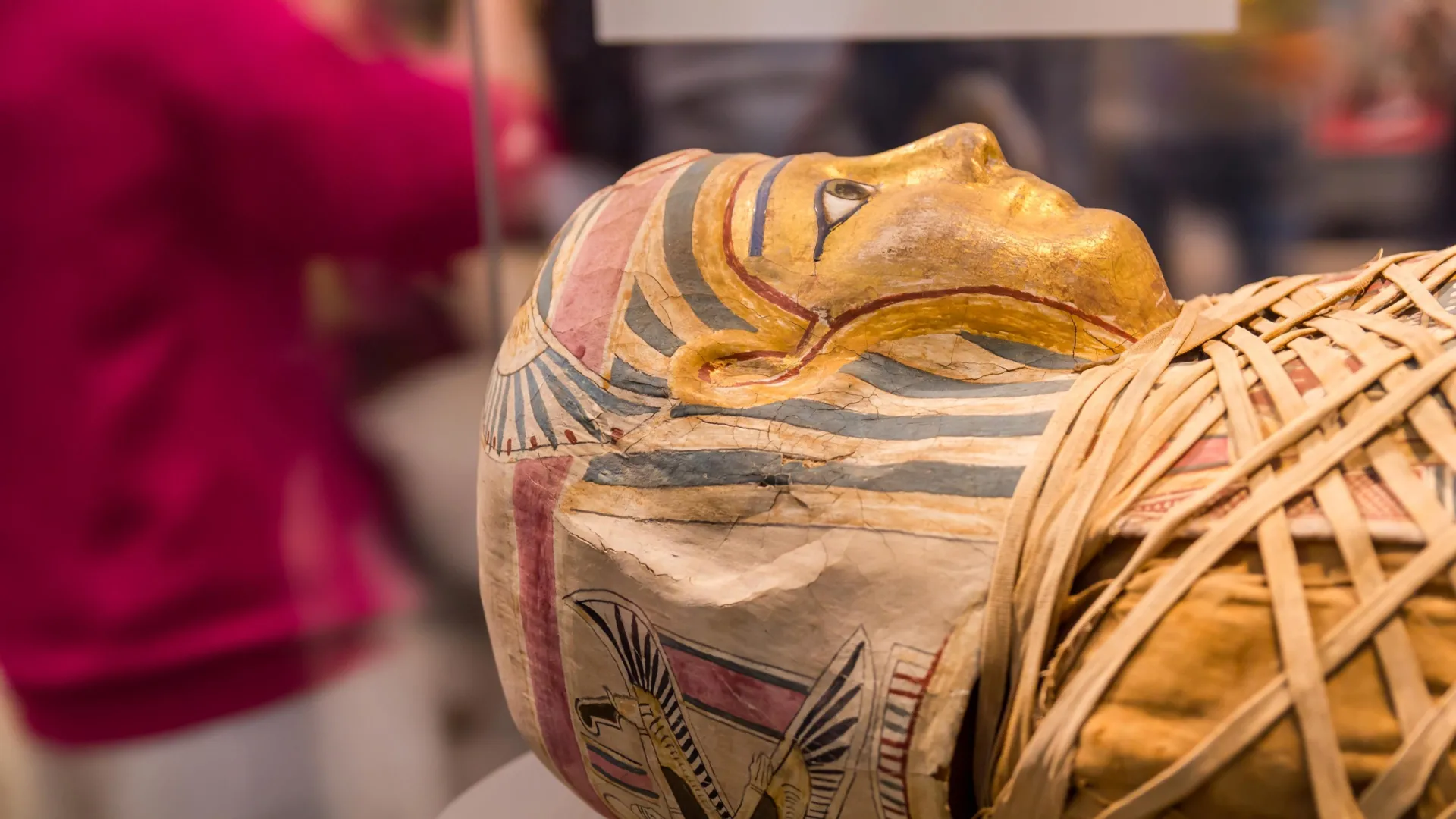
In a discovery that bridges the gap between classical literature and the funerary mysteries of antiquity, archaeologists working at the legendary site of Oxyrhynchus, Egypt, have unearthed a find of unprecedented significance. Within the wrappings of a Roman-era mummy, estimated to be approximately 1,600 years old, researchers discovered a perfectly preserved papyrus fragment containing a passage from Homer’s Iliad.
While Oxyrhynchus—modern-day Al Bahnasa—is globally renowned for its vast cache of ancient manuscripts, this specific find marks a historical first: the intentional incorporation of a canonical literary text into the mummification process. Unlike previous discoveries where papyri found in tombs served magical or ritualistic purposes, this fragment represents a deliberate choice to inter the foundational epic of Western literature alongside the deceased.
Chronology of the Discovery: A Tale of Two Seasons
The discovery was the result of a rigorous, multi-phase archaeological campaign conducted by the Oxyrhynchus Archaeological Mission, a project under the auspices of the Institute of Ancient Near East Studies (IPOA) at the University of Barcelona. Directed by Maite Mascort and Esther Pons, the mission has been a cornerstone of Spanish-led Egyptology since its inception in 1992.
The Initial Unearthing (November–December 2025)
The excavation focused on Sector 22, specifically Tomb 65, located within the Al Bahnasa necropolis. A team led by Núria Castellano was clearing the funerary complex—a structure comprised of three limestone chambers—when they encountered a series of Roman-era mummies, some housed in decorated wooden sarcophagi. Despite evidence of historical looting that had compromised the structural integrity of the tomb, the team located an undisturbed funerary bundle. Resting directly upon the abdomen of the mummy was the papyrus scroll, positioned with the clear intent of the embalmers.
Analytical Campaigns (January–February 2026)
Following the initial recovery, the focus shifted from excavation to laboratory analysis. The fragile document was transported to a secure facility, where a multidisciplinary team—including conservator Margalida Munar, papyrologist Leah Mascia, and Professor Ignasi-Xavier Adiego—began the delicate process of stabilization and translation. It was during this period that the true identity of the text was confirmed, transforming a routine archaeological find into a world-class literary sensation.
The Literary Significance: Why the Iliad?
The identification of the text was spearheaded by papyrologist Leah Mascia and confirmed by Professor Ignasi-Xavier Adiego, a leading expert in classical philology. Through a careful analysis of the script and content, they identified the fragment as originating from the "Catalogue of Ships" in Book II of Homer’s Iliad.
The "Catalogue of Ships" is arguably one of the most famous passages in the history of Western literature. It provides an exhaustive list of the Greek contingents, their commanders, and the number of ships they contributed to the expedition against Troy. Its inclusion in a burial context raises profound questions about the owner of the mummy. Was the deceased a scholar, a lover of epic poetry, or perhaps an individual of high status who wished to carry the weight of Greek heritage into the afterlife?
Professor Adiego highlights the anomaly of the find: "For over a century, Oxyrhynchus has yielded thousands of papyri. We have found tax receipts, personal letters, and, most frequently, magical spells and ritual texts meant to guide the soul. To find a literary work—specifically Homer—placed with such care on the body indicates that the text held a personal or protective significance that we are only beginning to understand."
Supporting Data: Contextualizing the Necropolis
The Al Bahnasa site, located 190 kilometers south of Cairo near the Bahr Yussef branch of the Nile, served as the administrative and cultural hub of Oxyrhynchus during the Greco-Roman period. Its history is one of layers; as a provincial capital, it fostered a unique fusion of Egyptian, Greek, and Roman cultural practices.
The funerary complex excavated by the Barcelona team provides a window into this synthesis. The burial chambers contained a mixture of traditional Egyptian mummification techniques applied to individuals living under Roman administration. The presence of Greek literary papyri within these tombs suggests that by the 4th century CE, the "Homeric tradition" had become deeply integrated into the spiritual lives of the local elite.
The physical condition of the tomb—having been partially plundered in antiquity—makes the discovery of the Iliad fragment even more miraculous. The fact that the papyrus remained on the abdomen of the mummy, largely undisturbed by the tomb robbers who sought gold and amulets, suggests that the scroll was tucked deep within the inner layers of the linen bandages, shielded from the sight of those who desecrated the site centuries ago.
Official Responses and Collaborative Efforts
The success of the 2025–2026 season is a testament to the international cooperation between the University of Barcelona and Egyptian authorities. The mission operates in close coordination with the Egyptian Supreme Council of Antiquities and Cairo University, ensuring that all artifacts are treated with the highest standards of preservation.
During a recent symposium held at the University of Barcelona’s Faculty of Philology and Communication, project members presented their findings to the academic community. The presentation underscored the mission’s reliance on a vast support network, including the Ministry of Culture, the Palarq Foundation, the Catalan Egyptology Society, and AIXA Serveis Arqueològics.
"The discovery is not just about the paper," noted Dr. Maite Mascort during the lecture. "It is about the human intent. By placing the Iliad on the deceased, someone wanted to ensure that the heroics of Achilles and the strategic might of Agamemnon traveled with the soul. It reflects a fascinating intersection of Homeric obsession and funerary ritual."
Implications for Future Research
The implications of this find extend far beyond the immediate thrill of recovering a classical text. Scholars are now reconsidering the extent to which "secular" literature was utilized in the funerary rites of the Greco-Roman world.
The Evolution of Funerary Rituals
If the Iliad was used to provide comfort or prestige to the deceased, does this mean other literary works—plays by Euripides, or the philosophy of Plato—were also occasionally buried with the dead, only to be destroyed by moisture or decay? Researchers are now re-examining existing papyrus collections from similar Roman-era burials to look for telltale signs of literary fragments that may have been overlooked or misidentified as ritual scraps.
Preservation and Conservation
The role of conservator Margalida Munar has been pivotal. The stabilization of a 1,600-year-old document that was in direct contact with mummification resins is a feat of modern chemistry. The techniques developed during this mission will likely serve as a blueprint for future attempts to recover text from fragile organic matter.
The Legacy of the Oxyrhynchus Mission
As the mission enters its fourth decade, the 2025–2026 season stands as its most significant achievement. The project, initiated by Professor Josep Padró in 1992, has evolved from a simple excavation project into a holistic research program that combines archaeology, anthropology, and digital papyrology.
As the team prepares for future excavations, the world of classical studies awaits with bated breath. The Iliad fragment serves as a poignant reminder that while the physical bodies of the ancient inhabitants of Oxyrhynchus have turned to dust, the stories they cherished—the very literature that defined their culture—remain, quite literally, inseparable from their journey into the unknown.
For now, the papyrus rests in a climate-controlled environment, awaiting further study that will undoubtedly reveal more about the ink, the handwriting, and the specific edition of the Homeric epic that graced the tomb of an anonymous Egyptian citizen over a millennium and a half ago.