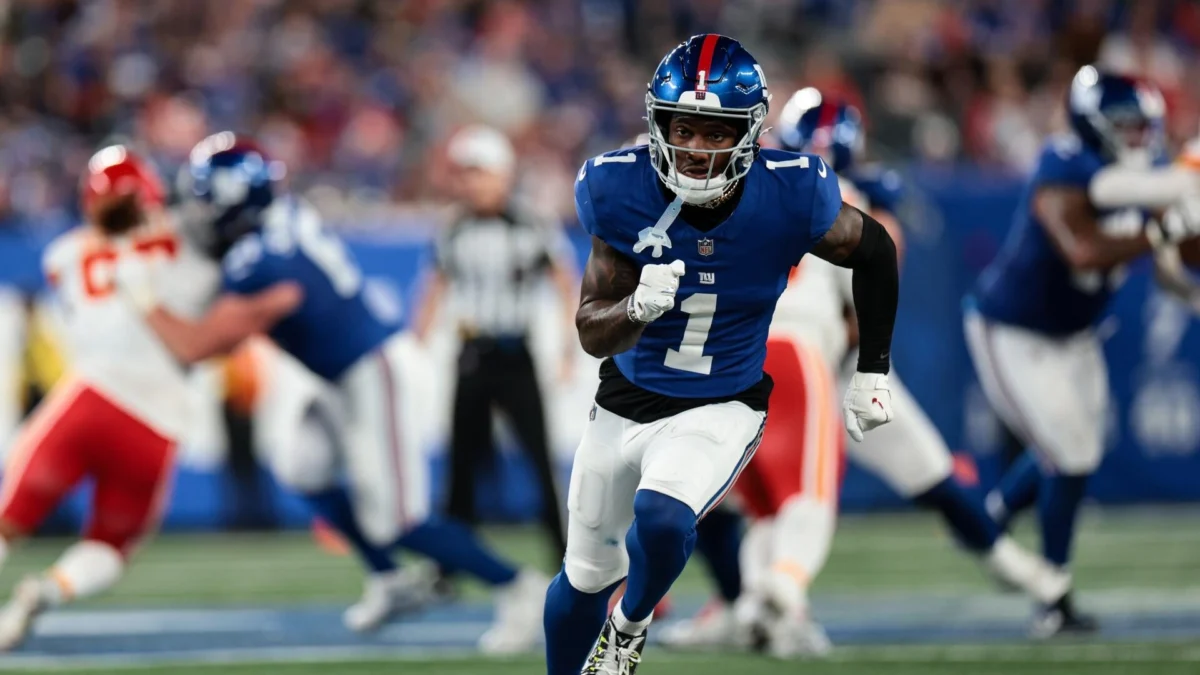
As the calendar turns toward late August, the intensity of the NFL preseason begins to wane, and the focus of the sports world shifts sharply toward the upcoming regular season. With kickoff scheduled for Wednesday, September 9, 2026, fantasy football managers are currently in the thick of their draft preparations. In an era where information is abundant but often contradictory, discerning the difference between a league-winning sleeper and a high-cost liability is the defining factor between hoisting a championship trophy and enduring a season of frustration.
To cut through the noise of the preseason hype cycle, SportsLine has leveraged its proprietary computer model, which has simulated the 2026 NFL season 10,000 times. By analyzing thousands of data points—ranging from recovery timelines for major surgeries to shifts in offensive coordinator philosophies—the model has identified the riskiest assets in the current draft pool. With stars like Josh Allen, Bijan Robinson, and Ja’Marr Chase headlining rankings, the margin for error in the early rounds has never been thinner.
The Science of Simulation: Why Data Beats Hype
The SportsLine model has established a consistent track record of identifying outliers before they manifest on the field. In 2025, the model famously flagged Washington Commanders receiver Terry McLaurin as a player to fade, correctly predicting that his top-50 ADP would yield poor returns. The result was a dramatic decline for the veteran, whose production plummeted to career lows in both receiving yards and touchdowns.
This isn’t an isolated success. The model’s history of "correcting" the market is well-documented: it pinpointed A.J. Brown as a breakout star in 2020, accurately forecasted the explosive rise of Jonathan Taylor in 2021, and identified the regression of C.J. Stroud in 2024. These insights are not based on gut feelings or the prevailing narrative on social media; they are the byproduct of comprehensive, data-backed simulations that account for injury risk, strength of schedule, and team-level schematic changes.
Chronology of a Draft Strategy: Preparing for 2026
The lead-up to the 2026 season has been defined by a unique set of variables. As we move through the final stages of the preseason, managers must reconcile the high expectations for established stars with the harsh reality of injury recovery and coaching adjustments.
- Pre-Draft Phase (Early August): Managers are evaluating rookie performances and depth chart battles. The focus is primarily on Average Draft Position (ADP) as a baseline for value.
- The Preseason Correction (Mid-August): As teams finalize their rosters, news regarding injury recovery timelines—specifically concerning players like Malik Nabers—begins to shift the market.
- The Final Stretch (Late August to September 9): This is the window where the SportsLine model provides its most critical utility. By comparing the consensus rankings to the model’s simulation results, managers can identify which players are being overdrafted relative to their likely statistical ceiling.
Deep Dive: The High-Cost Busts of 2026
According to the latest projections from SportsLine, two high-profile players stand out as particularly dangerous investments for those picking in the early-to-mid rounds.
Malik Nabers: The ACL Recovery Variable
Malik Nabers is currently commanding significant draft capital, with an ADP hovering around the 33rd overall pick. However, the SportsLine model suggests that this valuation is overly optimistic. Following an ACL tear last season and a subsequent follow-up procedure this past spring, there are legitimate concerns regarding his availability and explosiveness at the start of the year.
Beyond the injury, the New York Giants have undergone a schematic shift under offensive coordinator Matt Nagy. The team is expected to implement a run-heavy approach that limits the volume of pass-catchers. The model ranks Nabers well outside the top 15 at his position, placing him behind high-floor options like DeVonta Smith and Nico Collins. For managers looking to secure a reliable WR2, the price tag on Nabers is currently too high to justify the risk.
James Cook: The TD Vulture Dilemma
Buffalo Bills running back James Cook has become a polarizing figure in 2026 draft rooms. Despite an ADP around 11th overall, the SportsLine model ranks him as the RB10, suggesting he is more appropriately valued as a late-second or third-round selection.
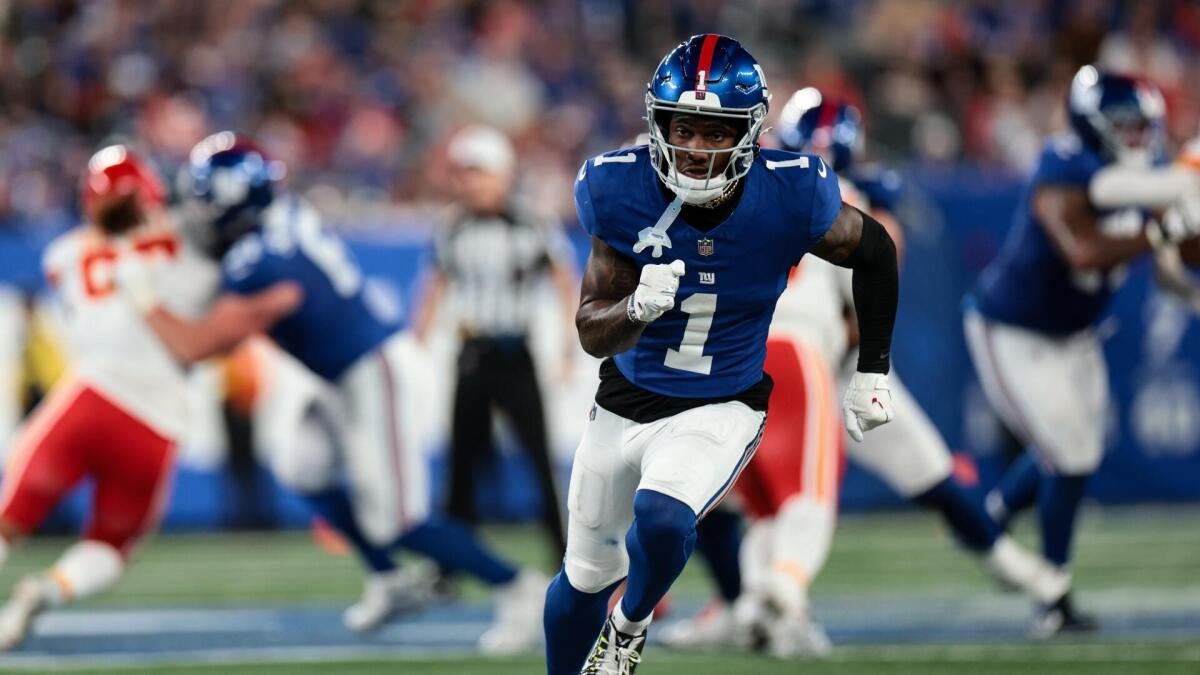
While Cook was an RB6 finisher a year ago, the model highlights two glaring red flags: an increase in fumble frequency and a lack of elite usage in the passing game. Perhaps most importantly, the presence of Josh Allen—a quarterback who serves as a persistent "touchdown vulture"—limits Cook’s upside in high-leverage situations. When managers spend a first-round pick, they require a player with bell-cow potential and goal-line security. The model argues that players like Derrick Henry and Chase Brown offer superior reliability for the price.
Implications for Your Draft Strategy
The overarching theme of the 2026 draft is "fading the narrative." The SportsLine model is currently recommending that managers avoid one of the top five wide receivers off the board, a player who is currently being treated as a locked-in elite asset. The model ranks this player barely inside the top 10, signaling a potential massive regression.
Tactical Recommendations
- Prioritize Efficiency Over Volume: As seen with the James Cook analysis, high volume does not always equate to high fantasy production if a player lacks red-zone equity.
- Monitor the Injury Reports: The caution surrounding Malik Nabers serves as a reminder that "expected recovery" and "on-field performance" are not the same. Managers should be wary of players coming off ligament-based surgeries, as their early-season efficiency often dips.
- Trust the Model Over the Crowd: In a typical league, the crowd often chases the previous year’s statistics. By utilizing the 10,000-simulation data set provided by SportsLine, you are essentially playing the "long game," focusing on probabilistic outcomes rather than the recency bias that drives ADP.
Official Stance and Data Outlook
The 2026 Fantasy Football landscape is shifting beneath our feet. While the top of the draft board is dominated by familiar names—Jahmyr Gibbs at 1.25, Bijan Robinson at 1.94, and Ja’Marr Chase at 4.02—the middle rounds are where leagues are won or lost.
The inclusion of players like Jaxon Smith-Njigba (6.92) and De’Von Achane (13.66) in the upper echelon of ADP rankings demonstrates that the market is beginning to value high-ceiling, younger players earlier than in previous years. However, the model cautions that this aggression must be balanced with the identification of "fades."
By visiting SportsLine, managers can access specific cheat sheets that categorize players by position, identifying the exact point at which a "value" pick becomes a "bust" based on the projected 10,000-season outcomes.
Conclusion: The Path to Victory
The 2026 fantasy football season will be defined by the managers who have the discipline to walk away from overhyped, high-ADP assets that the data suggests are destined for regression. Whether it is avoiding the injury risks of Malik Nabers or the touchdown-limited ceiling of James Cook, the key to success is in the numbers.
As you finalize your draft boards, consider the 10,000 simulations that have already accounted for the variables most people overlook. By leveraging the same model that successfully navigated the pitfalls of the 2025 season, you can ensure that your roster is built on a foundation of statistical probability rather than preseason hype.
For those looking to secure their championship run early, the path is clear: visit SportsLine, review the full rankings, and arm yourself with the insights necessary to dominate your draft. The season is only weeks away—make sure your decisions are built to last the full 17 weeks.