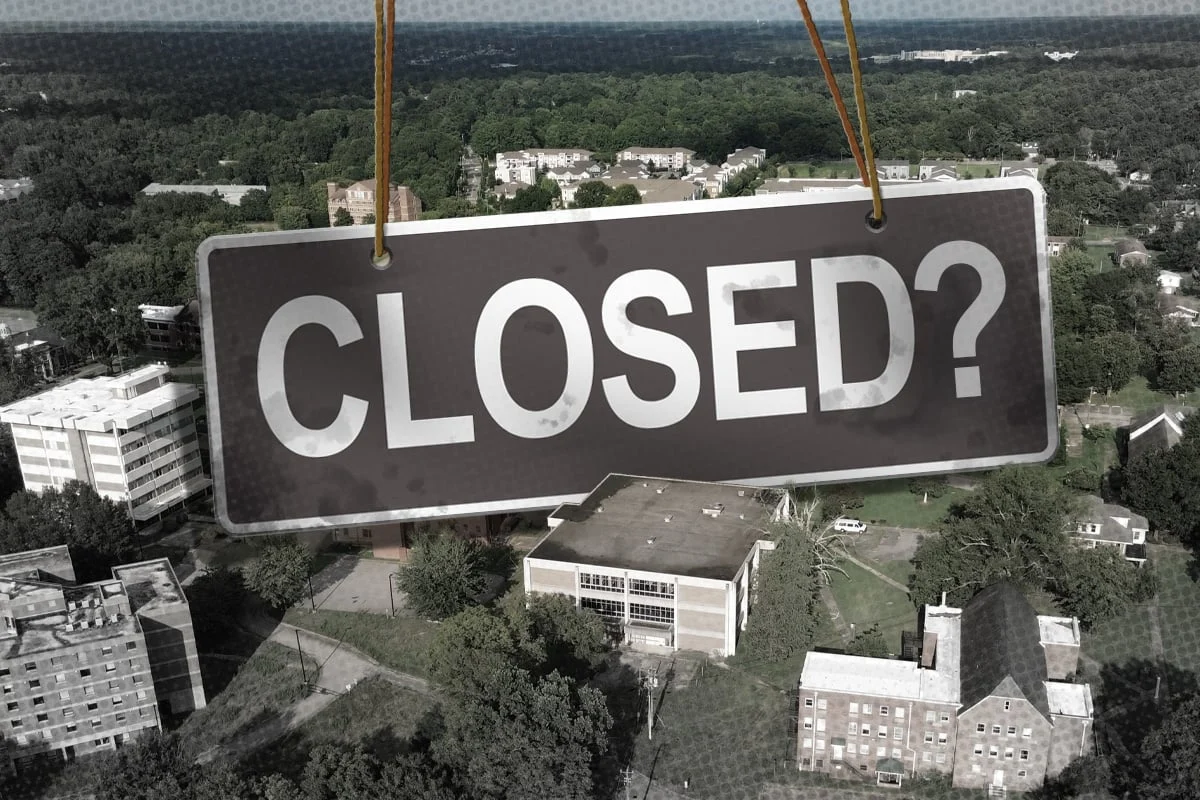
Saint Augustine’s University (SAU), a historic pillar of North Carolina’s higher education landscape, finds itself in a precarious, "zombie-like" state—neither fully operational nor officially shuttered. The historically Black university (HBCU), currently navigating the treacherous waters of Chapter 11 bankruptcy, has abruptly pivoted away from its last-ditch efforts to remain an active educator, signaling a shift in strategy that prioritizes financial survival over academic continuity.
In a recent hearing before the U.S. Bankruptcy Court for the Eastern District of North Carolina, legal representatives for the institution confirmed that the university has suspended all plans to launch online certificate and noncredit programs. This decision marks a significant retreat for an administration that had hoped to maintain a revenue stream after losing access to federal financial aid earlier this year.
The Current State of Affairs: A Strategic Retreat
For months, SAU officials maintained that despite a staggering $74 million debt load and a bankruptcy declaration filed in April, the university would survive by transforming its business model. The plan was to pivot toward a lean, online-first operation, partnering with third-party vendors to offer professional certifications.
That vision, however, has been abandoned. Ciara Rogers, counsel for Saint Augustine’s, told the court that the university has dissolved its partnership with the online education vendor Ed2Go. "At this time, the university is not going to be offering any educational offerings, whether they be certification programs or internships," Rogers stated.
The move is designed to stem the flow of cash. By eliminating these programs, the university aims to reduce payroll obligations and general expenditures at a time when its very existence is sustained by borrowed funds. Currently, SAU is operating on a lifeline from the Self-Help Ventures Fund, a nonprofit lender, while burning through approximately $300,000 in monthly expenses.
A Chronology of Decline and Desperation
The current crisis is not a sudden development but the culmination of years of financial mismanagement and external pressures.
- 2024–Early 2025: SAU faced increasing scrutiny regarding its fiscal health and accreditation status. The university struggled to balance its budget while facing mounting pressure from creditors.
- January 2025: In a desperate bid to stabilize its finances, the university attempted to lease its campus to a Florida-based developer in a proposed $70 million, 99-year deal. The plan collapsed when North Carolina state officials declined to sign off, citing concerns regarding the institution’s long-term viability and the legal requirements governing the transfer of nonprofit assets.
- April 2026: The university formally declared bankruptcy. The filing resulted in the immediate loss of access to federal financial aid, effectively halting the traditional student enrollment pipeline.
- Summer 2026: SAU leadership attempted to pivot to online-only certificate programs as a bridge to future solvency.
- August 2026: Following bankruptcy court proceedings, the university announced it would cease all educational activity to focus exclusively on restructuring and debt repayment.
Supporting Data: The Financial Weight of History
The numbers surrounding Saint Augustine’s University are stark. The $74 million debt figure represents a mountainous hurdle for a small private institution without the current ability to generate tuition revenue.
The reliance on the Self-Help Ventures Fund underscores the precarious nature of the university’s daily operations. Bankruptcy administrator Brian Behr noted during the proceedings that the university’s primary goal must be a rapid exit from bankruptcy. The "burn rate" of $300,000 per month without corresponding income from student tuition or state/federal grants makes the status quo unsustainable for anything other than a very short window of time.
Furthermore, the involvement of high-profile consultants highlights the gravity of the situation. The board has brought in Phillip Clay, the former chancellor of the Massachusetts Institute of Technology (MIT), to serve in an active advisory role. Clay, who has also served on the board of the University of North Carolina at Chapel Hill, is tasked with guiding the trustees through the complex process of organizational restructuring.

The Real Estate Dilemma
With no students to educate and no online programs to run, the university’s physical campus is its most valuable remaining asset. SAU has signaled its intent to hire the real estate firm Avison Young to facilitate the potential sale of portions of its property.
However, this path is fraught with legal and logistical hurdles. The Self-Help Ventures Fund has indicated it plans to object to the hiring of Avison Young. Because the bankruptcy court must approve any significant administrative hire or asset disposal, the opposition from a primary creditor creates a major roadblock.
Bankruptcy administrator Brian Behr expressed a cautious perspective on the matter. While he noted that a "wholesale sale of property" should not be the primary objective, he admitted it must remain a "back burner" possibility should the restructuring efforts fail entirely. The loss of the campus would, for all intents and purposes, signal the permanent end of Saint Augustine’s University as an operating institution.
Official Responses and Judicial Sentiment
The court’s reaction to the latest shift in strategy was one of cautious support. Bankruptcy Judge David Warren acknowledged the extreme difficulty of the university’s position.
"It’s very hard, especially when you’ve got a company or a university that is essentially closed and you’re trying to chart a new course and reorganize," Judge Warren remarked. He praised the board and the legal team for their persistence, emphasizing the importance of their ongoing commitment to the process.
The decision to pull the plug on the online programs was viewed by the court as a pragmatic acknowledgment of the university’s limited resources. By focusing solely on debt management and organizational restructuring, the board hopes to emerge as a "new and stronger entity," though the path to such a transformation remains obscured by the lack of an educational mission.
Implications for the Future of HBCUs
The saga of Saint Augustine’s University carries profound implications for the broader HBCU community. These institutions often serve as vital engines of social mobility, yet many remain vulnerable to the same liquidity crises that have paralyzed SAU.
- The "Zombie" Risk: SAU illustrates the dangers of institutions attempting to hold on to their brand and legal identity long after their core mission—teaching students—has been compromised.
- Regulatory Hurdles: The failure of the 99-year lease deal in 2025 demonstrates how state-level oversight can act as a check on private university management, especially when assets are tied to nonprofit status.
- Governance Challenges: The reliance on high-level academic consultants like Phillip Clay suggests that institutional survival in the modern era requires not just financial acumen, but high-level strategic governance that many small, tuition-dependent institutions lack.
As the court proceedings continue, the university remains in a holding pattern. Whether the board can successfully shed its debt and pivot to a sustainable future, or whether the sale of its historic campus becomes an inevitability, depends on the next few months of negotiations. For now, the gates of Saint Augustine’s University remain closed, and the path to reopening remains as uncertain as ever.
University officials, when reached for comment, did not provide further details regarding the specific timeline for the bankruptcy exit or the future of the faculty and staff remaining under the university’s payroll. The focus, according to legal counsel, remains strictly on "emerging on the other side." Whether that "other side" will include a campus, a faculty, or a student body, however, remains the $74 million question.