Main Facts and Core Primary Results
In a crucial test of political influence ahead of the November general elections, candidates strongly backed by former President Donald Trump secured major victories in Republican primary runoffs across South Carolina and Oklahoma on Tuesday.
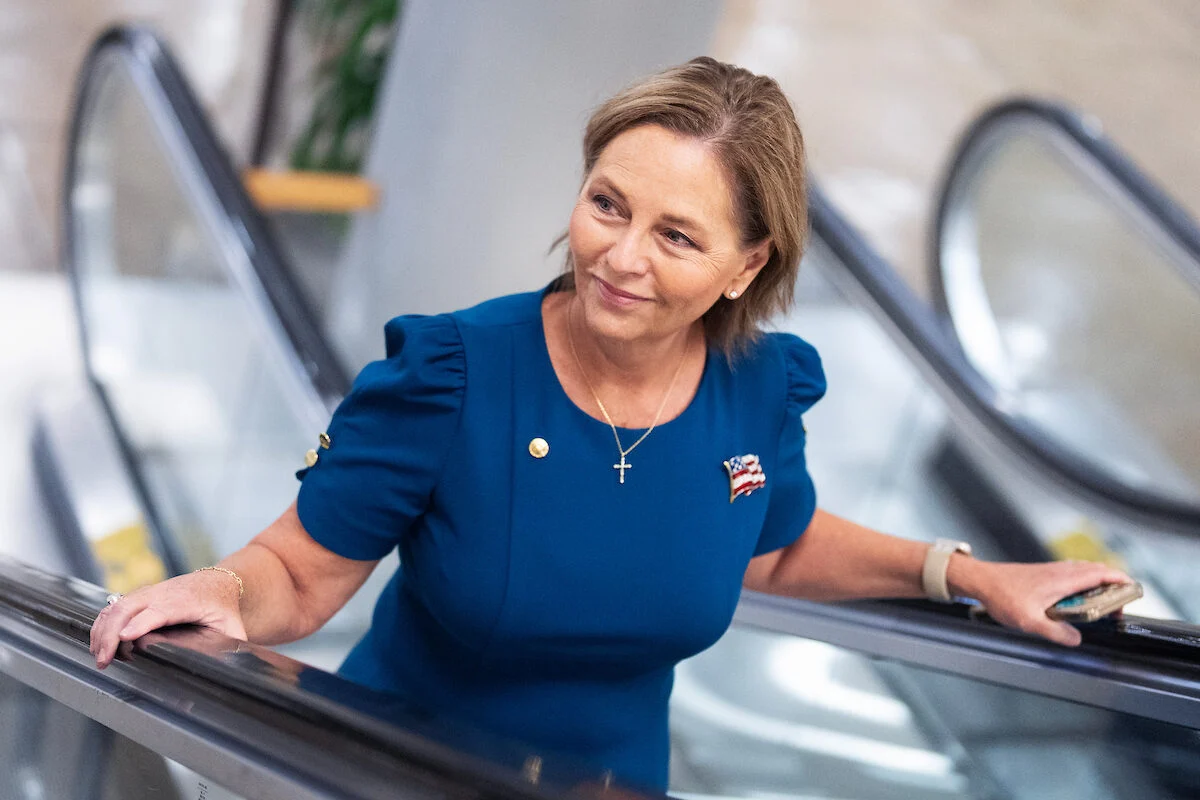
In South Carolina, Sen. Darline Graham successfully leveraged high-profile backing from President Trump to win the Republican primary runoff for the United States Senate seat previously held by her late brother, Lindsey Graham. With over 95 percent of the votes tallied, The Associated Press reported that Darline Graham held a 52 percent to 48 percent lead over her challenger, U.S. Rep. Ralph Norman. The victory guarantees that Graham will represent the GOP on the November ballot as she seeks a full six-year term.
Simultaneously, Trump achieved another key primary victory in Oklahoma’s gubernatorial runoff election. Former state Sen. Mike Mazzei, the candidate explicitly preferred by Trump, narrowly defeated Oklahoma Attorney General Gentner Drummond in a tight contest.
Tuesday’s primary night also featured notable results in Oklahoma’s Democratic Senate runoff, where primary voters selected self-described democratic socialist N’Kiyla Jasmine Thomas over moderate candidate Jim Priest.
These runoff elections carry significant weight for national and state party organizations as both political parties solidify their tickets for November, testing the strength of presidential endorsements and the direction of key legislative and executive races.
Chronology of the Race
The Tragic Catalyst and Initial Appointment
The pathway to South Carolina’s Republican Senate primary runoff began with a tragic catalyst in July, when long-serving Republican Sen. Lindsey Graham unexpectedly passed away due to an aortic tear. Following his sudden death, Darline Graham was appointed to temporarily fill the remainder of her late brother’s term.
Shortly after her initial appointment, President Trump actively encouraged Graham to launch a formal campaign for a full six-year term in the special election, prompting her entry into the competitive Republican primary field.
The Primary Campaign and Trump’s High-Stakes Intervention
The initial round of primary voting took place two weeks prior to the runoff, resulting in a crowded field being narrowed down to Darline Graham and Rep. Ralph Norman. U.S. Rep. Russell Fry finished third in that initial balloting.
Because no candidate secured an outright majority in the first round, Graham and Norman advanced to Tuesday’s head-to-head runoff. Following the initial vote, President Trump doubled down on his support for Graham to ensure her victory:
- Financial Backing: Trump opened the financial reserves of his super PAC to aid Graham’s political efforts.
- Consolidating Endorsements: Trump encouraged other prominent South Carolina Republicans to rally behind Graham, leading third-place finisher Rep. Russell Fry to officially endorse her campaign.
- The Myrtle Beach Rally: On the Friday immediately preceding the runoff, Trump traveled to South Carolina to host a major rally for Graham in Myrtle Beach. During the event, Trump made a direct appeal to voters in a state he had carried easily in three presidential elections, telling the crowd: "What I really want you to do is pretend, please, that I’m on the ballot."
Throughout the abbreviated campaign, candidates navigated distinct policy and profile challenges. During a televised debate, Graham faced scrutiny when she acknowledged being "not that informed on national security" matters—a stark departure from the reputation of her late brother, who was widely recognized as a prominent defense hawk advocating an interventionist foreign policy. In response, Graham framed her background as an asset, presenting herself as a plainspoken everywoman who led a state commission serving blind citizens, did not "speak politician," and prioritized domestic "kitchen table" issues over international relations.
On Tuesday night, with more than 95 percent of precinct votes reported, election officials confirmed Graham’s narrow victory over Norman, concluding the high-stakes primary contest.
Supporting Data and Voting Trends
South Carolina Senate Runoff Breakdown
According to data reported by The Associated Press with more than 95 percent of the votes counted:
- Darline Graham: 52%
- Rep. Ralph Norman: 48%
The result marks a major milestone for Graham in a state that has not elected a Democrat to the U.S. Senate in nearly three decades. Nonpartisan political handicapper Inside Elections with Nathan L. Gonzales currently rates the South Carolina Senate contest as Likely Republican heading into the general election.
Oklahoma Primary Margins and Trump’s Endorsement Record
In Oklahoma’s Republican gubernatorial runoff, the race was decided by a paper-thin margin:
- Mike Mazzei: Leading by just over 2,000 votes.
- Gentner Drummond: Runner-up in a race with more than 370,000 total votes cast.
- Reporting Status: More than 95 percent of votes tallied shortly before 11 p.m. Central time.
Mazzei’s victory provides a crucial win for Trump’s primary endorsement record. Heading into Tuesday, high-profile gubernatorial candidates endorsed by Trump had suffered primary defeats earlier in the year across five states:
- Georgia
- Iowa
- South Carolina
- Minnesota
- Wyoming
In Oklahoma’s Democratic Senate primary runoff, voters chose a distinct ideological direction:
- N’Kiyla Jasmine Thomas: A nurse and self-described democratic socialist, Thomas defeated her primary opponent by more than 20 percentage points.
- Jim Priest: A moderate former nonprofit executive who held high-profile endorsements from former Oklahoma Democratic Governors Brad Henry and David Walters.
Official Responses and Key Statements
Victory and Concession Speeches in South Carolina
Following the race call, Darline Graham delivered her victory speech, expressing deep gratitude to President Trump and paying emotional tribute to her late brother, who had become her legal guardian following the death of their parents.
Addressing Trump directly, Graham stated:
"Mr. President, Lindsey truly loved you and viewed you as one of his closest friends. I appreciate that bond and appreciate all that you’ve done for our country. Our victory would not have been possible without you, and we are truly grateful."
Reflecting on her brother’s legacy, she added:
"I continue to miss Lindsey every day, and there is still a big hole in my heart. But I know he’s looking down right now, very proud of everyone in this room."
Her opponent, Rep. Ralph Norman—a member of the hard-line House Freedom Caucus who entered the race following a third-place finish in the June gubernatorial primary—addressed his supporters on Tuesday night. As boos echoed through the room regarding Trump’s involvement, Norman offered a reflective assessment:
"The president got involved. He has that right. That’s his prerogative. His policies are good. I never understood why he got in this race. … But it is what it is, and I’ll accept it."
South Carolina Sen. Tim Scott, who serves as the chairman of the National Republican Senatorial Committee (NRSC), endorsed Graham’s victory, calling his new colleague "the real deal."
General Election Opponents Exchange Early Salvos
With the primary concluded, Graham immediately turned her focus to her Democratic general election opponent, pediatrician Annie Andrews. Graham labeled Andrews as:
"…the most radical liberal ever nominated for a statewide office by the South Carolina Democratic Party."
Andrews responded swiftly in a formal statement, dismissing Graham’s primary win and challenging her credentials:
"Graham is a candidate who was appointed to this seat because of her last name and elevated by Donald Trump’s endorsement and political machine."
Political Implications and November General Election Outlook
                         2026 PRIMARY RUNOFF SUMMARY
=============================================================================
STATE           OFFICE        WINNER (PARTY / BACKING)    RUNNER-UP
-----------------------------------------------------------------------------
South Carolina  U.S. Senate   Darline Graham (R - Trump)  Rep. Ralph Norman
Oklahoma        Governor      Mike Mazzei (R - Trump)     AG Gentner Drummond
Oklahoma        U.S. Senate   N'Kiyla Jasmine Thomas (D)  Jim Priest
=============================================================================
South Carolina Senate General Election
Darline Graham enters the general election campaign as the clear favorite against Democratic nominee Annie Andrews. Given South Carolina’s nearly thirty-year streak of electing Republicans to the U.S. Senate, Graham holds a strong structural advantage, reinforced by Inside Elections rating the seat as "Likely Republican." However, the general election will test whether Graham’s kitchen-table message and lineage can maintain complete unity among conservative voters following a competitive primary.
Oklahoma Gubernatorial and Senate General Elections
In Oklahoma, Republican gubernatorial nominee Mike Mazzei advances to face Democratic nominee Cyndi Munson, who currently serves as the state House Minority Leader. Mazzei’s narrow runoff victory helps steady Trump’s primary endorsement record after earlier gubernatorial primary losses in Georgia, Iowa, South Carolina, Minnesota, and Wyoming, giving state Republicans a unified ticket heading into the fall.
In the Oklahoma Senate race, Democratic nominee N’Kiyla Jasmine Thomas faces a steep uphill battle against Republican nominee Rep. Kevin Hern, who easily secured the GOP nomination in June. With Oklahoma Democrats having not won a U.S. Senate race since 1990, Thomas enters the general election as a heavy underdog against Hern.
National Broader Impact
Tuesday’s primary results provide President Trump with an important political boost at a time when his sliding poll numbers have raised concerns within the GOP regarding its ability to maintain control of both the House and the Senate in November. While Trump’s endorsement has faced challenges in several high-profile primary contests earlier this cycle, his direct political intervention, financial backing, and personal campaigning in South Carolina and Oklahoma proved decisive, reinforcing his continued sway over the Republican electorate heading into the general election.