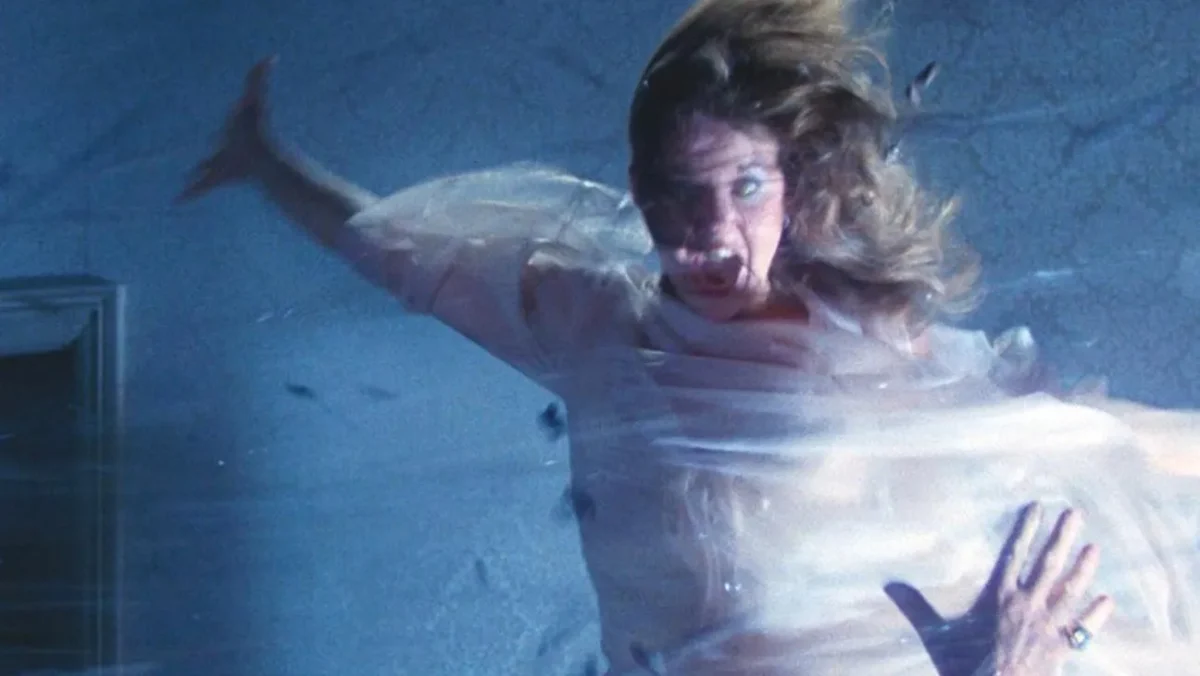
In the pantheon of cinema’s most legendary failures, few entries possess the bizarre, operatic, and enduringly baffling quality of John Boorman’s 1977 sequel, Exorcist II: The Heretic. It is a film that functions less as a narrative experience and more as a cautionary tale of unchecked creative hubris. Now, David Kittredge’s new documentary, Boorman and the Devil, offers a comprehensive, dishy, and frequently hilarious post-mortem of how one of the most anticipated sequels in history descended into such spectacular, unintentional farce.
The Genesis of a Disaster
To understand the magnitude of the Exorcist II catastrophe, one must look at the era from which it emerged. The 1970s marked the high-water mark of "New Hollywood," a period where directors were granted the kind of creative carte blanche rarely seen before or since. It was a time of ambitious, auteur-driven bombs—from the sprawling, misguided period piece 1941 by Steven Spielberg to the famously ruinous Heaven’s Gate.
John Boorman, fresh off the critical and commercial success of his 1972 survival thriller Deliverance, was the studio’s golden boy. When he was approached to helm the sequel to William Friedkin’s The Exorcist—a film that had fundamentally redefined the horror genre—he initially hesitated. Boorman famously turned down the original Exorcist because he found the source material “repulsive,” viewing it as a story about the torture of a child. When he eventually accepted the sequel, his ambition was not to deliver a scarier, bloodier iteration, but to create a metaphysical meditation on the aftermath of the original film’s trauma.
As Stanley Kubrick famously warned him, the audience did not want a meditation; they wanted more blood and gore. By ignoring this fundamental expectation, Boorman set the stage for one of the most spectacular disconnects between filmmaker and audience in cinema history.
Chronology of a Collapse
The production of Exorcist II was plagued by a litany of logistical and creative mishaps that seem, in hindsight, to be divinely ordained signs of trouble.
- 1975–1976: The script underwent constant, frantic revisions. Boorman and co-writer Rospo Pallenberg struggled to define the film’s central conceit, eventually settling on the "fruit-loop" pseudo-science of synchronized hypnosis and the theological musings of Pierre Teilhard de Chardin.
- Production Woes: The set design—specifically the recreation of Ethiopia on a Warner Bros. soundstage—was a disaster. Wind machines blew clouds of imported dirt, causing Boorman himself to contract valley fever, a fungal infection that shut down production for five weeks.
- The Budget Balloon: What was initially a $10 million project swelled to $15 million, becoming the most expensive film Warner Bros. had produced at the time.
- The Sneak Preview: The film’s first public screening in Pasadena became a parable of hubris. As the audience transitioned from confusion to open, raucous laughter, studio executives were forced to literally flee the theater after an attendee stood up and threatened the creators.
- The Summer of 1977: The film opened in 700 theaters—an unprecedented wide release. By the second weekend, attendance had plummeted by 50 percent. A frantic, last-minute recut by Boorman—lopping off the ending for an equally incoherent one—did nothing to stem the tide of ridicule.
The Failure of Vision
The primary grievance held by audiences in 1977 was simple: Exorcist II was not scary. Instead of the visceral, demonic terror of the original, viewers were treated to Richard Burton, clearly miscast and reportedly struggling with personal demons, delivering lines like "Evil… is a spiritual being" with a gravitas that tipped into absurdity.
The visual metaphors were equally baffling. The demonic entity, once a singular, horrifying presence, was now manifested by swarms of locusts. The use of the newly invented Steadicam to capture a "locust’s-eye view" resulted in disorienting, nausea-inducing cinematography. James Earl Jones, playing the African scientist Kokumo, was forced to wear a giant, foam-rubber locust head, culminating in a scene where he spits a tomato—a bizarre, inexplicable visual non-sequitur that remains a focal point of the film’s infamy.
Boorman’s insistence on "synchronized hypnosis" turned the film into a static, cerebral affair where characters sat in rooms staring at one another while wearing wiry metal headbands. It lacked the kinetic, visceral pulse of his earlier triumphs like Point Blank or Deliverance. It was the work of a director who had become entirely untethered from the practical, emotional reality of his audience, preferring to chase high-minded, metaphysical abstractions that ultimately meant nothing to the viewer.
Official Responses and the "Delusion" Factor
Perhaps the most striking aspect of Boorman and the Devil is the perspective of John Boorman himself. Now 93, the director remains remarkably unrepentant. Filmed at his country home in County Wicklow, Ireland, the documentary captures a man who still exudes a "shining belief" in the project.
Boorman continues to insist that Exorcist II contains some of his best work. He frames the film’s failure as a mistake of the audience’s expectations rather than a flaw in his execution. This unwavering, perhaps even delusional, commitment to his vision lends the documentary the quality of a Christopher Guest mockumentary. It is a portrait of an artist who, decades later, remains unable to diagnose why his "metaphysical" project failed to land.
Other industry figures, such as director Joe Dante, offer more dryly humorous insights. Dante notes with a straight face, "Many of the techniques he uses, I’ve never seen repeated again!"—a backhanded compliment that highlights the singular, if catastrophic, nature of Boorman’s experiment.
Implications: The Rise of "Disaster Rehabilitation"
In recent years, a trend has emerged among "hipster cinephiles" and critics to rehabilitate famous cinematic failures. Films like Heaven’s Gate and Eyes Wide Shut have been re-evaluated as misunderstood masterpieces. Boorman and the Devil features interviews with esteemed critics—such as Bilge Ebiri and Joseph McBride—who attempt to find a "loopy grandeur" in Exorcist II.
This trend of "Disaster Rehabilitation" suggests a postmodern shift in how we view film. It posits that movies are malleable texts, capable of being reframed by the passage of time, regardless of whether they possess basic narrative coherence or emotional logic. Critics like Pauline Kael, who famously found something to admire in the chaos of Exorcist II, helped birth this culture. Kael’s tendency to champion inferior sequels over popular hits became a hallmark of her contrarian critical style, setting a precedent for a generation of critics who now seek to "discover" depth in the most hollow of projects.
However, this revisionism often ignores the fundamental truth of the filmmaking process. As Boorman notes in the documentary, "In my experience, successful movies have one thing in common, and that’s luck." This is a deflection. While luck plays a role, successful filmmaking is, at its core, the product of artists who are grounded in reality, understand their medium, and possess the discipline to translate their vision into something that resonates with a human audience.
Conclusion: A Pile of Pazuzu
Boorman and the Devil is a fascinating, well-constructed documentary that serves two masters. It honors the sheer ambition of John Boorman, a director who was clearly swinging for the fences, even if he missed by a mile. Yet, it also serves as a necessary reality check. By contextualizing the making of Exorcist II—the illnesses, the ego, the budgetary bloat, and the total lack of narrative cohesion—the film reinforces why The Heretic remains one of the most famous misfires in history.
Ultimately, the documentary attempts to elevate Exorcist II to the status of an "insane work of artistic daring." But as one watches the film again, observing Linda Blair performing an inexplicable tap-dance or witnessing the Styrofoam-rock-filled "Ethiopian" desert, one is forced to conclude that the label "daring" is far too generous. It was a project defined by an unhinged, high-minded hubris that lost its way long before the cameras started rolling. To call it a masterpiece of failure is perhaps the only honest way to describe it, but to call it a masterpiece, as some modern critics insist, is simply a pile of Pazuzu.