The United States federal debt has officially crossed the $40 trillion threshold, a figure that was once relegated to the realm of far-off fiscal warnings but has now become a central, pressing reality for global markets. As this mountain of liabilities grows, a fundamental shift is occurring in how Washington manages its obligations. The focus has moved away from addressing the root causes of the deficit—namely, systemic overspending and stagnant tax revenues—and toward managing the symptoms through a strategy known as "financial repression."
Recent maneuvers by the U.S. Treasury Department, led by Secretary Scott Bessent, suggest that the government is increasingly relying on market interventions to keep borrowing costs manageable. However, analysts warn that these "soft-form" repression tactics, while providing short-term relief for bond yields, may be sowing the seeds for a long-term devaluation of the U.S. dollar and a fundamental restructuring of the global financial order.
Main Facts: A Strategy of Intervention
The current fiscal landscape is defined by three primary developments that signal a departure from traditional "hands-off" market dynamics:
- The $40 Trillion Debt Ceiling: The total U.S. national debt has reached a level that represents approximately 120% of the nation’s Gross Domestic Product (GDP). More alarmingly, the annual interest expense on this debt has surpassed $1 trillion, consuming a larger portion of the federal budget than the entire defense department.
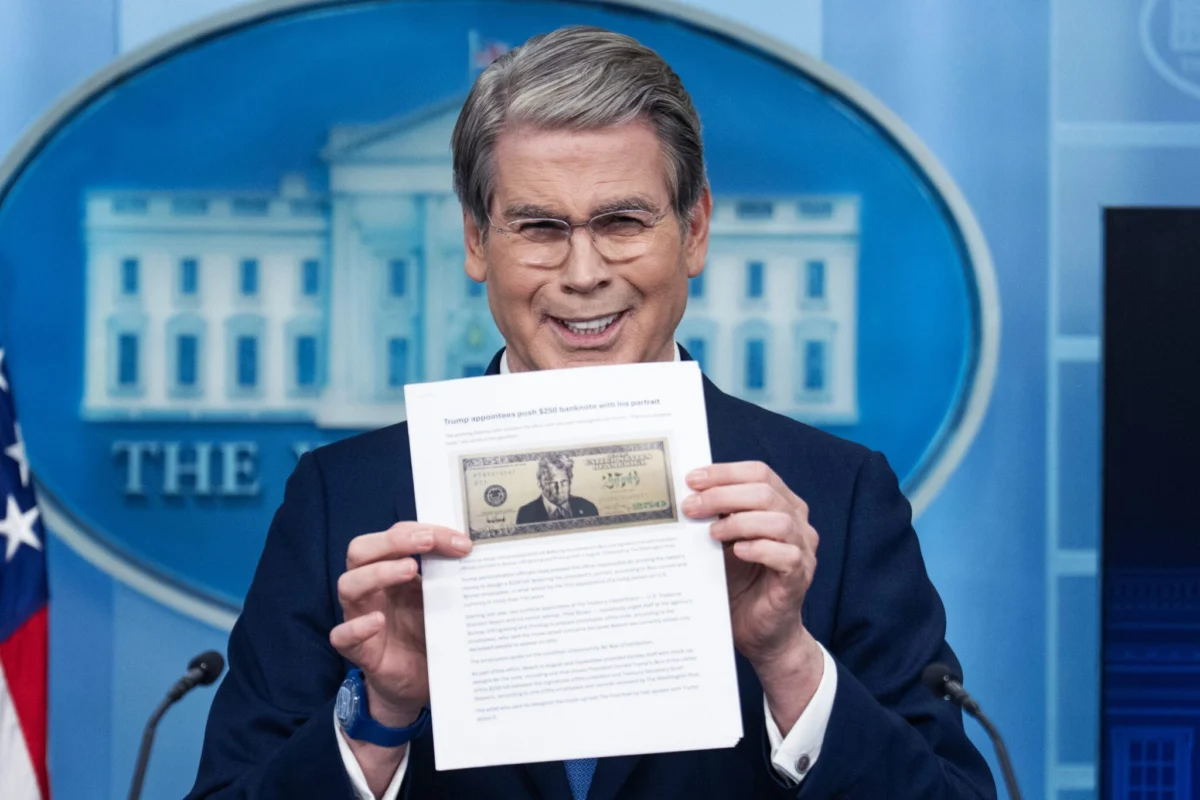
- Treasury Buybacks: Treasury Secretary Scott Bessent recently announced a significant expansion of the government’s bond buyback program. By purchasing long-term Treasury securities, the government is effectively attempting to put a ceiling on yields, which recently touched 20-year highs.
- The FIMA Facility and Currency Stabilization: In coordination with the Bank of Japan, the U.S. has utilized obscure Federal Reserve tools, such as the Foreign and International Monetary Authorities (FIMA) Repo Facility. This allows foreign central banks to obtain dollar liquidity without selling their Treasury holdings, preventing a "fire sale" of U.S. debt that would drive interest rates even higher.
Collectively, these actions represent a move toward "financial repression"—a set of policies that allow a government to channel funds to itself and keep interest rates below the rate of inflation, effectively liquidating the real value of its debt at the expense of savers and bondholders.
Chronology: The Road to Repression
The transition toward active market manipulation has accelerated over the past several months as the bond market began to rebel against the relentless supply of new U.S. debt.
Late Spring: The Yield Spike
As the federal deficit headed toward a projected $2 trillion for the fiscal year, the "bond vigilantes" returned. The yield on the 30-year Treasury bond surged, threatening to derail the broader economy by driving up mortgage rates and corporate borrowing costs. The market began to question the sustainability of a system where the U.S. must issue trillions in new debt annually just to roll over existing obligations and fund current spending.
The Summer Intervention: The Yen and the FIMA Facility
A few weeks ago, the U.S. and Japan engaged in their first joint currency intervention in three decades to support the flagging yen. Crucially, the U.S. chose to sell euros rather than dollar-denominated assets. Simultaneously, Japan, the world’s largest foreign holder of U.S. Treasuries, utilized the Fed’s FIMA facility. Instead of selling Treasuries to raise dollars (which would have spiked U.S. yields), Japan used its Treasuries as collateral to borrow dollars. This was the first major signal that the Treasury and the Fed were working behind the scenes to shield the bond market from selling pressure.
The Bessent Announcement
On Wednesday, Secretary Scott Bessent surprised Wall Street by formalizing the "buyback" strategy. By announcing that the Treasury would actively buy back long-term debt, the government signaled it would no longer let the market solely determine the price of U.S. credit. This move was widely interpreted by analysts as a form of "Yield Curve Control-lite."
The Market Pivot: The Debasement Trade
Immediately following these interventions, markets reacted not by buying the dollar, but by fleeing to "hard assets." Gold prices hit new record highs, and Bitcoin surged, as investors realized that the government’s solution to high interest rates was not fiscal discipline, but rather the printing and manipulation of money.
Supporting Data: The Arithmetic of Insolvency
The shift toward financial repression is driven by cold, hard mathematics. According to data from the Congressional Budget Office (CBO) and the Treasury Department:
- Interest Burden: The U.S. is currently spending roughly $3 billion per day on interest payments alone. This figure is expected to rise as older debt, issued at near-zero rates, matures and is refinanced at current market rates.
- Deficit Projections: Despite a period of relative economic growth, the federal budget deficit is on track to hit $2 trillion this fiscal year. This indicates a structural imbalance that cannot be "grown out of" through traditional GDP expansion.
- Historical Precedent: A recent International Monetary Fund (IMF) research paper highlighted that the conditions for financial repression—high debt-to-GDP ratios and high inflation—are at their highest levels since the post-World War II era. Between 1945 and 1980, the U.S. used these exact tactics to reduce its debt-to-GDP ratio from 116% to roughly 33%.
- The Dollar Impact: George Saravelos, head of FX research at Deutsche Bank, notes that when a government suppresses bond yields, the "pressure valve" of the economy shifts to the currency. Since the buyback announcement, the dollar index (DXY) has shown signs of structural weakness against a basket of commodities.
Official Responses: A House Divided
The response from official institutions reveals a growing tension between the Treasury’s fiscal needs and the Federal Reserve’s monetary goals.
The Treasury Department
Secretary Scott Bessent has defended the buyback program as a tool for "market liquidity" and "volatility management." The Treasury’s official stance is that these measures are technical adjustments designed to ensure the smooth functioning of the world’s most important bond market. However, critics argue this is a thin veil for price manipulation.
The Federal Reserve
The Fed’s position remains the ultimate "wild card." Fed Chairman Kevin Warsh has notably refrained from providing "forward guidance" on how the central bank will react to the Treasury’s interventions. Traditionally, if the Treasury "loosens" financial conditions by buying bonds, the Fed should "tighten" by raising rates or selling assets to combat inflation.
George Saravelos of Deutsche Bank warned: “If Chair Warsh does not recognize the buyback as a factor driving an easing of financial conditions, we would take it as an additional dollar negative driver.” If the Fed remains passive while the Treasury manipulates yields, it suggests a loss of central bank independence—a hallmark of high-debt regimes.
International Monetary Fund (IMF)
The IMF has been increasingly vocal about the return of "The Age of Repression." Their recent findings suggest that in an era of "wars and calamities," governments will inevitably prioritize debt servicing over currency stability. The IMF suggests that investors should prepare for a decade where real interest rates (nominal rates minus inflation) remain negative.
Implications: The "Debasement Trade" and the Global Outlook
The move toward financial repression has profound implications for investors, consumers, and the global geopolitical landscape.
1. The Erosion of the Dollar’s Purchasing Power
If the U.S. Treasury continues to suppress yields, the dollar must bear the brunt of the adjustment. When interest rates are kept artificially low in a high-inflation environment, the currency loses value. This is the "debasement trade." Investors are increasingly moving capital into assets that cannot be printed—gold, silver, real estate, and Bitcoin—as a hedge against a declining greenback.
2. The End of the "Safe Haven" Treasury?
For decades, U.S. Treasuries were considered the "risk-free asset." However, if the market perceives that prices are being distorted by government intervention rather than reflecting true economic reality, the "risk-free" status may be questioned. If foreign creditors, such as China or the Gulf States, decide that the "repo" facilities and buybacks are merely masks for insolvency, they may accelerate their diversification away from U.S. debt.
3. Inflation as a Policy Tool
In a regime of financial repression, inflation is not an accident; it is a necessity. By keeping inflation at 4% or 5% while holding bond yields at 3%, the government effectively "taxes" bondholders to pay down its debt. For the average American, this means a persistent increase in the cost of living and a steady erosion of savings held in cash or traditional fixed-income products.
4. The Potential for a "Devaluation Spiral"
The most significant risk is what economists call a "devaluation spiral." If the dollar weakens too much, it drives up the cost of imports, which further fuels inflation. This forced inflation requires even more yield suppression to keep debt costs down, which in turn further weakens the dollar. Breaking this cycle usually requires painful fiscal austerity—something that currently appears politically impossible in Washington.
Conclusion
The crossing of the $40 trillion debt mark is more than just a symbolic milestone; it is the catalyst for a new and more interventionist era of American economic policy. By opting for the "soft-form financial repression" of buybacks and repo facilities, policymakers have chosen to treat the symptoms of the nation’s fiscal malaise while allowing the underlying disease—excessive debt—to fester.
As the Treasury and the Federal Reserve navigate this precarious path, the "debasement trade" is no longer a fringe investment thesis but a mainstream strategy for institutional investors. The coming years will likely be defined by a tug-of-war between the government’s need to fund itself and the market’s demand for sound money. In this environment, the only certainty is that the era of "stable" markets and "hands-off" policy has come to a definitive end.