Main Facts of the Incident
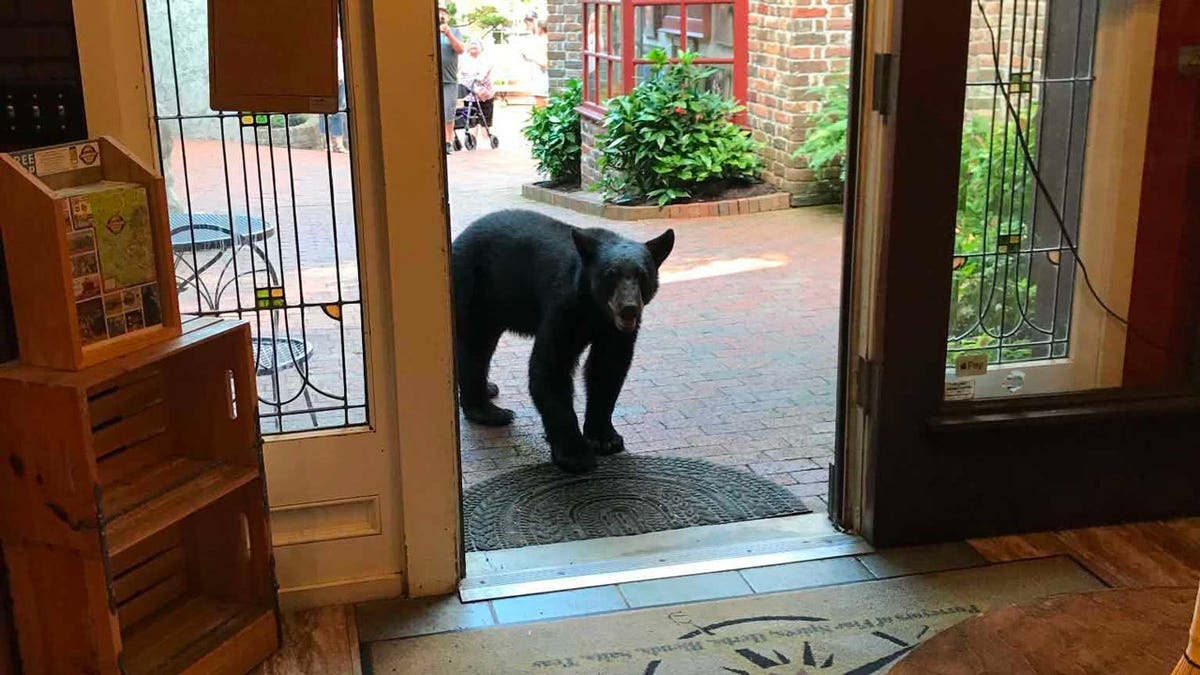
What was meant to be a tranquil weekend getaway to celebrate seven years of marriage turned into an astonishing, close-range encounter with wildlife for an American couple in Gatlinburg, Tennessee. On Friday, Victoria Puyol and Joshua Card were visiting The Spice & Tea Exchange, a popular boutique shop in the heart of the tourist district, when a young black bear (Ursus americanus) casually strolled through the front entrance.
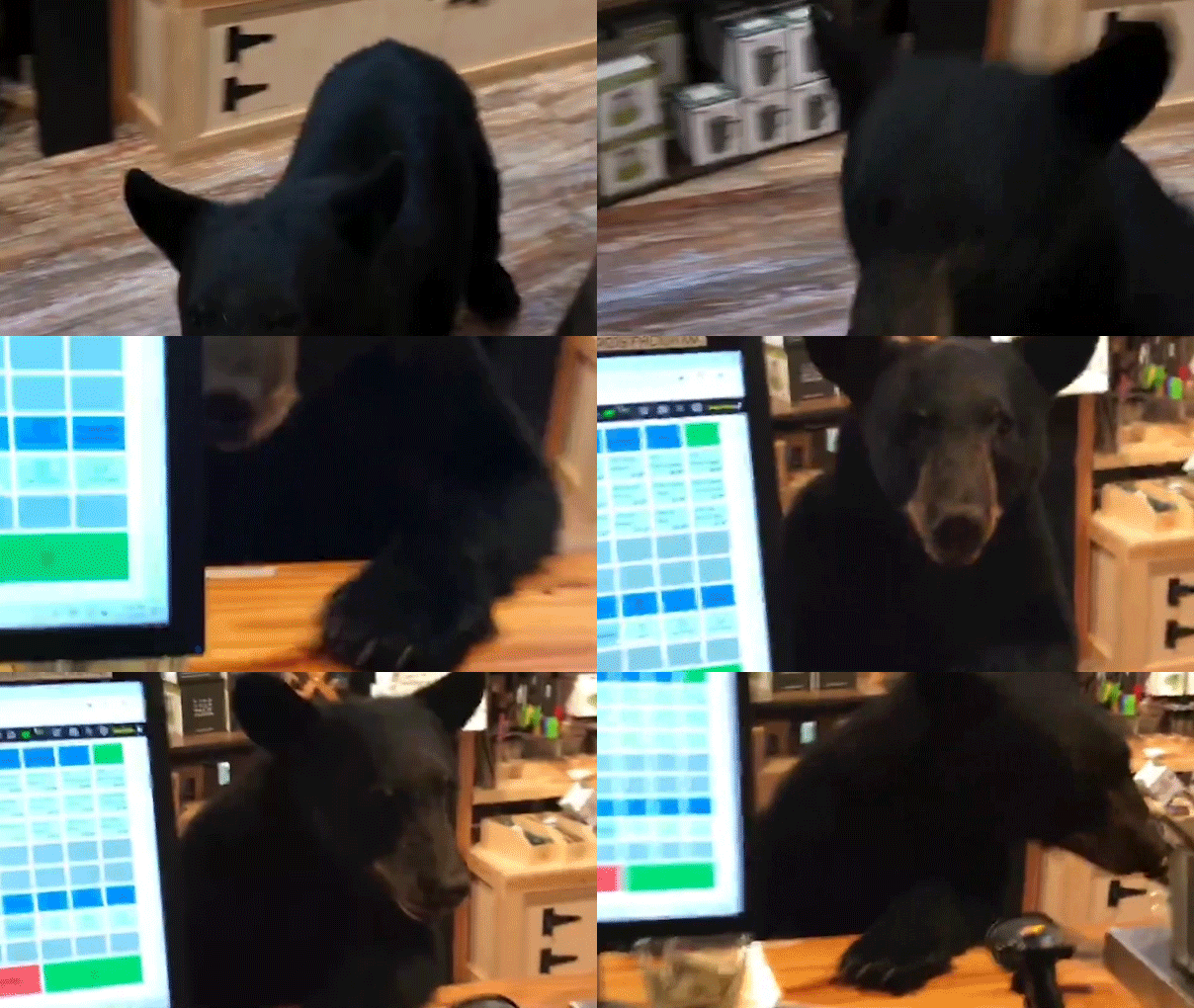
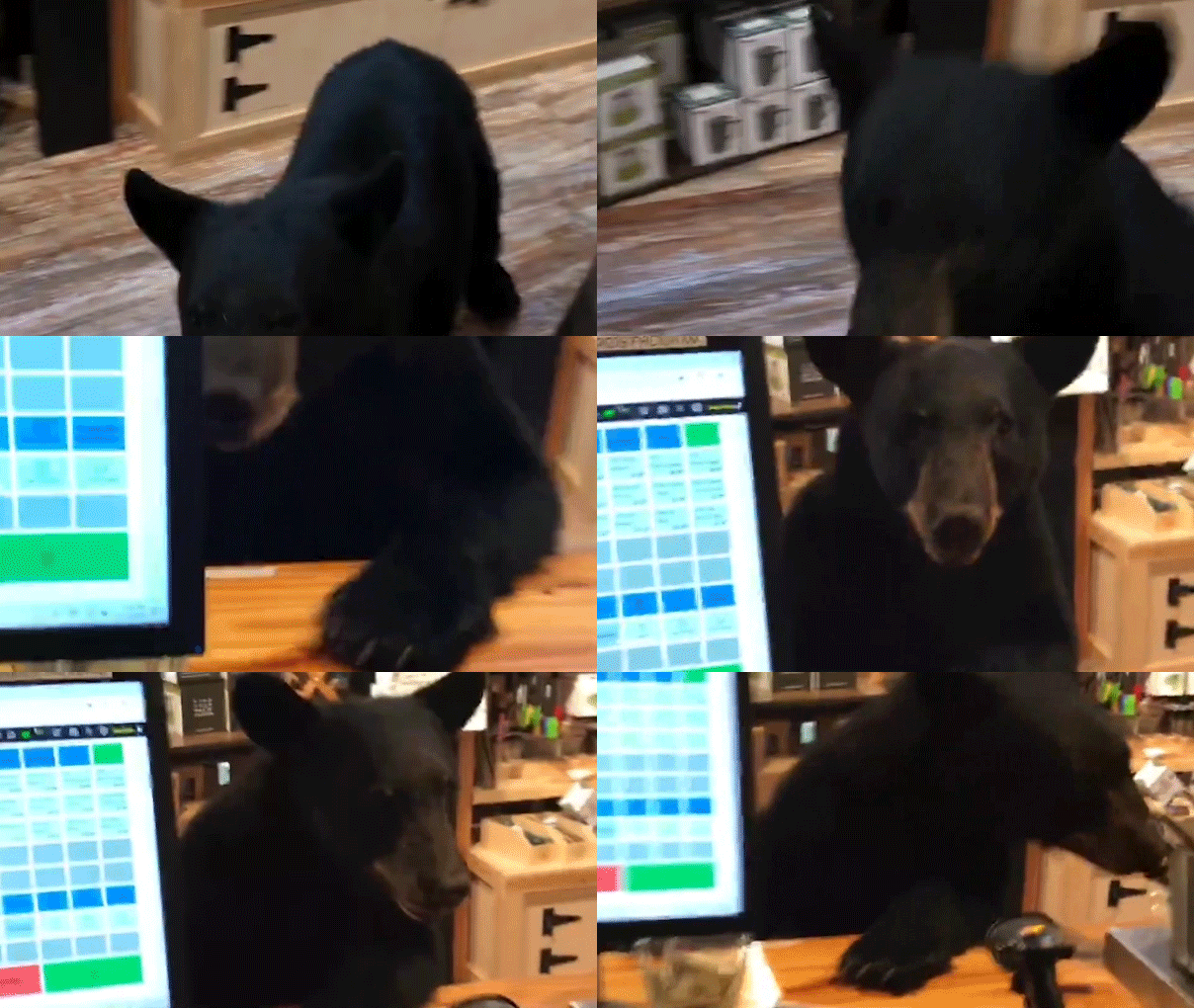
The incident, which was captured in detail on video, saw the wild animal navigate the narrow aisles of the retail store, rummage through aromatic merchandise, tear into a sweet-tea blend, and eventually leap onto the main service counter. Despite the presence of store employees, customers, and a gathering crowd of onlookers outside, the bear showed little fear of humans—a behavioral trait that wildlife experts warn is becoming increasingly common in high-density tourist areas adjacent to national parks.
Card, a military veteran and former lifeguard, recorded the encounter while attempting to maintain his composure and de-escalate the situation. Puyol, who had ironically expressed a desire to see a black bear during their trip, watched from a distance of just eight feet. The encounter lasted approximately 10 to 15 minutes before the bear voluntarily exited the premises, leaving behind a ruined bag of tea, a shocked retail staff, and a stark reminder of the challenges posed by habituated wildlife in urban-wildland interfaces.
Chronology of the Encounter
The sequence of events unfolded rapidly on Friday afternoon in Gatlinburg, a bustling mountain resort town that serves as a major gateway to the Great Smoky Mountains National Park.
[Arrival at Shop] ➔ [Bear Spotted at Door] ➔ [Retreat to Register] ➔ [Bear Rummages Tea] ➔ [Air Horn Blown] ➔ [Bear Jumps on Counter] ➔ [Bear Exits Safely]The Initial Sighting
Puyol and Card were browsing the shelves of The Spice & Tea Exchange, enjoying the aromatic displays of spices, loose-leaf teas, and culinary gifts. As they stood near the center of the shop, Card’s attention was drawn to the open front door.
- The Discovery: Card spotted a black bear standing directly in the doorway. "There’s a bear," he told his wife.
- The Realization: Puyol initially did not register the warning, assuming it was either a joke or a misunderstanding. However, when both Card and the store clerk repeated the statement with urgency, she turned to see the young black bear cross the threshold and step fully into the retail space.
Taking Cover
Adhering to general safety recommendations, the couple and the store clerk immediately sought to distance themselves from the animal.
- Seeking Safety: As the bear ventured deeper into the store, the clerk directed Puyol and Card behind the checkout counter. This area offered a degree of physical separation and, crucially, immediate access to an emergency exit.
- The Intruder’s Curiosity: The bear did not exhibit aggressive posture; instead, it appeared highly motivated by olfactory stimuli. It began investigating the lower shelves, tearing open a package of a proprietary sweet-tea blend and nudging tea diffusers.
Attempts at Deterrence
As the bear explored the shop, a crowd of tourists began to gather on the sidewalk outside, peering through the glass windows and filming the event on their mobile phones.
- The Air Horn: Recognizing the danger, an employee from a neighboring business attempted to scare the bear away by sounding a loud air horn from the sidewalk.
- Lack of Effect: The high-decibel blast, which would typically send a wild bear fleeing into the woods, had virtually no effect on the intruder. The bear merely paused, looked toward the noise, and continued its exploration of the shop’s inventory.
The Counter Jump and Resolution
With the bear now inches from the checkout area, Card began filming the encounter. In the video, Card can be heard speaking to the bear in a calm, steady tone: "Hey, what you doing there, buddy?"
- The Leap: Moments later, the bear hoisted its front paws onto the wooden counter and leaped completely onto it, placing itself at eye level with Card and Puyol.
- The Retreat: Card took a calculated step backward, maintaining eye contact but giving the animal space. Puyol, observing her husband’s calm demeanor, later remarked, "He’s talking to this thing like it’s a puppy. It’s a bear. It’s not a puppy."
- The Escape: The clerk began discussing an alternative evacuation route via a second-floor exit. However, before the group needed to retreat upstairs, the bear suddenly turned, hopped down from the counter, and bolted out the front door into the bustling streets of Gatlinburg. Card and the clerk quickly closed and locked the main door to prevent a re-entry.
Supporting Data: Black Bear Behavior and the Gatlinburg Interface
To understand why a wild black bear would enter a retail store in broad daylight, it is necessary to examine the local ecology and the phenomenon of wildlife habituation.
+-----------------------------------------------------------------------------+
|                      THE HABITUATED BEAR TRAJECTORY                         |
|                                                                             |
|  [Natural Foraging] -> [Human Food Sources] -> [Loss of Fear (Habituation)] |
|                                                                             |
|                                     |                                       |
|                                     v                                       |
|                                                                             |
|  [Euthanasia/Relocation] <- [Property Damage/Conflict] <- [Bolder Behavior] |
+-----------------------------------------------------------------------------+
The Density of the Smoky Mountain Bear Population
The Great Smoky Mountains National Park (GSMNP), which borders Gatlinburg, is home to one of the most concentrated populations of American black bears in the Eastern United States.
- Population Estimates: Wildlife biologists estimate that approximately 1,900 black bears reside within the park’s boundaries.
- Density: This equates to an average density of approximately two bears per square mile.
- Territorial Expansion: As the bear population thrives and younger bears seek out their own territories, they frequently cross the park’s boundaries into surrounding municipalities like Gatlinburg, Pigeon Forge, and Townsend.
The Science of Food Conditioning
Black bears possess an extraordinary sense of smell—estimated to be roughly seven times stronger than that of a bloodhound. This acute sense allows them to detect food odors from miles away.
| Attribute | Black Bear Sense of Smell | Human Sense of Smell |
|---|---|---|
| Olfactory Bulb Size | Highly developed, large relative to brain size | Small relative to brain size |
| Sensitivity | Can detect food scents from miles away | Limited to immediate vicinity |
| Scent Receptors | Approx. 100 times more than a human | Approx. 5 million receptors |
When wild bears successfully access human food, garbage, or aromatic commercial products (such as sweet teas and sugars), they undergo a psychological process known as food conditioning.
- Positive Reinforcement: The bear associates humans, buildings, and urban environments with high-calorie rewards.
- Loss of Flee Response: Over time, the animal loses its natural fear of humans, a state known as habituation.
- Escalating Boldness: A habituated, food-conditioned bear will bypass natural foraging opportunities in favor of searching vehicles, cabins, dumpsters, and—as seen in this incident—occupied retail spaces.
Official Responses and Safety Guidelines
Following the incident, details emerged suggesting that this specific bear was already familiar with The Spice & Tea Exchange.
Store Management and Social Media Evidence
According to store employees, the young bear was suspected to be a repeat visitor. Earlier in the week, the shop’s social media account posted a photograph of a young black bear inside the store with the caption: "This young bear came into our shop today, snagged some sugar and came back for more!"
This prior success likely explains why the bear returned on Friday and why it was entirely undeterred by the presence of customers or the sound of an air horn. Having previously secured a high-calorie reward (sugar), the bear’s behavior was goal-oriented and persistent.
Wildlife Agency Protocols
The Tennessee Wildlife Resources Agency (TWRA) and the National Park Service (NPS) have long warned the public about the dangers of habituating wild animals. While the video of the bear jumping onto the counter may appear amusing or novel to some, wildlife officials view such behavior with gravity.
- The "BearWise" Program: The TWRA actively promotes the "BearWise" program, a national initiative designed to help people live responsibly with black bears. The program emphasizes six core principles:
- Never feed or approach bears.
- Secure food, garbage, and recycling.
- Remove bird feeders when bears are active.
- Never leave pet food outdoors.
- Clean and store outdoor grills.
- Alert neighbors to active bear activity.
- The Fate of Habituated Bears: Wildlife managers often reiterate the adage, "A fed bear is a dead bear." Once a bear becomes bold enough to enter occupied structures, it is classified as a "nuisance animal" and a potential threat to public safety. In many cases, relocation is unsuccessful because the bear’s homing instinct brings it back, or it simply repeats the behavior in a new community. Consequently, euthanasia is frequently the only remaining option for highly habituated bears.
Implications for Urban-Wildlife Management and Tourism
The incident at The Spice & Tea Exchange serves as a case study for the ongoing challenges faced by tourist towns nestled in ecologically sensitive areas.
The Economic and Safety Dilemma
For communities like Gatlinburg, black bears are both a major marketing tool and a significant liability.

- The Tourism Appeal: Thousands of tourists visit the region every year hoping to catch a glimpse of a black bear. Shops, hotels, and local attractions heavily feature bear imagery.
- The Public Safety Risk: The proximity of wild predators to dense crowds of tourists—many of whom are unfamiliar with wildlife safety—creates a high-risk environment. If a tourist attempts to feed, pet, or corner a habituated bear, the animal may react defensively, leading to severe injury or death.
The Need for Stricter Local Ordinances
To mitigate these encounters, cities bordering national parks have increasingly turned to legislative solutions. This includes mandating the use of bear-resistant trash receptacles, imposing heavy fines for feeding wildlife, and requiring businesses to keep doors closed during peak bear activity seasons.
For retail establishments in downtown Gatlinburg, simple measures such as keeping front doors closed and utilizing air conditioning rather than propping doors open can prevent curious animals from wandering inside. Additionally, securing highly aromatic products near entrances can reduce the olfactory triggers that draw bears into human-dominated spaces.
A Memorable Anniversary
For Victoria Puyol and Joshua Card, the encounter ended without injury, leaving them with an unforgettable story to mark their seventh anniversary.
Reflecting on the experience, Card noted that his background in managing emergency situations helped him remain calm, though he recognized the inherent unpredictability of the situation. "This didn’t really feel like an emergency," Card said. "It felt unpredictable to me."
Puyol, meanwhile, offered a humorous warning to future travelers to the Great Smoky Mountains: "Be careful what you wish for because I wanted to see a bear, not that up close and personal."