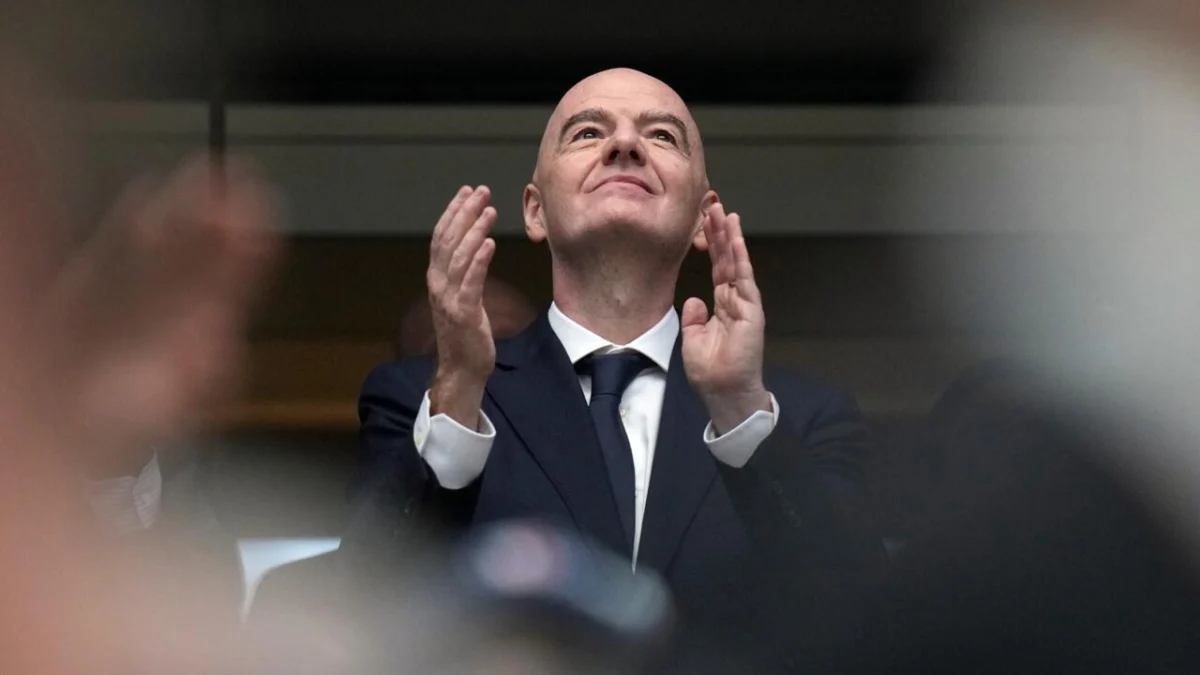
The global governing body of football, FIFA, is currently engulfed in a firestorm that threatens the very foundation of its leadership. Gianni Infantino, now in his 11th year at the helm of the organization, finds his authority increasingly contested following a botched, secretive attempt to privatize the federation’s future profits. In a move that highlights the widening rift between the president and his inner circle, Infantino deliberately defied a formal request from one of his own vice presidents to avoid a public appearance in the Dominican Republic, choosing instead to project an image of normalcy amidst a backdrop of internal mutiny.
The Punta Cana Standoff: A Study in Defiance
On Saturday, the tension within FIFA’s executive ranks reached a new, public intensity. Despite an urgent, written plea from Victor Montagliani—the Canadian president of the Miami-based confederation CONCACAF and a FIFA vice president—to stay away from a Caribbean Football Union (CFU) youth tournament in Punta Cana, Infantino arrived at the event.
The optics were stark. While Infantino used his Instagram account to broadcast images of himself meeting with local political and sporting dignitaries, the reality behind the scenes was one of diplomatic isolation. Montagliani’s letter, obtained by the Associated Press, was blunt: "I believe that considering the governance crisis surrounding FIFA as a result of your controversial FIFA Forward Enterprise proposal, the media will focus on this situation, which will unfortunately significantly take away from the technical nature of the CFU youth competition."
Montagliani went further, adding, "As such, I respectfully ask you in the name of football to reconsider your attendance as it will unfortunately undermine the technical nature of this important youth development activity." By ignoring this request, Infantino signaled that he intends to remain a visible, active force, regardless of the mounting calls for his resignation or the growing coalition of powerful officials working to unseat him.
Chronology of a Failed Power Play
The current crisis stems from a clandestine initiative known as the "FIFA Forward Enterprise" (FFE). The project, which aimed to spin off FIFA’s multi-billion-dollar commercial operations into a subsidiary partially owned by private investors—including a group led by Joshua Kushner—was revealed to the public on July 28 by The Times.
- July 28, 2026: The details of the $20 billion FFE proposal are leaked, sending shockwaves through the footballing world. The plan, which sought to secure immediate liquidity by mortgaging future World Cup earnings, is met with immediate, global backlash from fans, associations, and internal stakeholders.
- Early August 2026: Kevin Lamour, FIFA’s chief operating officer, issues a scathing public critique of the proposal, characterizing it as a betrayal of FIFA’s mission and a symptom of a toxic leadership style.
- August 1, 2026: Under the weight of intense scrutiny and mounting pressure from senior leadership, Infantino formally withdraws the project.
- Mid-August 2026: The internal fallout continues. Kevin Lamour is fired from his position at the Zurich headquarters, and the coalition against Infantino solidifies.
- August 14, 2026: FIFA vice presidents Aleksander Ceferin (UEFA) and Sheik Salman bin Ebrahim Al Khalifa (Asian Football Confederation) join Montagliani in an effort to curb Infantino’s influence.
- August 21-22, 2026: The standoff in the Dominican Republic occurs, marking the first time Infantino has appeared in a public, non-scripted setting since the FFE scandal broke.
The Mechanics of the "Deception"
The core of the rebellion against Infantino is the accusation of "deception." His critics argue that the FIFA president attempted to bypass the democratic processes of the FIFA Council to unilaterally hand over a significant percentage of the organization’s revenue-generating power to outside interests.
The proposal would have effectively placed a 20% stake in FIFA’s commercial arm into the hands of private equity, a move that many governing officials saw as an existential threat to the organization’s non-profit mandate. By keeping the negotiations secret for over a year, Infantino alienated his most crucial allies. The revelation that the president had been negotiating the future of the sport’s most profitable assets behind closed doors has shattered the trust required for his long-term governance.
Official Responses and Tactical Silence
FIFA’s official communication strategy in the wake of the FFE collapse has been characterized by a combination of calculated silence and defensive posturing. When pressed by journalists regarding the internal opposition, the governing body has repeatedly declined to address the specifics of the Montagliani letter or the broader concerns regarding leadership integrity.
Instead, FIFA has pivoted toward its financial contributions to member associations, noting that it provides up to $5 million per four-year cycle to regional bodies like the CFU. This is widely interpreted as a reminder to smaller federations of the financial leverage the central administration holds over them—a subtle warning to those who might be considering joining the "rebel" coalition.
When confronted in Punta Cana by Sky News reporter James Matthews, who asked if he had betrayed the sport and whether he intended to resign, Infantino opted for deflection. His response—a brief quip about their shared lack of hair—served as a stark reminder of his penchant for personal charm as a defense mechanism against systemic political failure.
Implications: The Road to the 2027 Congress
The political map of world football is currently being redrawn. The coalition led by Ceferin, Al Khalifa, and Montagliani represents the most significant threat to Infantino’s tenure since he ascended to the presidency. However, the battlefield is not uniform.
Caribbean federations remain a critical swing vote. While they have traditionally aligned with CONCACAF, the promise of FIFA funding and direct access to the president makes them a primary target for Infantino’s survival strategy. Conversely, South American governing body CONMEBOL has offered a degree of support to the incumbent, viewing him as a necessary instrument to ensure that the 2030 World Cup—which they hope to expand to 64 teams—remains a viable project.
The immediate deadline on the horizon is November 18, the cutoff for candidates to declare their intention to run for the FIFA presidency. Infantino has made it clear he intends to seek a fourth and final term at the upcoming congress in Rabat, Morocco, next March.
Conclusion: A Legacy in Question
Gianni Infantino’s presidency, once marked by rapid expansion and the promise of a "new FIFA," is now defined by a struggle for survival. His defiance in Punta Cana is emblematic of his broader strategy: to project an image of authority, leverage the financial dependence of smaller nations, and outlast his detractors through procedural maneuvering.
However, the cost of this survival is high. The "deception" regarding the FFE project has left a permanent scar on his reputation. Even if he succeeds in securing another term in Rabat, he will lead a fractured organization, one where the trust of the European, Asian, and North American power blocs has been effectively exhausted.
As the world looks toward the November 18 deadline, the question is no longer just whether Infantino can win an election, but whether he can lead a federation that no longer views him as a steward of the game, but as a political liability. The coming months will determine whether the FIFA of 2027 will be a continuation of the Infantino era or the beginning of a long-overdue period of reform and reconciliation.