The ongoing conflict in Ukraine has reached a harrowing new level of brutality, marked by a series of lethal aerial assaults that have left civilians in both Ukraine and Russia bearing the brunt of a widening war. On Friday, the central Ukrainian city of Kryvyi Rih—the birthplace of President Volodymyr Zelensky—became the site of a devastating "double-tap" drone strike on a shopping center, resulting in at least 14 deaths and over 120 injuries. The attack, which targeted civilians in broad daylight, serves as a grim indicator of the increasingly cynical nature of the aerial campaign as the war approaches its four-and-a-half-year mark.
The Tragedy in Kryvyi Rih: A Calculated Strike
The assault on Kryvyi Rih unfolded with chilling precision. According to regional governor Oleksandr Hanzha, the first Russian drone struck the shopping center, drawing emergency responders to the scene. Thirty minutes later, a second drone hit the same location—a tactic known as a "double-tap" strike, designed specifically to maximize casualties among first responders, medics, and civilians assisting the wounded.
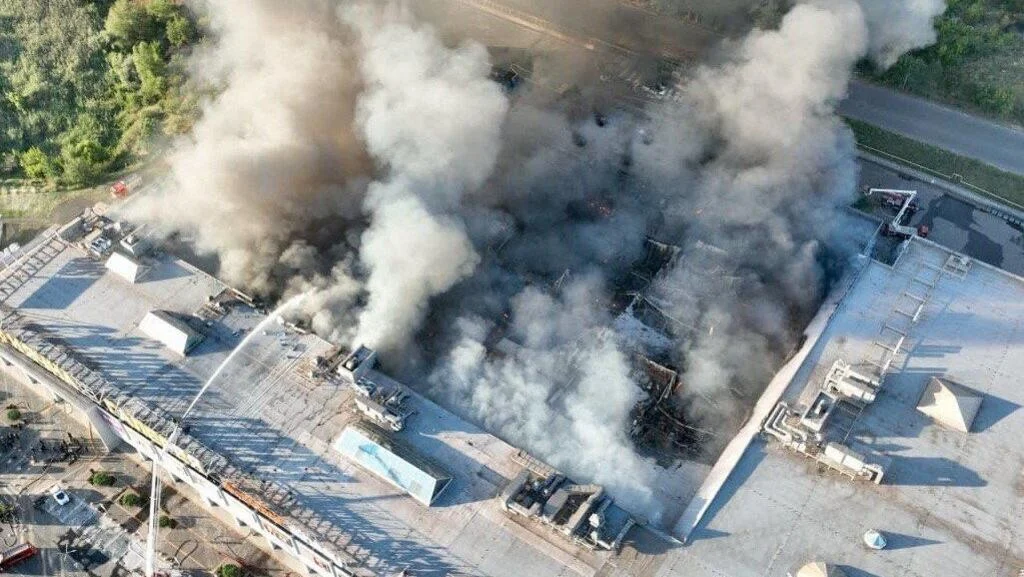
The human toll of this specific attack is staggering. Among the 120 wounded, 22 are children. Governor Hanzha reported that 29 people remain in serious condition, five of whom are minors. Images circulated by officials following the attack showed thick, black plumes of smoke billowing from a shattered industrial-style building, a visual testament to the intensity of the explosions.
President Zelensky, reacting to the news, condemned the attack as "absolutely cynical and despicable." In a statement issued via Telegram, he did not mince words, labeling the strike a "terrorist act" and calling for the international community to hold the Kremlin accountable for the deliberate targeting of non-combatants and emergency personnel.
A Chronology of Escalation
The strike in Kryvyi Rih does not exist in a vacuum; it is the latest in a relentless barrage of attacks that have defined the summer of 2026.
- August 20, 2026: A massive Russian ballistic missile attack on the capital, Kyiv, resulted in the deaths of 17 people, further destabilizing the central region.
- August 21, 2026: Reports emerged of Ukraine launching an unprecedented wave of over 600 drones aimed at the Moscow region, signaling a shift in Kyiv’s strategic posture toward deeper, more frequent strikes on Russian soil.
- August 22, 2026 (Friday): The double-tap drone attack occurs in Kryvyi Rih. Simultaneously, a Ukrainian drone strike hits a car in Russia’s Belgorod region, killing one and wounding four.
- August 22, 2026 (Continued): Ukrainian long-range strikes reach deep into Russian territory, including an oil refinery in Perm—over 1,600 kilometers from the Ukrainian border—and the Marinovka military airfield in the Volgograd region.
This rapid-fire sequence of events illustrates a shift toward a total war of attrition, where infrastructure and morale are treated as primary targets, regardless of the civilian presence.
Expanding the Theater: Ukraine’s Long-Range Response
As Russia continues to hammer Ukrainian urban centers, Kyiv has significantly scaled up its own retaliatory capabilities. Historically, Ukraine focused on defensive operations, but recent months have seen a pivot toward "asymmetric warfare." By utilizing long-range, indigenous, and Western-supplied drone technology, Ukraine is now systematically targeting the pillars of the Russian war machine: oil refineries, logistics hubs, and military airfields.
The strike on the Lukoil-operated refinery in Perm is particularly significant. At a distance of 1,600 kilometers, it demonstrates that there is virtually no location in European Russia that is beyond the reach of Ukrainian ingenuity. While Russian local officials downplayed the damage, describing it only as an impact on an "industrial facility," the fires reported by independent outlets like Astra suggest that these strikes are successfully disrupting the flow of refined fuel needed for the Russian military’s logistics.

Similarly, the attack on the Marinovka airfield highlights an effort to degrade the Russian Air Force’s ability to conduct sorties. By targeting the airfields from which these planes launch, Ukraine is attempting to create a "denial zone" for Russian aviation, though the success of these operations is currently being weighed against the heavy toll of Russia’s retaliatory strikes.
Official Responses and Global Implications
The international community has watched with mounting concern as the conflict moves away from traditional frontline fighting in the Donbas and toward a nation-wide aerial duel.
The Kremlin’s Stance
Russia continues to frame its strikes as "high-precision" operations against military infrastructure. However, the recurring pattern of hitting shopping centers, residential buildings, and civilian-heavy areas has led to widespread condemnation from international human rights organizations. Moscow’s narrative maintains that its escalation is a necessary response to "provocations" and the increasing sophistication of Ukrainian strikes on Russian border regions, such as Belgorod.
Kyiv’s Strategic Shift
For President Zelensky, the strategy is clear: if Russia refuses to stop targeting Ukrainian civilians, Ukraine must ensure that the Russian public feels the economic and logistical pain of the war. By bringing the conflict to the doorstep of Russian industry, Kyiv is betting that the cumulative damage to Russia’s energy sector will eventually force a reassessment of the war’s cost in Moscow. However, this strategy carries significant risks, as it invites even more intense retaliatory strikes on Ukrainian population centers.
The Human Cost: A Society Under Siege
Behind the dry statistics of drone counts and missile yields lies a humanitarian catastrophe. In Kryvyi Rih, the wounding of 22 children is not merely a military statistic; it is a profound societal trauma that will haunt the region for generations.
The psychological toll on the Ukrainian population is being pushed to the breaking point. With the war entering its 54th month, the constant threat of "double-tap" strikes—which specifically target those who are trying to help—has created an atmosphere of pervasive fear. Medics, firefighters, and first responders are now among the most targeted demographics, a development that complicates the ability of the state to provide even the most basic emergency services.
Implications for the Future of the Conflict
As the conflict stretches toward the five-year mark, several critical implications emerge:
- The Normalization of Long-Range Strikes: We have moved past the era where long-range strikes were "exceptional" events. Both sides now possess the capability to strike deep into the other’s territory, ensuring that the "home front" is effectively a front line.
- The Erosion of Rules of Engagement: The use of double-tap strikes suggests a total disregard for the Geneva Conventions. As these tactics become standard, the possibility of a negotiated ceasefire or a return to diplomatic norms becomes increasingly remote.
- Economic Attrition: The targeting of oil refineries like the one in Perm suggests that the war is becoming an economic endurance test. The side that can maintain its energy infrastructure while dismantling the other’s will likely hold the ultimate advantage in sustaining a long-term war effort.
- The Need for Air Defense: The sheer volume of drone traffic—evidenced by the 600 drones launched in a single wave by Ukraine—underscores the desperate need for advanced, multi-layered air defense systems. The current reality is that neither side’s air defenses are fully capable of mitigating the scale of these attacks, leaving civilians in a state of permanent vulnerability.
Conclusion
The tragic events in Kryvyi Rih are a sobering reminder that the war in Ukraine is not de-escalating; it is evolving into a more dangerous and indiscriminate phase. As both nations double down on their aerial strategies, the distinction between military and civilian targets continues to dissolve. With no clear path to a diplomatic breakthrough, the coming months promise more of the same: a relentless cycle of destruction, where the resilience of the civilian population remains the only thing standing between the status quo and total societal collapse. The international community, urged by Zelensky, faces an increasingly difficult challenge: how to hold aggressors accountable in a conflict where the traditional rules of engagement have been rendered all but obsolete.