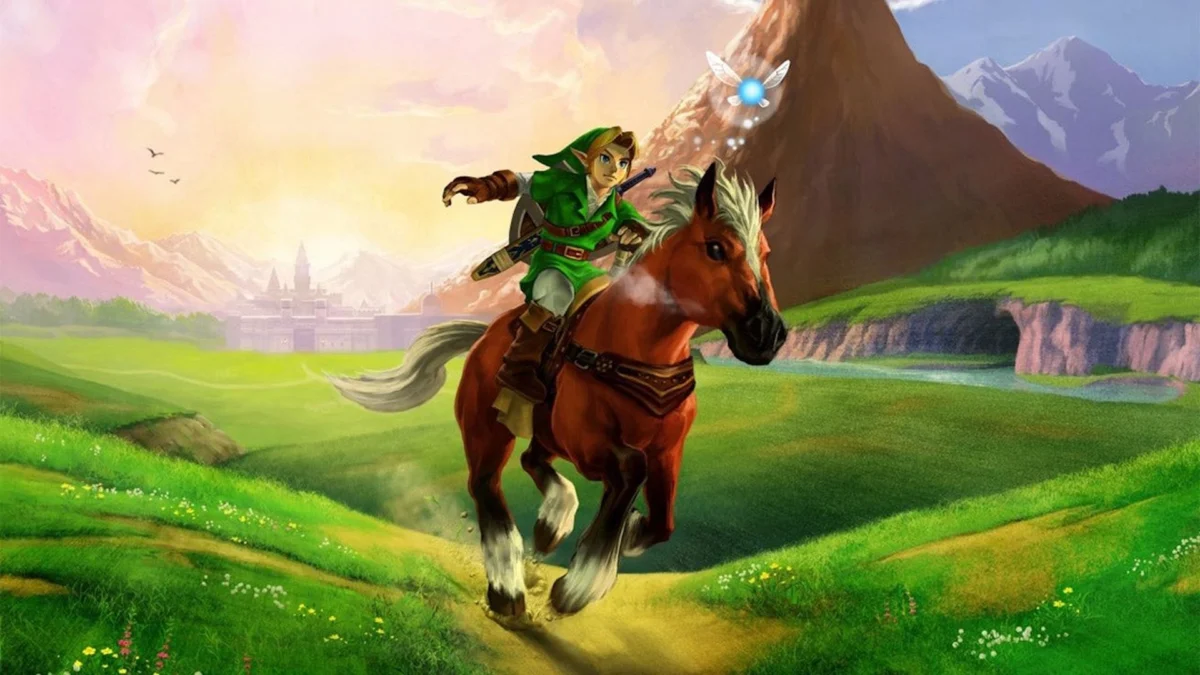
In the world of retro gaming, few titles hold the legendary status of The Legend of Zelda: Ocarina of Time. Originally released for the Nintendo 64 in 1998, the game was a technical marvel that pushed the boundaries of what home consoles could achieve. However, due to the constraints of the era’s hardware, developers relied heavily on "camera tricks"—specifically, pre-rendered 2D backgrounds—to create the illusion of vast, complex environments.
Today, decades after its release, a modder named Reonu is attempting to peel back the curtain on those illusions. Through an ambitious project titled OoT unJPEG, the modder is laboriously replacing every pre-rendered 2D background in the game with fully realized, real-time 3D environments. Perhaps most impressively, the project is being optimized to run on original Nintendo 64 hardware, a feat that requires both technical genius and a deep understanding of the console’s legacy architecture.
The Core Concept: Unmasking the Matte Paintings
To understand the scale of OoT unJPEG, one must first understand the limitations of the late 90s. When Nintendo developers were crafting Hyrule, they were working with extremely limited RAM and processing power. To make the world feel "full" without crashing the console, they used static 2D images—essentially digital matte paintings—as backgrounds for various locations.
When a player walked through the Market or navigated certain dungeons, the game was not rendering a full 3D space; it was projecting a flat, high-quality image behind the 3D character models. While this technique allowed for incredible visual detail, it also limited the player’s perspective. If you looked at a "static" scene, you could never rotate the camera or see the environment from a different angle.
Reonu’s project aims to bridge this gap. By modeling the geometry that these 2D images were merely masquerading as, OoT unJPEG effectively "unlocks" the world. The player is no longer staring at a picture of a room; they are walking through a fully rendered 3D architectural space.
A Technical Odyssey: The Chronology of Development
The project, which has been in active development for over a year, represents a significant investment of time and specialized skill. Reonu’s process has been iterative and demanding, characterized by a series of technical hurdles that would have stalled most hobbyist projects.
- Initial Concept (Early 2025): The project began as an experiment to see if the engine could handle depth-mapping the original background assets.
- The "UnJPEG" Breakthrough: Reonu successfully isolated the camera data from the original game files, allowing him to map 3D objects onto the coordinates where the 2D images were previously placed.
- Hardware Compatibility (Mid-2025): The decision to support original N64 hardware was the project’s most significant turning point. Unlike PC-based emulation, where you can throw raw processing power at a problem, the N64 has a strict memory ceiling. Reonu had to write custom CPU culling code—a method of telling the console to only render what the player is currently looking at—to ensure the game doesn’t stutter or crash under the increased load of full 3D geometry.
- The Present Day: The project is currently in a state of refinement. Reonu has successfully combined areas like the Market, effectively eliminating the need for the original, immersion-breaking load screens.
The Challenge of Hardware Constraints
The most significant hurdle in the OoT unJPEG project is the Nintendo 64’s proprietary hardware. In modern gaming, developers can utilize high-end graphics cards to handle millions of polygons. The N64, by contrast, operates on a much more limited scale.
To maintain a playable frame rate on original hardware, Reonu has had to become an expert in "optimization architecture." The custom CPU culling code mentioned earlier is essential here. By optimizing how the game draws objects in the distance and prioritizing the immediate environment, the mod ensures that the hardware doesn’t "choke" on the extra polygons.
This is not just a mod; it is an act of digital restoration and engineering. Reonu has acknowledged that his own texturing skills are a work in progress, which is why he has extended a call to arms for texture artists to assist in the project. The goal is to ensure that the new 3D models don’t just look accurate to the geometry, but also maintain the distinct art style that defined the 1998 classic.
Official Responses and the Industry Landscape
While Nintendo has remained largely silent on fan-made projects like OoT unJPEG, the industry is currently in a state of transition regarding the Zelda franchise. Nintendo has officially confirmed that it is working on its own remake of Ocarina of Time for the upcoming Switch 2 console.
This creates an interesting dichotomy in the gaming community. On one hand, Nintendo’s official remake will undoubtedly feature modern lighting, updated assets, and potentially a complete overhaul of the game’s mechanics. On the other hand, OoT unJPEG offers something different: an "authentic" experience that respects the original source code and hardware.
For purists and hardware enthusiasts, the ability to run a "3D-expanded" version of Ocarina of Time on an actual N64 console is a dream scenario. It preserves the "feel" of the original input latency and aesthetic while removing the visual limitations that defined the game’s 1998 release.
Implications: The Future of Retro Modding
The success of OoT unJPEG signals a broader trend in the retro gaming community. We are moving past simple "texture pack" mods and entering an era of "structural remaking." Modders are no longer satisfied with just making a game look sharper; they are interested in expanding the game’s world and correcting the architectural compromises made decades ago.
Furthermore, the integration of these mods with the "Zelda 64 Recompiled" project—which allows for native code execution—suggests that the ceiling for what can be achieved with the N64 engine is much higher than we previously thought.
Why This Matters for History
When we discuss the preservation of video games, we often focus on keeping the hardware running. However, projects like this prove that "preservation" can also mean "realization." By taking the original vision of the developers—who were limited by the technology of their time—and completing it with the tools of today, modders are effectively finishing the work that started in 1998.
The Road Ahead
There is no official release date for OoT unJPEG. Reonu has indicated that he prefers to take his time to ensure that the mod meets his high standards for performance and visual fidelity. As the project continues, the community remains eager to see how far he can push the original hardware.
For those interested in following the progress, the project serves as a reminder that the Legend of Zelda community remains one of the most vibrant and technically proficient groups in the gaming world. Whether or not you are a fan of hardware modding, the achievement of mapping a 2D-restricted environment into a fully realized 3D space is an incredible milestone in the history of software engineering.
As we await Nintendo’s own official remake for the Switch 2, the existence of OoT unJPEG provides a fascinating alternative. It stands as a testament to the fact that, even after twenty-eight years, Hyrule still has secrets waiting to be uncovered—and for the right modder, those secrets are just a few lines of code away from being transformed into reality.