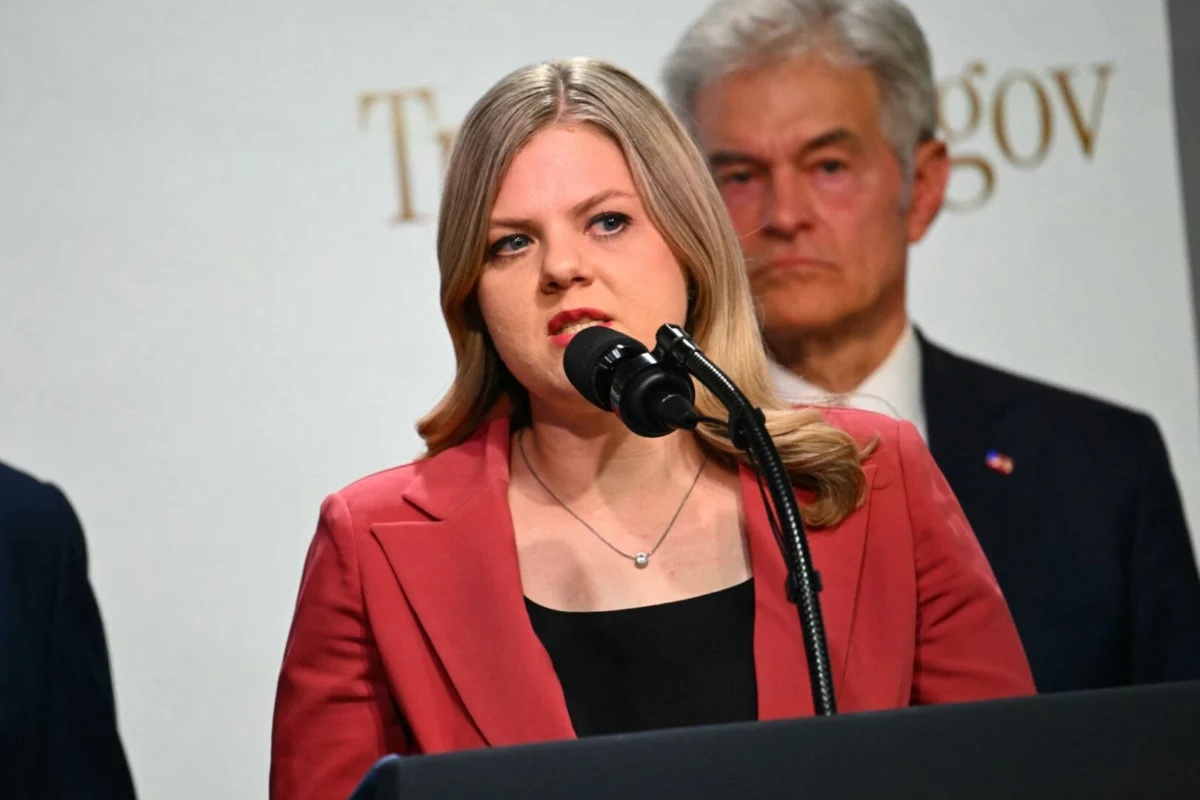
WASHINGTON — President Donald Trump announced on Wednesday his intention to nominate Dr. Heidi Overton, a senior White House domestic policy adviser and former think-tank executive, to serve as the Commissioner of the Food and Drug Administration (FDA).
If confirmed by the Senate, Dr. Overton will take charge of an agency navigating significant administrative disruptions, structural downsizing, and intense debate over public health priorities. The nomination comes at a critical juncture for the regulatory body, which oversees products accounting for roughly 20 cents of every dollar spent by American consumers—ranging from pharmaceuticals and biological therapies to food safety, medical devices, and tobacco products.
Overton, who currently serves as the White House Deputy Director of the Domestic Policy Council, would inherit an agency marked by high-level executive turnover, deep personnel cuts following broad federal reduction-in-force initiatives, and ongoing political friction over sensitive regulatory matters, including childhood immunizations, reproductive medications, peptides, and electronic vapor products.
1. Main Facts: A Healthcare Veteran with Conservative Policy Roots
Dr. Heidi Overton brings a background spanning clinical medicine, public health research, and conservative policy advocacy to the nomination. She earned her Doctor of Medicine (M.D.) from the University of New Mexico School of Medicine and holds a Doctor of Philosophy (Ph.D.) in clinical investigation from the Johns Hopkins University Bloomberg School of Public Health.
Before joining the executive branch, Overton held senior leadership positions at the America First Policy Institute (AFPI), a research organization closely aligned with the Trump administration’s agenda. At AFPI, she served as Chief Policy Officer and Deputy Director for the organization’s Center for a Healthy America, where she authored policy briefs advocating for free-market healthcare reforms, stricter controls on chemical abortion, and limits on gender-affirming medical interventions for minors.
       ===============================================================
       DR. HEIDI OVERTON: KEY QUALIFICATIONS & BACKGROUND
       ===============================================================
       Current Role:     Deputy Director, White House Domestic Policy Council
       Prior Position:   Chief Policy Officer, America First Policy Institute (AFPI)
       Education:        M.D. (University of New Mexico)
                         Ph.D. in Clinical Investigation (Johns Hopkins University)
       Key Expertise:    Surgical research, health economics, regulatory policy
       Target Role:      Commissioner, Food and Drug Administration (FDA)
       ===============================================================
Throughout her tenure in the White House, Overton has worked closely with Health and Human Services (HHS) Secretary Robert F. Kennedy Jr. on broad administrative health reforms. She has frequently appeared alongside President Trump during major health policy announcements, establishing herself as a leading operational voice within the administration’s health policy apparatus.
If confirmed, Overton will succeed Acting FDA Commissioner Kyle Diamantas, who has led the agency on an interim basis since May 2026 following the resignation of Dr. Marty Makary.
2. Chronology: The FDA Leadership Timeline and Recent Policy Battles
The FDA has experienced a turbulent period over the past 18 months, defined by governance changes, workforce restructuring, and shifting regulatory frameworks.
+-----------------------------------------------------------------------------------+
|                            FDA LEADERSHIP TIMELINE                                |
+-----------------------------------------------------------------------------------+
|  [2025]        |  Administration initiates federal workforce reductions (RIF)      |
|  [Spring 2026] |  Dr. Marty Makary resigns as FDA Commissioner                    |
|  [May 2026]    |  Kyle Diamantas steps in as Acting FDA Commissioner              |
|  [Aug 10, 2026]|  White House issues Executive Order on childhood vaccines        |
|  [Aug 19, 2026]|  President Trump formally nominates Dr. Heidi Overton for FDA    |
+-----------------------------------------------------------------------------------+
Workforce Reductions and Early Strains (2025)
Following executive orders aimed at shrinking the federal civil service, the FDA underwent a series of reduction-in-force (RIF) measures throughout 2025. Thousands of operational and administrative roles were consolidated or eliminated, raising questions from industry stakeholders regarding drug review timelines and inspection capabilities for overseas manufacturing plants.
The Resignation of Dr. Marty Makary (Spring 2026)
In the spring of 2026, then-FDA Commissioner Dr. Marty Makary stepped down after brief and contentious tenure. Makary’s resignation followed months of backstage friction with senior administration officials over regulatory actions concerning mifepristone (medication abortion), the review pipeline for wellness peptides, and enforcement policies surrounding flavored electronic cigarettes.
Following Makary’s departure in May, Kyle Diamantas, a former health policy legal counsel, was appointed as Acting Commissioner to oversee day-to-day operations while the administration searched for a permanent replacement.
The Vaccine Executive Order (August 2026)
Earlier this month, Overton played a central role in an Oval Office announcement detailing an executive order designed to alter recommended schedules for childhood immunizations. The directive encourages states to stagger routine childhood vaccines, departing from long-standing unified schedules published by traditional public health institutions.
During the event, Overton publicly criticized state alignment with non-governmental professional societies:
"These are the gold-standard childhood vaccine recommendations, and you should put this into your state law so that when parents go to enroll their kids in school, they do not have to meet some of the requirements for the vaccines that are no longer recommended for all children," Overton stated, arguing that states should rely on executive guidance rather than outside bodies like the American Academy of Pediatrics (AAP).
While federal executive orders cannot directly alter state-level school immunization laws, the announcement signaled a shift in federal public health guidance that drew sharp scrutiny from medical associations and congressional oversight committees.
3. Supporting Data: Agency Metrics, Budget Pressures, and User Fee Deadlines
Overton’s nomination comes at a moments when the FDA faces both internal operational shifts and major legislative milestones.
+-------------------------------------------------------------------------------+
|                       FDA OPERATIONAL PROFILE & METRICS                       |
+-------------------------------------------------------------------------------+
|  Metric                               |  Value / Status                       |
+---------------------------------------+---------------------------------------|
|  Total Annual Budget                  |  ~$6.7 Billion (FY 2026)              |
|  User Fee Contribution                |  ~45% of total budget                 |
|  Next PDUFA Reauthorization Deadline  |  September 30, 2027                   |
|  Personnel Impact (2025 RIF)          |  Estimated 8% to 12% workforce cut    |
|  Pending Tobacco PMTAs                |  Tens of thousands awaiting review    |
+---------------------------------------+---------------------------------------|
The 2027 User Fee Reauthorization (PDUFA VIII)
One of the most consequential tasks awaiting the next confirmed FDA Commissioner is negotiating the reauthorization of the Prescription Drug User Fee Act (PDUFA), along with sister user-fee agreements covering medical devices (MDUFA), generic drugs (GDUFA), and biosimilars (BsUFA).
- Financial Impact: User fees collected from pharmaceutical and biotechnology sponsors account for nearly 45% of the FDA’s total operational budget, funding thousands of medical review personnel.
- Legislative Deadline: The current authorization package is set to expire on September 30, 2027.
- Domestic Policy Conditions: The Trump administration has signaled plans to tie the upcoming PDUFA VIII negotiations to specific domestic manufacturing mandates. Specifically, officials aim to introduce financial incentives for sponsors conducting a larger percentage of early- and late-stage clinical trials within the United States rather than relying on international trial sites.
Regulatory Backlogs and Administrative Cuts
The recent reduction-in-force efforts have impacted scientific review centers, including the Center for Drug Evaluation and Research (CDER) and the Center for Biologics Evaluation and Research (CBER). Industry groups have expressed concern over potential delays in:
- Premarket Tobacco Applications (PMTAs): Processing a backlog of applications for alternative nicotine products.
- Compounding and Peptides: Defining clear regulatory boundaries for compounded peptide therapies, which faced heightened enforcement actions in early 2026.
- Foreign Inspection Mandates: Maintaining routine, unannounced physical inspections of overseas active pharmaceutical ingredient (API) facilities, particularly in Asia.
4. Official Responses: Administration Support and Congressional Friction
The announcement of Overton’s nomination elicited immediate commentary from executive leadership, congressional lawmakers, and public health organizations.
Executive Branch Support
In a statement published on Truth Social, President Donald Trump commended Overton’s policy record and problem-solving approach within the White House:
"She is known to take on the HARDEST issues, and bring me solutions that work best for the Country," Trump stated.
Health and Human Services Secretary Robert F. Kennedy Jr. echoed the President’s endorsement, framing the selection process as an extensive talent search across the health policy landscape:
"There was a pantheon of superstar candidates that made the choice one of the toughest during my tenure at HHS," Kennedy said in a prepared statement. "I am confident President Trump and I chose the best person for the job."
Congressional Reactions and Senate HELP Scrutiny
Overton’s nomination must be vetted and reported out by the Senate Committee on Health, Education, Labor, and Pensions (HELP) before advancing to a full Senate vote.
       +-------------------------------------------------------------+
       |               SENATE HELP COMMITTEE KEY PLAYERS             |
       +-------------------------------------------------------------+
       |  Chair: Sen. Bill Cassidy (R-LA)                            |
       |  Key Focus Areas for Confirmation Hearings:                 |
       |    • Childhood vaccination schedules & scientific consensus |
       |    • Mifepristone / Medication abortion regulatory status   |
       |    • FDA user-fee negotiations (PDUFA VIII prep)            |
       |    • Staffing retention following civil service cuts        |
       +-------------------------------------------------------------+
Senate HELP Committee Chairman Bill Cassidy, R-La., a physician himself, has previously expressed reservations regarding administration directives that challenge established medical guidance. Cassidy publicly criticized the administration’s recent vaccine executive order, signaling that the HELP Committee will conduct rigorous confirmation hearings.
- Vaccine Policy Concerns: Committee members are expected to question Overton extensively regarding the scientific basis for altering federal vaccine recommendations and whether executive directives will override FDA career scientists.
- Reproductive Healthcare: Democratic lawmakers are expected to focus on Overton’s past writings at the America First Policy Institute. In June 2022, following the Supreme Court’s ruling in Dobbs v. Jackson Women’s Health Organization, Overton released a statement celebrating the decision:
"The Supreme Court’s decision today will allow Americans to reevaluate the value of the potential of every baby in the womb and choose life through a democratic process. Human life is not disposable, but a precious gift from God with inherent worth and dignity," Overton wrote at the time.
Her previous policy briefs advocating for heightened FDA restrictions on chemical abortion drugs, such as mifepristone, are expected to be a central focal point for questioning during confirmation proceedings.
5. Implications: What Lies Ahead for the FDA and Regulated Industries
The nomination of Dr. Heidi Overton marks a decisive moment for the future direction of federal health policy, regulatory enforcement, and biopharmaceutical oversight.
               +-----------------------------------------------+
               |          KEY AREAS OF REGULATORY IMPACT       |
               +-----------------------------------------------+
               |                                               |
               |  [1] DRUG & BIOLOGIC APPROVALS                |
               |      Shift toward domestic trial requirements |
               |                                               |
               |  [2] REPRODUCTIVE MEDICINE                    |
               |      Potential review of mifepristone rules   |
               |                                               |
               |  [3] VACCINE STANDARDS                        |
               |      Updated guidance on pediatric schedules  |
               |                                               |
               |  [4] AGENCY MANAGEMENT                        |
               |      Stabilization following civil service RIF|
               |                                               |
               +-----------------------------------------------+
Impact on the Pharmaceutical and Biotech Sectors
If confirmed, Overton will lead an agency balancing administrative priorities with industry demands for predictable regulatory pathways. The administration’s plan to push for domestic clinical trials during PDUFA VIII negotiations could force pharmaceutical firms to restructure their research infrastructure, potentially raising clinical trial costs while prioritizing U.S.-based medical centers.
Furthermore, biotech firms focused on peptide development and alternative therapies will be watching closely to see if Overton maintains the stringent enforcement posture of early 2026 or adopts a more flexible oversight model aligning with broader wellness initiatives championed by HHS Secretary Kennedy.
Internal Agency Morale and Institutional Stability
A primary internal challenge for Overton will be stabilizing the FDA’s civil service workforce. Following a year of job reductions, organizational restructuring, and high-profile executive departures, career scientists and administrative staff face ongoing operational pressures.
Restoring organizational stability while implementing the administration’s specific health reform agenda will require careful navigation between political appointees and non-partisan scientific review panels.
The Road to Confirmation
Overton’s nomination sets the stage for a high-stakes confirmation process in the Senate. With narrow margins in the chamber, her ability to secure confirmation will depend largely on navigating the concerns of moderate Republicans—including HELP Committee Chairman Cassidy—and articulating a clear framework for how she intends to balance political policy directives with traditional, evidence-based scientific review at the nation’s premier drug regulator.