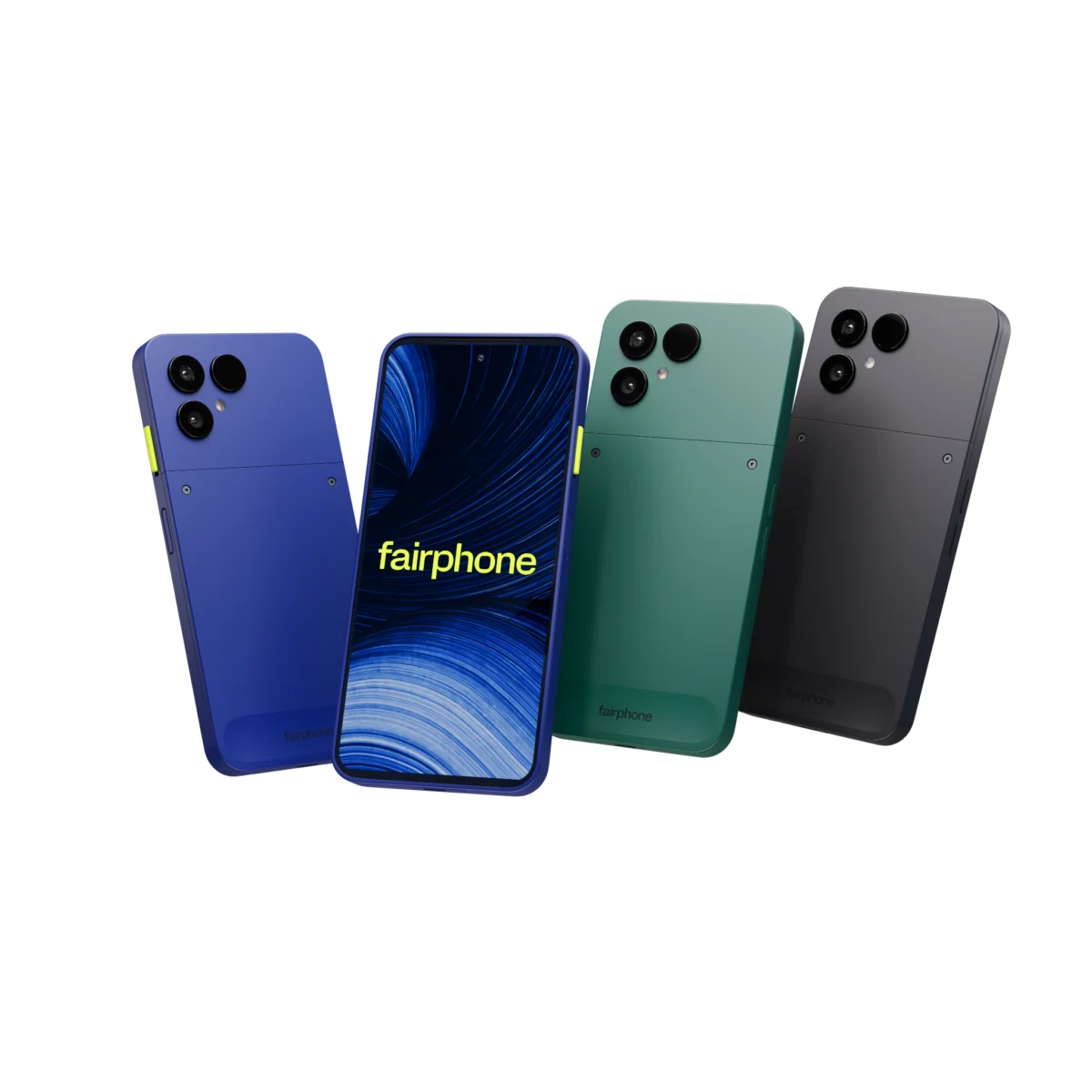
In a significant milestone for the global movement toward sustainable technology, Dutch manufacturer Fairphone has officially launched its latest flagship, the Fairphone (Gen 6+), in the United States. Starting at $649, the device represents a paradigm shift for American consumers, marking the first time the company has offered its signature modular, repair-friendly hardware directly to the U.S. market without the need for third-party operating system modifications.
While previous forays into the U.S. market were limited to niche, "de-Googled" variants developed in partnership with Murena and the /e/OS open-source community, the Gen 6+ arrives as a fully realized, mainstream Android offering. Designed to combat the "planned obsolescence" cycle that defines the modern smartphone industry, the device invites users to view their technology not as a disposable commodity, but as a long-term investment.
Chronology: From European Niche to Global Accessibility
Fairphone’s journey to the U.S. has been a methodical, decade-long evolution. Founded in 2013, the company initially focused on the European market, where it built a cult following among environmentalists and tech enthusiasts who prioritized ethical sourcing and repairability.
- 2013–2016: Fairphone establishes its business model in Europe, prioritizing conflict-free minerals and fair labor practices, while introducing the first modular smartphone designs.
- 2017–2022: The company refines its hardware, releasing subsequent generations that improve performance while maintaining a modular chassis. During this period, the brand gains international recognition for its high scores on repairability indices.
- 2023: Fairphone takes its first cautious step into the U.S. market by partnering with Murena to sell the Fairphone 4, albeit with an operating system stripped of Google services. This limited release served as a proof-of-concept for American consumer interest.
- August 2026: The official announcement of the Fairphone (Gen 6+) signals a full-scale market entry. By offering the phone with standard Android, Fairphone addresses the primary barrier to entry for the average American user: the lack of familiar software ecosystems.
Hardware Specifications: Mid-Range Power Meets Longevity
The Fairphone 6+ is positioned as a mid-range contender, balancing performance with power efficiency. Under the hood, the device is powered by Qualcomm’s Snapdragon 7s Gen 4 processor, paired with a robust 12GB of RAM. This configuration ensures that the device remains performant for modern multitasking, app-switching, and moderate gaming.
The display is a high-quality 6.31-inch LTPO OLED panel, capable of an adaptive refresh rate that scales up to 120Hz for fluid scrolling and visual fidelity. Powering this, a 4,415 mAh battery—fully user-replaceable—supports 30W fast charging.
The Photographic Array
Photography on the Gen 6+ is handled by a dual-camera setup on the rear:
- Main Sensor: A 50-megapixel Sony sensor with an f/1.88 aperture, designed for reliable daylight performance.
- Ultrawide Sensor: A 13-megapixel lens with an f/2.2 aperture.
- Selfie Camera: A 32-megapixel front-facing sensor with an f/2.0 aperture.
While the inclusion of an ultrawide lens offers utility for landscape and architectural photography, some industry analysts have suggested that a telephoto lens might have offered more versatility for portraiture. As with many mid-range sensors, performance is expected to be excellent in well-lit conditions, though users may notice the typical limitations of smaller sensor sizes in low-light environments.
The Modular Philosophy: Architecture of Longevity
The core value proposition of the Fairphone 6+ is its industry-leading modularity. The device is comprised of 12 distinct, replaceable components. Unlike the glued-shut glass sandwiches common among flagship competitors, the Gen 6+ can be dismantled and serviced using a single screwdriver.
Users can independently replace the battery, the camera modules, the USB-C port, and the display assembly. This design choice is not merely an aesthetic preference; it is a functional hedge against hardware failure. By enabling consumers to replace only the failing part rather than the entire device, Fairphone significantly lowers the total cost of ownership.
Warranty and Software Longevity
Fairphone’s commitment to longevity extends beyond the physical hardware. The company has pledged a five-year warranty and a software support roadmap that extends until 2033. This commitment effectively doubles the industry standard for software updates, ensuring that security patches and OS upgrades remain available for nearly a decade.

Official Perspectives: A Call for Industry Change
Fairphone CEO Raymond van Eck has been vocal about the company’s mission to disrupt the throwaway culture of the tech industry. In a recent statement, van Eck emphasized the intentionality behind the Gen 6+ design:
"We’re delivering a device built from the ground up to be opened, repaired, and kept alive for many years. Our goal is to shift the consumer mindset. When you buy a Fairphone, you aren’t just buying a gadget; you are buying into a sustainable ecosystem that respects both the planet and the user’s autonomy."
This ethos is backed by tangible environmental efforts. The company reports that the manufacturing carbon footprint of the Gen 6+ has been reduced to just 30 kg of CO2e, a figure achieved through recycled material sourcing and optimized production logistics.
Implications: The Market Impact
The entry of the Fairphone 6+ into the U.S. market, with support for major carriers like T-Mobile and AT&T, poses interesting questions for the broader smartphone landscape.
1. Pressure on "Big Tech"
The Right to Repair movement has gained significant legislative momentum in several U.S. states. Fairphone’s success could force major manufacturers like Apple and Samsung to accelerate their own repair programs. When a consumer can see that a 12-part modular phone is viable, the argument that "gluing components is necessary for thinness" loses its persuasive power.
2. Environmental Responsibility
With a reported carbon footprint of 30 kg of CO2e per unit, Fairphone is setting a new benchmark for environmental reporting. By integrating sustainability into the core product architecture, the company is catering to a growing demographic of eco-conscious consumers who are increasingly skeptical of "greenwashing" in the tech sector.
3. The Future of Personal Tech
The Gen 6+ also introduces a degree of personalization through hardware. Accessories such as finger loops, lanyards, and card holders are designed to be integrated into the phone’s chassis, moving away from the need for bulky, environmentally unfriendly plastic cases. This shift toward "functional customization" suggests a future where smartphones become more personal, durable tools rather than fragile luxury items.
Conclusion: A Worthy Investment?
For the average American consumer, the Fairphone 6+ is a compelling alternative to the constant pressure to upgrade. While it may not compete with the ultra-premium camera arrays or raw silicon power of $1,200 flagships, it occupies a vital space in the market: the intersection of performance and permanence.
As component shortages and inflationary pressures continue to drive the price of consumer electronics upward, the ability to maintain a device for eight to ten years makes the $649 price tag look increasingly attractive. Whether the American public will embrace the modular aesthetic remains to be seen, but the availability of the Fairphone 6+ is undoubtedly a victory for consumer rights and environmental stewardship.
By purchasing a Fairphone, consumers are not only acquiring a functional tool—they are casting a vote for a future where technology is designed to last. As the company continues to refine its software and hardware offerings, it is well-positioned to become a permanent fixture in the American tech landscape, challenging the status quo one replaceable part at a time.