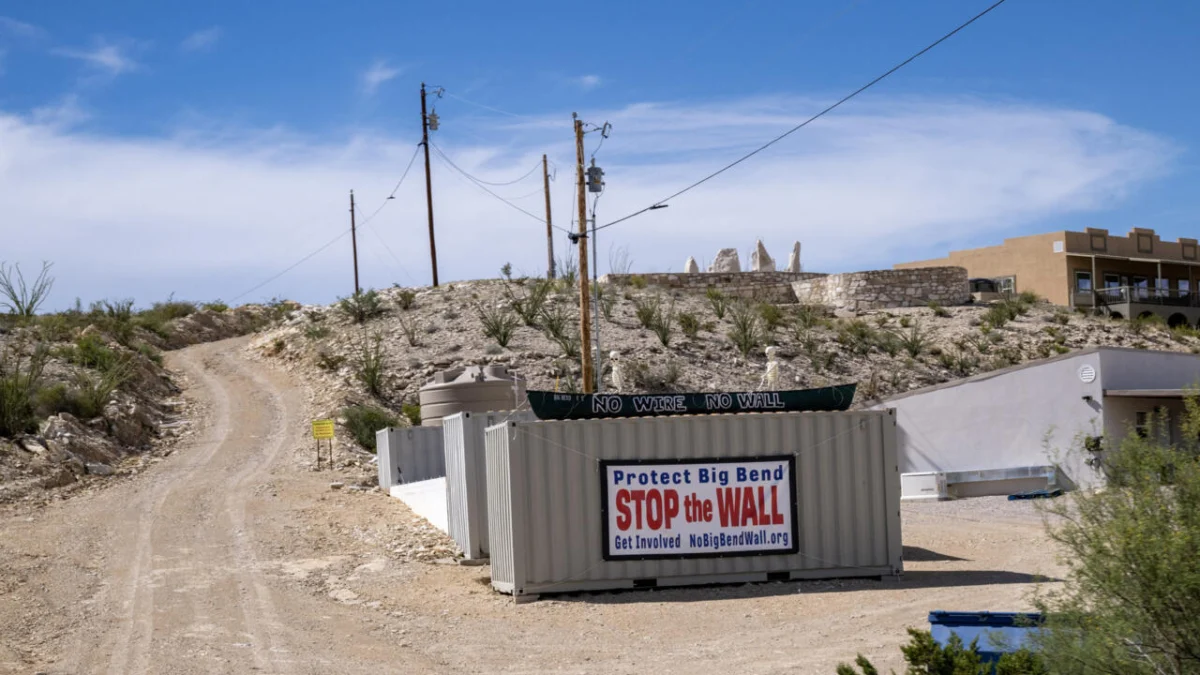
In a rare concession that highlights the intensifying friction between the Trump administration’s aggressive border security agenda and local preservationist efforts, U.S. Customs and Border Protection (CBP) has ordered a temporary halt to construction activities within the borders of Texas’ iconic Big Bend National Park.
The announcement, delivered by CBP Commissioner Rodney Scott via social media on Monday, confirmed that all development—including road grading and the installation of tactical infrastructure—is suspended pending an "on-the-ground evaluation." The pause follows months of mounting pressure from a diverse coalition of critics, ranging from environmentalists and Native American tribal leaders to local law enforcement and Republican politicians, who argue that the project is an unnecessary and destructive intrusion into one of the United States’ most pristine wilderness areas.
The Context: A "Crown Jewel" Under Threat
Big Bend National Park, a sprawling expanse of desert, mountains, and river canyons along the Rio Grande, has long been regarded as a sanctuary for biodiversity and archaeological history. However, the Trump administration’s mandate to complete a continuous border barrier from the Pacific to the Gulf of Mexico has placed this remote region in the crosshairs of federal construction crews.
While the administration initially proposed a 30-foot-tall bollard wall, public outcry successfully forced them to pivot. Currently, the project consists of "technological infrastructure," including new access roads, floodlights, vehicle barriers, and buried fiber-optic sensor cables. Critics contend that even these "secondary" measures—specifically the road construction—threaten to irreparably damage the fragile desert ecosystem and disturb sensitive cultural sites.
Chronology of the Dispute
The conflict reached a boiling point in mid-July 2026, when residents and park advocates reported the arrival of heavy machinery. The timeline of the escalation is as follows:
- Summer 2025: Congress allocates $46 billion for border security, including the construction of barriers across the southern border.
- Early 2026: CBP announces plans for construction in the Big Bend region, triggering immediate legal challenges from environmental groups citing the misuse of regulatory waivers.
- July 2026: Bulldozers are spotted within the park boundaries. The Department of Homeland Security (DHS) characterizes the activity as "survey and design work," sparking a wave of formal protests.
- August 2026: Sen. John Cornyn (R-TX) pens a pointed letter to Homeland Security Secretary Markwayne Mullin, emphasizing that the natural geography of Big Bend—characterized by 1,000-foot cliffs and extreme temperatures—acts as its own, more effective deterrent to migration.
- August 17, 2026: Governor Greg Abbott holds high-level talks with Secretary Mullin, leading to the announcement of a "pause" in construction.
- August 18, 2026: Commissioner Rodney Scott arrives in Texas to conduct a personal assessment and meet with local stakeholders.
Supporting Data: Geography as a Deterrent
The primary argument against the construction is rooted in the unique topography of the Big Bend region. Local stakeholders and regional law enforcement point to the fact that border crossings in this sector have historically been among the lowest along the 2,000-mile border.
According to regional data, crossing attempts in this specific area have declined over the past two years. Opponents of the wall argue that the area’s rugged, mountainous terrain and the perilous, deep canyons of the Rio Grande serve as a natural barrier that renders high-cost infrastructure redundant.
"My constituents believe that the 1,000-foot riverbank cliffs and remote Big Bend terrain offer their own source of deterrence," Senator Cornyn wrote in his correspondence with the administration. "The dangerous terrain includes steep mountains, deep canyons, and expansive deserts which act as a natural barrier that limits large-scale movements."
Official Responses and Political Maneuvering
The administration’s decision to pause, while framed as a listening tour, is widely viewed by political analysts as a strategic maneuver to cool off a growing political firestorm.

Commissioner Rodney Scott stated on X that he intends to "listen to local leadership, community members and stakeholders" to address what he characterized as "real national security threats" while simultaneously acknowledging the need to protect the park. However, CBP has remained opaque regarding the duration of this pause and the specific list of individuals Scott is scheduled to consult.
Texas Governor Greg Abbott, who has navigated a complex relationship with federal immigration policy, claimed credit for the intervention. Following his weekend discussion with Secretary Mullin, Abbott stated that the federal government committed to abandoning the wall and physical barriers in the park. Notably, however, the Governor’s statement did not explicitly address the ongoing road construction, which remains a primary point of contention for local residents.
Brewster County Sheriff Ronny Dodson, who has been a vocal critic of the project, confirmed he would meet with Commissioner Scott. "I am glad the commissioner is going to have the opportunity to see the terrain with his own eyes," Dodson said. His primary concerns center on the potential for construction-related degradation of archaeological sites and the potential desecration of Native American burial grounds, which are prevalent throughout the park’s landscape.
Implications: A Precedent for Future Projects?
The suspension of work at Big Bend signals a rare instance where the Trump administration has been forced to retreat on a signature policy promise due to bipartisan pressure.
For environmental activists, such as Laiken Jordahl of the Center for Biological Diversity, the pause is a victory, but a fragile one. "This temporary pause proves how much non-partisan public pressure is mounting," Jordahl said. "We’re not resting until these contracts are cancelled, these workers are sent packing, the waivers are rescinded and every wall plan for the greater Big Bend region is scrapped for good."
However, observers like Bob Krumenaker, former superintendent of Big Bend National Park and current chair of the group "Keep Big Bend Wild," advise caution. While he described himself as "wary but optimistic," Krumenaker emphasized that the administration’s core directive remains the militarization of the border. "It is unlikely that CBP is going to entirely abandon all its plans in the region," he noted.
The immediate next steps will be critical. The public and local officials will be watching to see if the heavy equipment, including the bulldozers that sparked the initial outrage, is removed from the park. If the administration merely updates its plans without significantly scaling back the physical footprint of the project, the current "pause" may only be a brief intermission in a much longer battle over the conservation of America’s public lands.
Conclusion
As the administration continues to push for rapid completion of its southern border vision, the standoff at Big Bend highlights a fundamental tension: the conflict between national security imperatives and the mandate to preserve the nation’s natural and cultural heritage. Whether Commissioner Scott’s visit results in a fundamental shift in strategy or merely a tactical delay remains to be seen. For now, the silence of the bulldozers in the Texas desert provides a momentary respite, but the debate over the future of the border—and the sanctity of its most remote reaches—is far from resolved.