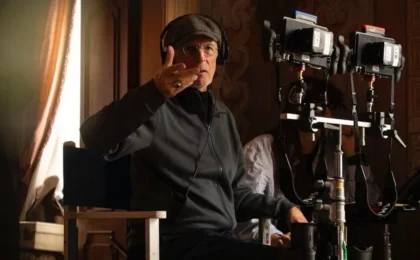
Introduction: The Outsider’s Dilemma
In the history of cinema, the trajectory of the "rebel" is often predictable. The punk, the grunge-rocker, and the fringe-outsider usually follow a well-trodden path toward the halls of respectability. Figures like John Waters, Patti Smith, and Henry Rollins have transitioned from agents of chaos to elder statesmen of cultural prestige. However, there is one figure for whom the concept of "mainstream acceptance" is not only unattainable but actively repelled: Tom Six.
The Dutch director, best known for the visceral and polarizing The Human Centipede trilogy, has never sought a seat at the polite table of film criticism. Instead, he occupied a subterranean niche, crafting works so extreme they challenged the very threshold of human tolerance. Now, with the release of his latest project, The End of Tom Six, the director invites us into his private purgatory. Part DIY schlock-umentary and part intimate confessional, the film chronicles the intersection of a fading career, a changing cultural landscape, and a brutal, life-altering diagnosis of multiple sclerosis.
Chronology: From Underground Infamy to Isolation
To understand the significance of The End of Tom Six, one must first contextualize the director’s rise.
- 2009: The release of The Human Centipede (First Sequence) introduced the world to Dr. Heiter, a mad surgeon with a grotesque, surgically reinforced vision of humanity. It became a global touchstone for transgressive horror.
- 2011: The Human Centipede 2 (Full Sequence) arrived. A monochromatic, unrelenting nightmare, it pushed the boundaries of what could be shown on screen, effectively alienating 97 percent of the viewing public while enthralling the remaining three percent.
- 2015: The trilogy concluded with The Human Centipede 3 (Final Sequence), cementing Six’s reputation as an unapologetic purveyor of "torture porn" and exploitation cinema.
- 2010–Present: Roughly 14 years ago, Six was diagnosed with multiple sclerosis (MS). While he initially managed his condition in secrecy, the progressive nature of the disease eventually forced him into seclusion in Amsterdam.
- 2019: Six completes his post-trilogy project, The Onania Club. Despite his previous notoriety, the film fails to secure distribution, signaling a seismic shift in the film industry’s appetite for controversy.
- 2024: The End of Tom Six premieres on YouTube, acting as both a final act for his public persona and a meditation on his physical decline.
Supporting Data: The Anatomy of a Cult Phenomenon
While Tom Six was never a darling of the Academy Awards, his cultural footprint is undeniable. The Human Centipede films transcended their niche status to become a shorthand for extreme horror in the global lexicon. They were referenced in mainstream staples such as South Park, The Simpsons, Saturday Night Live, Unbreakable Kimmy Schmidt, Deadpool 2, and Beavis and Butt-Head. Even Childish Gambino’s music video for "Bonfire" featured the concept.
This success mirrors the "carny-barker" tradition of exploitation icons like Russ Meyer and Herschell Gordon Lewis. Like John Waters—who turned the midnight-movie circuit success of Pink Flamingos into a legitimate "trash-art" empire—Six successfully commodified the aura of danger. However, the data surrounding his latest endeavor suggests that the market for such provocation has withered. The rejection of The Onania Club—a film starring Chloë Sevigny—by distributors across the board suggests that the "anything goes" spirit of the 2000s and early 2010s has been replaced by a more risk-averse, censorious corporate environment.
Official Responses and the "Living X-Ray"
In The End of Tom Six, the director is both subject and object. The film is a surrealist tapestry, shot in black-and-white, reminiscent of Victorian Gothic noir. Six is framed lounging on an antique Chinese opium bed, draped in a paisley silk bathrobe and wearing dark aviator shades. He is surrounded by a bizarre, theatrical entourage: a Nazi censor, a tattooed assistant with a vocoder, and a multifaceted butler played by Edwin Alofs.
The film is not a standard documentary. It is an act of self-mythologizing. Six addresses his illness—a condition that has left him confined to his home, reliant on oxycodone for chronic pain, and battling the "scrambled egg" brain fog induced by heavy medication—with a cold, detached wit. He describes himself as a "living X-ray," a man watching his own slow dissolution. When asked if the documentary is a genuine account or an Andy Kaufman-esque performance piece, even the most skeptical viewer might hesitate. Six has spent his career blurring the line between the stage and the self; in his current state, that line has all but vanished.
Implications: The Death of Transgression?
The central question posed by The End of Tom Six is not merely "What happened to the director?" but "What happened to the cinema?"
Six argues that his career was stifled not by a lack of quality, but by a moral shift in the industry. He believes that the marketplace has become a "safe space," where the fear of controversy and the pressure of censorship have effectively neutered the artist’s ability to shock. For Six, the inability to release The Onania Club—a film he describes as an exploration of the loss of empathy—was the final nail in the coffin of his professional life.
This raises significant implications for the future of film as an art form:
- The Chilling Effect: If directors like Six are unable to find distribution for transgressive work, we risk a homogenization of content. When the "marketplace" decides what is acceptable, the boundaries of human experience, even the darker, more "evil" aspects of the psyche, remain unexplored.
- The Definition of Horror: Is horror meant to be a safe, thrill-ride experience, or is it meant to, as the Marquis de Sade once did, expand the viewer’s vision of human capacity for cruelty? By sterilizing the genre, do we lose the catharsis that true horror provides?
- The Erasure of the Outsider: The "rebel" is an essential part of the cultural ecosystem. If there is no longer a place for the provocateur, the art world risks becoming a feedback loop of comfortable, predictable narratives.
Conclusion: A Final, Uncomfortable Look
The End of Tom Six is not for everyone. It is a work of "underground-cinephile-on-acid" art that demands a specific kind of engagement. It is a film about a man who thrived on being the most hated person in the room, now facing a world that has decided to ignore him entirely.
Whether one finds his work to be a work of art or a work of exploitation, the documentary serves as a stark reminder that the era of the "transgressive auteur" is closing. Tom Six, the man who stitched together the human race for our morbid entertainment, is now stitching together the final pieces of his own legacy. As he lies in his opium bed, surrounded by the remnants of his kitsch gallery, he challenges us to consider: do we really want a world where art is sanitized, or are we willing to accept the uncomfortable, the sick, and the truly transgressive in the name of total creative freedom? For now, the screen fades to black, and the silence that follows is as loud as any scream in his movies.