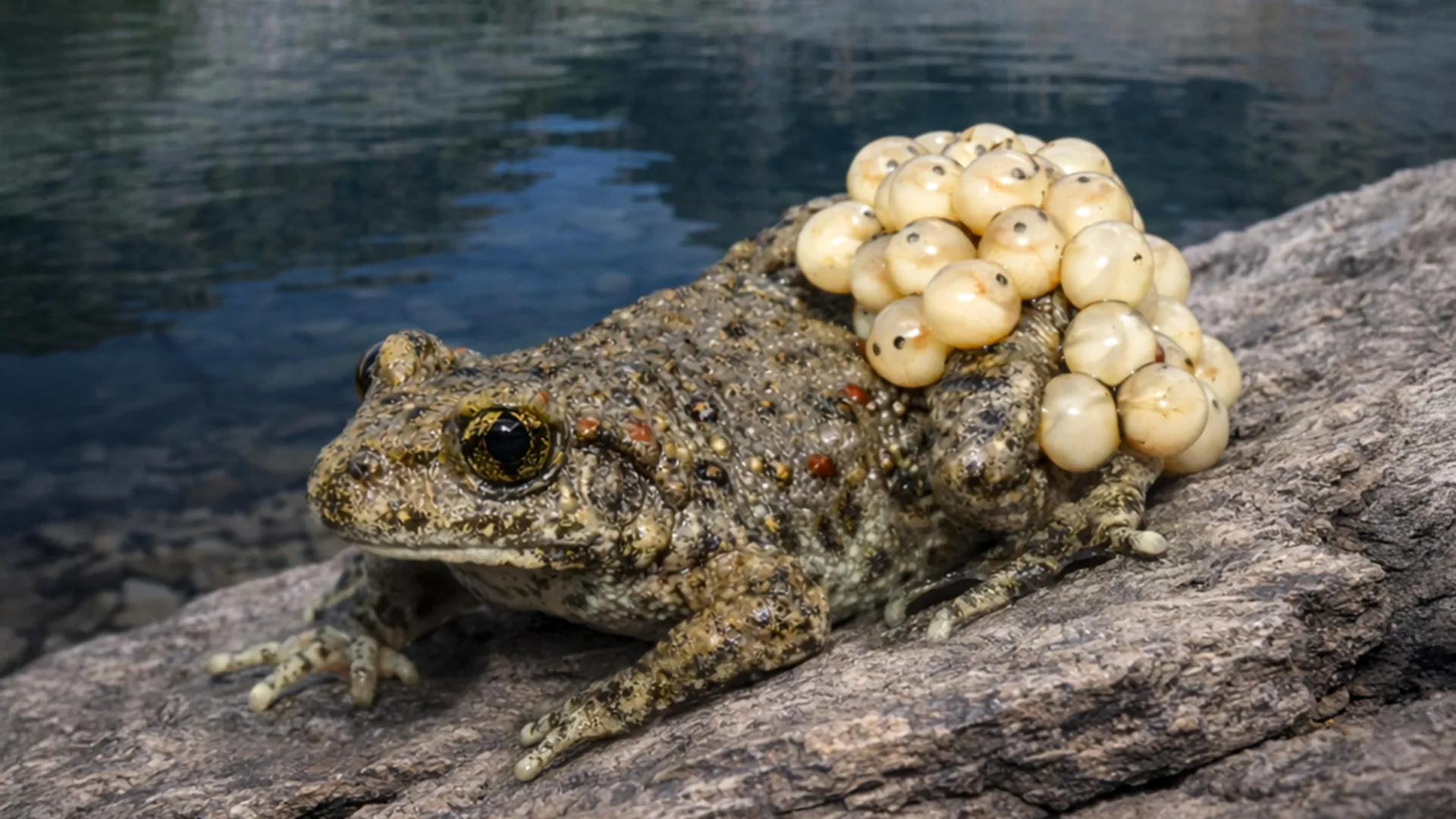
In the high-altitude lakes of the Pyrenees, a silent war has been raging for decades. For years, the chytrid fungus—Batrachochytrium dendrobatidis (Bd)—has acted as a biological scythe, sweeping across continents and decimating amphibian populations with a lethality that has brought dozens of species to the brink of extinction. However, amidst this ecological carnage, scientists have observed a curious, hopeful phenomenon: some populations are not just surviving; they are thriving in the presence of the pathogen.
A groundbreaking study led by a collaborative team from University College London (UCL), the ZSL Institute of Zoology, and Imperial College London has finally unmasked the secret behind this resilience. Published in the journal Nature Chemical Biology, the research reveals that the survival of these amphibians hinges not on a permanent genetic mutation, but on a critical matter of biological timing—the early maturation of the immune system.
The Anatomy of a Global Catastrophe
To understand the scale of the challenge, one must understand the biology of the killer. Bd is a fungal pathogen that targets the skin of amphibians, the very organ they rely on for respiration and the regulation of essential electrolytes, salts, and water. When Bd infects a host, it triggers chytridiomycosis, a disease that effectively leads to a catastrophic physiological collapse.
The fungus thrives on keratin, a structural protein found in the skin of adult amphibians. This creates a lethal "window of vulnerability." While tadpoles and aquatic larvae are largely immune because their skin lacks significant keratin, the process of metamorphosis is a death trap. As a frog or toad transitions from its larval form to an adult, its skin begins to keratinize, suddenly providing the perfect substrate for the fungus to colonize. This transition, which should be the start of a new life cycle, has instead become a bottleneck where massive population die-offs occur.
Chronology of a Research Breakthrough
The investigation, which spanned years of field and laboratory work, focused on common midwife toads (Alytes obstetricans) residing in four distinct lakes across the Pyrenees. These sites provided a natural laboratory: all had been severely impacted by Bd outbreaks, yet the outcomes were strikingly different.
At one site, the toads were in a state of terminal decline, nearing local extinction. At the other three sites, the populations had rebounded, displaying robust numbers despite the ongoing presence of the fungus in the water and soil.
The research team, utilizing advanced mass spectrometry, began by analyzing the chemical profile of the toads’ skin secretions. They specifically looked at antimicrobial peptides (AMPs)—small, naturally occurring proteins that function as the first line of defense in the amphibian immune system.
The Discovery Phase
- Initial Screening: Researchers collected skin secretions from both the struggling and the recovering populations.
- Mass Spectrometry Analysis: Using tandem mass spectrometry at UCL Chemistry, the team broke down these secretions into their constituent parts to map the molecular structure of the peptides.
- Comparative Analysis: The team compared the "peptide landscape" of tadpoles versus adults across all four sites.
- Correlation Study: They mapped the appearance of these peptides against the survival rates of the toads during the crucial metamorphosis phase.
The results were unequivocal. The toads from the recovering populations were not necessarily "stronger" in their adult form; rather, they were "smarter" in their developmental timing.
Supporting Data: The "Early Bird" Immune Defense
The data revealed a clear disparity between the populations. In the thriving groups, the toads began producing a broad, diverse array of antimicrobial peptides while they were still in the tadpole stage. By the time they emerged onto land as adults, their immune "arsenal" was fully stocked and ready to neutralize Bd before it could establish a fatal foothold.
In contrast, the toads from the dying population showed a delayed immune development. They produced fewer peptides during their larval stage, meaning that when they hit the vulnerable period of metamorphosis, they were effectively defenseless against the encroaching fungus.
The Hidden Peptide Reservoir
Perhaps the most startling finding was the sheer volume of chemical defenses identified. The team identified 1,152 distinct peptides, of which only seven had been previously documented in scientific literature. This massive, previously hidden repertoire of immune molecules suggests that amphibians possess a much more sophisticated chemical armor than biologists had ever imagined. The data showed that individuals producing a higher variety of these peptides were significantly more likely to survive the infection.
Official Responses and Expert Analysis
Dr. Phillip Jervis, the lead author of the study from UCL Chemistry and the ZSL Institute of Zoology, emphasized that this finding changes the narrative from one of despair to one of potential intervention.
"Our study shows species that have declined heavily from this disease can still recover," Dr. Jervis stated. "They have the tools to fight off infection—it just depends on timing. The disease kills toads and frogs as they turn from tadpoles to adults. Getting mature immunity at the tadpole stage helps these toads survive and the population to continue."
Dr. Jervis noted that the next phase of research is to identify the "environmental triggers" that influence this timing. "This could be down to genetics or environmental factors such as temperature or the presence of trout," he explained. "Trout are a major danger for tadpoles; they act as predators that might force the toads to accelerate their metamorphosis to escape the water. If they rush to become adults, they have less time for their immune system to develop, leaving them as sitting ducks for the fungus."
Senior author Professor Alethea Tabor (UCL Chemistry) highlighted the broader implications for the field of biochemistry. "We discovered a far greater diversity of peptides than we expected," she said. "We now need to understand how they work to control pathogens and which ones are specifically anti-microbial."
Implications for Human Medicine and Beyond
The potential applications of this research extend far beyond the conservation of amphibians. Historically, the natural world has been the most prolific pharmacy for human medicine. Penicillin, the foundation of modern antibiotics, was derived from fungi. The discovery of over 1,100 new peptides in toad skin represents a vast, untapped library of biological compounds.
"These peptides are new leads that could be used to help human health," Professor Tabor added. "We are facing a global crisis with the rise of antimicrobial resistance (AMR), which is requiring us to find new ways to treat infections. By studying how these toads naturally fight off fungal pathogens, we may uncover new classes of antibiotics or antifungals that could be adapted for human use."
The study also underscores the utility of advanced analytical techniques. Dr. Kersti Karu, a co-author from UCL Chemistry, noted the importance of the technology used. "The ability to analyze hundreds to thousands of molecules in parallel has only emerged over the past decade," she said. "This approach is more commonly applied in human health research, for example to distinguish cancer cells from normal tissue, but is increasingly being extended to other areas of biological investigation."
Looking Forward: A Strategy for Conservation
The implications for conservation are profound. If researchers can determine the environmental conditions that allow for early immune maturation, they may be able to manipulate those factors to save endangered populations. This might involve habitat management—such as controlling predatory fish populations—to allow tadpoles more time to develop their defenses, or perhaps even chemical intervention to stimulate the immune system earlier in the lifecycle.
As the scientific community continues to grapple with the sixth mass extinction, this study serves as a vital reminder that the answers to our most pressing environmental crises often lie hidden within the complex, microscopic processes of the creatures we are struggling to save. By understanding the "timing" of life, we may just find the time needed to pull a species back from the brink.
This research, funded by the UK’s Natural Environment Research Council (NERC) and the Leverhulme Trust, marks a significant step forward in our understanding of host-pathogen interactions and sets the stage for a new era of biochemical discovery in the fight against one of the world’s most persistent ecological threats.