Washington D.C. – Senate Republicans on Wednesday released a significantly revised version of their landmark cryptocurrency regulatory framework bill, aiming to establish a comprehensive market structure for digital assets. The updated legislation includes a crucial new section designed to address potential conflicts of interest among public officials involved in the crypto space. However, the measure faces an uphill battle, encountering immediate and strong resistance from Democratic negotiators who demand further modifications, particularly regarding ethics provisions and robust law enforcement tools.
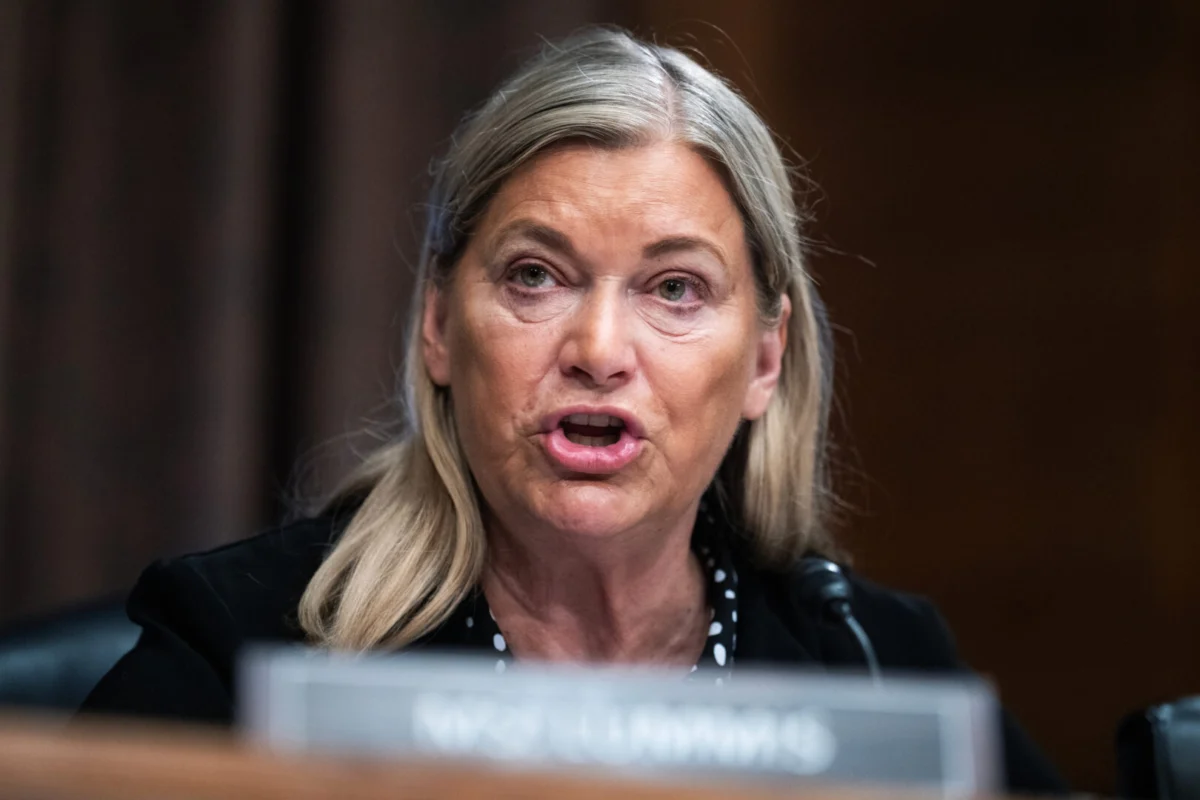
The bill, championed by Senate Banking Digital Assets Subcommittee Chair Cynthia Lummis (R-Wyo.), represents the culmination of years of legislative effort to bring clarity and oversight to the rapidly evolving digital asset industry. Yet, with a critical Senate floor vote targeted before the August 7 summer recess, the clock is ticking on bridging the partisan divide that currently threatens its passage.
Main Facts: A Bid for Clarity Amidst Political Headwinds
The core objective of the proposed legislation is to create a clear regulatory "market structure" for digital asset operations and oversight in the United States. This includes defining which agencies would regulate different aspects of the crypto market, setting standards for exchanges, and providing consumer protections. The latest iteration combines elements from a previous version approved by the Senate Banking Committee in May with an amendment from the Senate Agriculture Committee, reflecting the shared jurisdictional complexities of digital assets.
A standout feature of the revised bill is the introduction of an ethics section, a direct response to growing concerns over public officials’ financial entanglements with the crypto industry. This provision specifically targets a perceived loophole, particularly highlighted by Democrats, regarding former President Donald Trump’s family crypto ventures, which they contend "turbocharged" his wealth and exemplify egregious conflicts of interest.
Despite these significant revisions, key Democratic senators remain unswayed, arguing that the bill still falls short in critical areas. Their continued skepticism underscores the formidable challenge of crafting bipartisan legislation in a highly charged political environment, especially on an issue as complex and financially impactful as cryptocurrency regulation.
Legislative Journey: A Winding Path to the Floor
Senator Cynthia Lummis, a vocal proponent of digital asset innovation and regulation, has been at the forefront of this legislative push for years. Upon releasing the updated text for the Senate’s substitute amendment to a House-passed bill, Lummis expressed optimism and a commitment to bipartisan collaboration. "This is another step in my years-long journey to ensure the U.S. leads the way on digital assets," Lummis, who is retiring, stated, adding, "I also want to thank my Democratic colleagues for their important contributions to this draft, and express my commitment to reaching a deal in the coming days that will allow this legislation to become law."
The journey of this bill through Congress has been intricate, navigating the overlapping jurisdictions of various committees. The Senate Banking Committee, responsible for financial services, and the Senate Agriculture Committee, which oversees commodities (a category many digital assets might fall under), have both contributed to the current draft. The bill’s evolution reflects an ongoing dialogue and attempt to reconcile diverse perspectives within the Republican caucus and, ideally, with amenable Democrats.
The urgency to bring the measure to a Senate floor vote before the summer recess on August 7 is palpable. Missing this window could significantly delay, or even derail, the legislation, pushing it into a potentially more challenging political landscape closer to the presidential election.
The Ethics Quagmire: Addressing Conflicts of Interest
The most notable addition to the revised framework is a comprehensive ethics section, directly targeting public officials’ potential crypto conflicts. This provision would explicitly prohibit any public official or employee, along with their spouse, from issuing or sponsoring a digital asset. The scope of this ban is broad, encompassing the President, Vice President, members of Congress, and federal judges, as outlined in a fact sheet released by Senator Lummis.
Enforcement of this ban would fall to the U.S. Attorney General, who would be empowered to take legal action against both public officials and crypto exchanges found in violation. Intriguingly, the ban includes a sunset clause, scheduled to expire on January 20, 2029 – the inauguration day for the next president. This specific date, according to the Lummis fact sheet, is significant because "this is a standard President Trump chose to hold himself to, not one Congress imposed on him." This phrasing clearly signals the provision’s direct lineage to Democratic concerns about Trump’s past financial activities related to digital assets.
Democrats have been vocal and persistent in their demands for robust ethics provisions, citing what they describe as "egregious crypto conflicts" linked to the former president. Senators Angela Alsobrooks (D-Md.) and Ruben Gallego (D-Ariz.), who were the only two Banking Committee Democrats to vote for an earlier version of the bill in May, have unequivocally stated their refusal to support the bill on the Senate floor without "strong ethics guardrails."
However, even with the new section, Senator Alsobrooks remains unsatisfied. She advocates for empowering state attorneys general to also enforce these ethics rules, arguing for a broader, more decentralized enforcement mechanism. "We’ve got to keep working," she told reporters, indicating that the current proposal does not go far enough.
Senator Cory Booker (D-N.J.), who raised significant ethics concerns during the Agriculture Committee markup, echoed this sentiment, outright dismissing the revised bill. "There’s all these [Democratic] priorities that are not reflected in that text, and we’re not going to support it," Booker asserted to reporters. He emphasized the necessity of a truly bipartisan pathway, warning, "or this is going to die."
Senator Thom Tillis (R-N.C.), a member of the Banking Committee, acknowledged the persistent divide. "If we bridge the gap on ethics tonight, tomorrow, then I think we’ve got a shot," he conceded, highlighting the immediate need for a breakthrough. The political reality dictates that if all Republicans unite behind the bill, at least seven Democrats would still need to cross the aisle to overcome a potential filibuster, underscoring the necessity of genuine bipartisan compromise.
Strengthening Law Enforcement Tools: A Democratic Imperative
Beyond ethics, another major point of contention for Democrats revolves around the bill’s provisions for law enforcement. Concerns have been raised about whether the framework adequately equips authorities to combat illicit finance, money laundering, and other forms of malfeasance prevalent in digital markets. The rapid evolution of cryptocurrency, often used in sophisticated schemes, necessitates advanced tools and clear legal frameworks for prosecution and asset recovery.
The revised bill attempts to address some of these anxieties by including a stand-alone section on "law enforcement tools." This section proposes a substantial allocation of $600 million annually from fiscal 2027 through fiscal 2031 for state and local digital asset enforcement initiatives. Additionally, it aims to create grants specifically for state and local enforcement efforts against elder financial fraud involving digital assets, establish a dedicated digital asset law enforcement training program, and set up a task force focused on cryptocurrency scams.
Despite these proposed enhancements, Senator Catherine Cortez Masto (D-Nev.) remains unconvinced. She had previously raised significant law enforcement concerns during the Banking Committee markup, arguing that the original bill would impede authorities’ ability to trace illicit finance, recover victims’ money, and prosecute criminals for knowingly transmitting illicit funds. Her spokesperson, Lauren Wodarski, confirmed that the updated text still fails to assuage her specific concerns, which she has been working to address for months. "Sen. Cortez Masto is still negotiating with her colleagues, but this updated text does not address her specific concerns that she’s been working to address for months," Wodarski stated.
A joint statement later released by seven Democrats generally considered to be pro-crypto—Senators Alsobrooks, Booker, Gallego, Cortez Masto, as well as Senators Mark Warner (D-Va.) and Raphael Warnock (D-Ga.)—underscored the collective Democratic position. While not ruling out a future deal, their statement explicitly called for strengthening key provisions, including those addressing "ethics for elected officials, consumer protection, illicit finance, conflicts of interest and market integrity." They affirmed their commitment to working in good faith with their Republican colleagues to bring the legislation to a successful conclusion.
Stablecoins: Industry Wins, Banking Sector Woes
The revised bill also maintains key provisions concerning stablecoins, digital assets designed to maintain a stable value relative to a fiat currency, typically the U.S. dollar. Like its original version, the updated bill would prohibit crypto exchanges from paying interest to stablecoin investors for simply holding the token. However, it explicitly permits crypto exchanges to offer rewards to stablecoin holders for engaging in specific activities, such as making payments with stablecoins.
This nuanced language is largely viewed as a significant win for the burgeoning crypto industry, which seeks to integrate stablecoins more deeply into the financial ecosystem for payments and remittances. Proponents argue that allowing activity-based rewards encourages innovation and utility for stablecoins without creating the systemic risks associated with traditional interest-bearing deposits.
Conversely, the banking sector has expressed strong dissatisfaction with these provisions, viewing them as a potential threat to financial stability. Banking groups have consistently warned that allowing any form of yield or reward for stablecoin holdings could trigger a migration of traditional bank deposits into stablecoins, potentially destabilizing the conventional financial system. They argue that this outflow of deposits could diminish the capital available for local lending, which is crucial for driving economic activity across the U.S.
In a joint statement, six prominent banking groups – the American Bankers Association, Consumer Bankers Association, Bank Policy Institute, Financial Services Forum, Independent Community Bankers of America, and the National Bankers Association – reiterated their concerns. They asserted that the revised bill "still puts at risk the local lending that drives economic activity in the U.S." These groups affirmed their ongoing collaboration with "senators who share our concerns" to push for "targeted changes that would strengthen the prohibition on interest-like payments for holding stablecoins." This signals continued lobbying efforts to modify the stablecoin provisions, further complicating the bill’s path.
The Broader Legislative Landscape and Path Forward
The "clock ticking" metaphor accurately captures the current legislative environment in the Senate. Beyond the crypto bill, the chamber is grappling with a crowded agenda, including a continuing resolution to fund the government, a potential Russia sanctions bill, and Jay Clayton’s nomination to be the next director of national intelligence, among other pressing issues. These competing priorities limit floor time and the bandwidth for complex, contentious legislation like the crypto framework.
While there’s a possibility the legislation could reach the Senate floor as early as next week, a Senate Republican aide indicated the following week might be more realistic, highlighting the fluid nature of the legislative schedule. The short window before recess means that any significant breakthroughs in negotiations on ethics, law enforcement, or stablecoins would need to occur almost immediately.
The implications of this bill’s passage or failure are substantial. A successful bipartisan effort would not only provide much-needed regulatory clarity for the U.S. digital asset market but also cement the country’s position as a leader in the global crypto economy. It could foster innovation, enhance consumer protection, and strengthen national security by providing clearer tools to combat illicit activities.
Conversely, a failure to pass this legislation would prolong the current regulatory uncertainty, potentially driving innovation and investment offshore. It would also leave critical gaps in consumer protection and law enforcement capabilities within the U.S., allowing bad actors to continue exploiting the regulatory vacuum. For Senator Lummis, in her final term, securing passage of this bill would be a significant legacy achievement, solidifying her years of advocacy for a robust and responsible digital asset ecosystem.
Ultimately, the fate of the Senate’s revised cryptocurrency bill hinges on the ability of Republicans and Democrats to find common ground on deeply contentious issues. Without further compromise, particularly on ethics and the scope of law enforcement tools, the legislative endeavor risks stalling, leaving the future of crypto regulation in the United States in a precarious state of limbo.