As the fifth year of Russia’s full-scale invasion drags on, Ukraine is experiencing a profound period of political and military transition. The recent appointment of Mykhailo Drapaty as the nation’s new army commander-in-chief marks a watershed moment in President Volodymyr Zelensky’s administration. This leadership change, which follows the abrupt dismissal of former commander Oleksandr Syrsky, comes in the wake of unprecedented civilian protests and deepening fatigue among front-line troops. While the appointment of the battle-hardened Drapaty has been met with cautious optimism by those on the front lines, the shadow of the ousted defence minister, Mykhailo Fedorov, continues to loom large over the Ukrainian political landscape.
Main Facts: A Pivot in Command
The decision to replace Oleksandr Syrsky with Mykhailo Drapaty is a direct response to the most significant internal volatility Ukraine has faced since the initial Russian invasion in February 2022. Syrsky, once celebrated for his role in the defense of Kyiv and the 2022 Kharkiv counter-offensive, became the focal point of public ire due to accusations of high troop casualties and a perceived lack of empathy for the rank-and-file soldier.
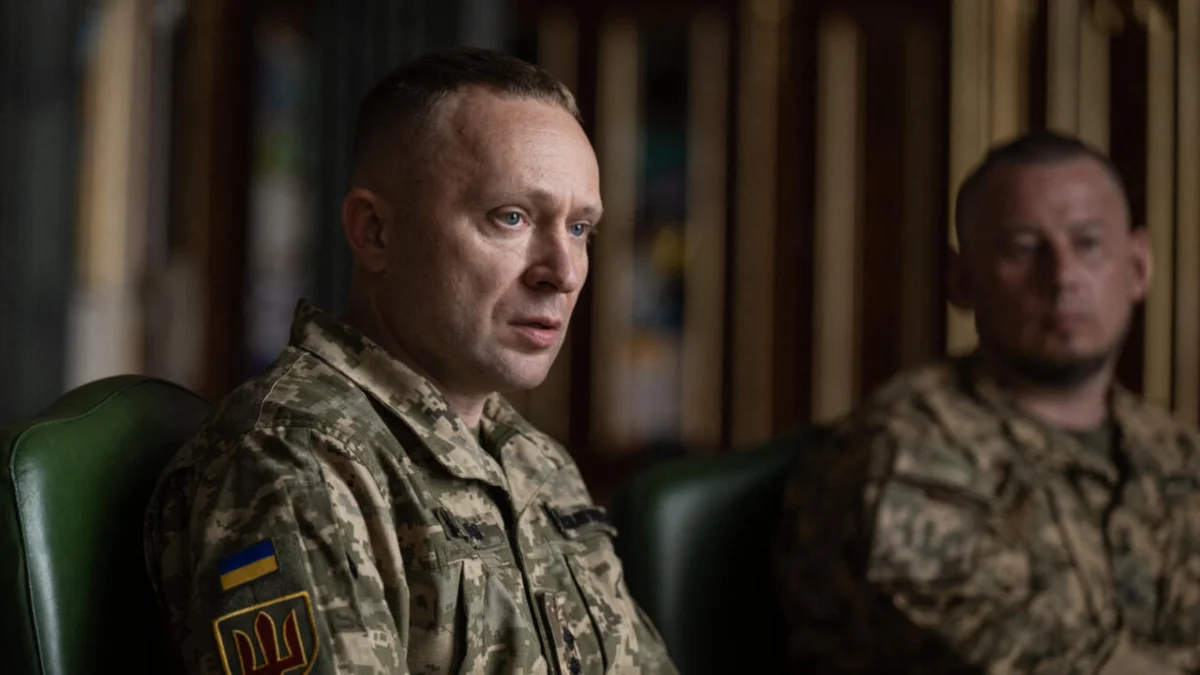
Drapaty, conversely, is viewed as a "combat officer" whose reputation is rooted in battlefield experience rather than administrative maneuvering. For soldiers currently holding the line in cities like Izium—a vital logistical hub near the front—his arrival is seen as a potential shift toward a more pragmatic, soldier-centric command structure. However, this relief is tempered by the ongoing controversy surrounding the departure of Mykhailo Fedorov. Fedorov, who gained immense popularity for his work in digitizing the defense sector, integrating advanced drone technology, and pushing for systemic reforms in mobilization, remains a symbol of progress for many. His sudden removal has ignited a firestorm of dissent, with thousands of Ukrainians taking to the streets to demand his reinstatement.
Chronology: From Reform to Rebellion
The current crisis did not emerge in a vacuum; it is the culmination of months of simmering tension between the military high command, the civilian government, and a weary, war-torn population.

- July 2026 (Early Month): Reports emerge regarding systemic issues within specific military units, including allegations of physical abuse and mismanagement within the Skelia assault unit. Public dissatisfaction with the military leadership begins to mount.
- July 16, 2026: The government announces the surprise dismissal of Defense Minister Mykhailo Fedorov. The move is ostensibly tied to internal restructuring, but it is widely perceived as an attempt to curtail the influence of a popular, reform-minded figure.
- July 17–18, 2026: Massive protests erupt in Kyiv and other major cities. Demonstrators demand the reinstatement of Fedorov and call for the immediate resignation of Army Chief Oleksandr Syrsky. The scale of these protests is noted as the largest war-related civil movement since 2022.
- July 22, 2026: Facing mounting pressure from both the streets and the front lines, President Zelensky officially relieves Oleksandr Syrsky of his duties.
- July 23, 2026: Mykhailo Drapaty is inaugurated as the new commander-in-chief. Simultaneously, Yevgen Khmara, an individual with a background in the security services, is tapped to fill the void left by Fedorov.
Supporting Data: The Soldier’s Perspective
The grievances driving these protests are rooted in the harsh realities of a war that has lasted nearly half a decade. Soldiers like "Khrest," a 22-year-old serving near Izium, emphasize that the issue is not just about individuals, but about policy.
Fedorov’s tenure was defined by his advocacy for fixed-term contracts. Currently, many mobilized soldiers remain in service indefinitely, with no clear end date in sight. Fedorov’s initiatives were aimed at providing these men and women with a predictable path to rotation and rest. As Khrest noted in interviews, "He’s introducing contracts so that mobilized soldiers at least know how long they’ll have to serve. And he’s also trying to make sure soldiers get some rest."
The tactical shift toward technological warfare is another cornerstone of the support for Fedorov. Another soldier, "Ananas," noted that Fedorov’s push for drone-heavy warfare was designed to replace human lives with machines. The loss of such a proponent is felt keenly by those who view the current attrition-based strategy as a "meat grinder."
Furthermore, the "digitalization" of the military, which allowed for better resource tracking and reduced corruption, was a hallmark of Fedorov’s ministry. While some, like the nurse Svitlana, warn against "idealizing" any official, they nonetheless recognize the tangible decline in pay and support systems that followed his exit, further fueling the public demand for his return.

Official Responses and Political Maneuvering
The government’s official stance has been to frame these changes as necessary iterations in a long-term strategy to win the war. In addressing the allegations of abuse within the Skelia unit—which became a rallying cry for protesters—the military leadership stated that such violations were "shameful" and that corrective measures were being implemented.
However, observers argue that the timing of these changes suggests a deeper political struggle. By replacing Fedorov with Yevgen Khmara, an insider from the security services, the administration may be attempting to consolidate control over the defense sector during a precarious time.
For many citizens, this maneuver is transparent. Oleg, a 69-year-old resident of Kyiv, expressed a widely held sentiment: "Zelensky tried to turn the attention away with Fedorov’s removal." The protesters view the move as a diversionary tactic rather than a genuine attempt to address the rot within the system. The appointment of Drapaty is seen by the government as a concession to the front-line soldiers, hoping that a "warrior-general" will command more respect than the previous careerist leadership.
Implications: The Road Ahead
The appointment of Mykhailo Drapaty and the ouster of Mykhailo Fedorov will have long-term implications for the trajectory of the war.

- Civil-Military Relations: The success of the current protests proves that Ukrainian civil society is no longer willing to be a silent observer of military leadership. The government must now navigate a delicate balance: maintaining military discipline while responding to the democratic pressures of a populace that has sacrificed everything for the nation’s survival.
- The "Fixed-Term" Question: The most pressing issue for the new commander will be the implementation of the rotation and contract policies that Fedorov championed. If Drapaty fails to address the lack of clear service terms, the morale of the armed forces—already strained—could reach a breaking point.
- Technological Integration: The loss of Fedorov’s vision for drone-based warfare creates a vacuum in the modernization of the Ukrainian army. Whether his successor, Khmara, will maintain the momentum of the drone program is a primary concern for both donors and soldiers.
- Political Stability: As Taisiia Obod, a political science student in Kyiv, noted, the momentum for reforms must not be lost. If the government continues to swap out reformers for security-apparatus insiders, it risks alienating the very public that has been its bedrock of support throughout the conflict.
In conclusion, the Ukrainian military and political leadership find themselves at a critical juncture. The appointment of Drapaty is a necessary step in satisfying the immediate, desperate needs of the troops on the front, but it is not a panacea. The underlying demands for transparency, fair treatment of soldiers, and a clear vision for the conclusion of the war remain unaddressed. As the war enters this new, uncertain phase, the ability of the Zelensky administration to harmonize the demands of the battlefield with the expectations of a resilient but weary society will likely determine the ultimate outcome of the conflict.