By Chuck Booth
In the annals of footballing history, few teams have achieved the level of clinical, systematic dominance that Luis de la Fuente’s Spain displayed throughout the 2026 World Cup. With a 1-0 victory over Argentina in the final, La Roja secured their second World Cup title, cementing a legacy that transcends mere results. By neutralizing a formidable Argentine attack—denying them a single shot on target across 90 minutes—Spain did more than just win a trophy; they redefined the blueprint for international success.
As the confetti settles in New York and the football world pivots toward the horizon of 2030, one reality remains clear: this is not a flash in the pan. This is a burgeoning dynasty, one that arrives at the threshold of a home-hosted World Cup in four years with the hunger, the youth, and the tactical sophistication to potentially eclipse the greatest teams the sport has ever seen.
The Path to Glory: A Historical Chronology
The 2026 campaign was an exercise in absolute control. From the group stages, where they dismantled Saudi Arabia, to the grueling knockout rounds expanded by the new 32-team format, Spain never faltered.
The tournament was defined by a ruthless consistency. Spain did not trail for a single minute of the entire tournament—a staggering statistic for any major competition, let alone the World Cup. Their path was marked by tactical fluidity. When injuries threatened to disrupt the rhythm—most notably to the electrifying winger Nico Williams—the squad depth proved to be the ultimate safety net. The tactical evolution of Pedro Porro, who wrestled the starting right-back position from Marcos Llorente, and the seamless rotation between Pedri and Fabian Ruiz, showcased a squad that operates as a collective rather than a collection of stars.
The final against Argentina served as the crowning achievement. Against a side led by the legendary Lionel Messi, Spain’s defensive structure—anchored by the indomitable Rodri and the composure of goalkeeper Unai Simón—rendered the opposition toothless. When Ferran Torres buried the decisive goal, it was the culmination of a tournament-long narrative: Spain’s defense was not just a shield; it was an impenetrable wall.
Supporting Data: The Metrics of Dominance
The statistics behind Spain’s 2026 run are historically significant. By conceding only one goal across eight matches, they set a new defensive benchmark for a World Cup winner. While Italy (2006), France (1998), and Spain (2010) previously held the record for defensive frugality, they achieved their marks over seven games. Spain’s ability to maintain this level of excellence through an extra round of competition underscores their physical and mental endurance.
The advanced metrics paint an even more lopsided picture. The highest Expected Goals (xG) value Spain allowed in any single match was 0.67 against Portugal; conversely, they held Saudi Arabia to a near-nonexistent 0.08 xG. Lionel Messi, typically the focal point of any match, was stifled to just 54 touches and a solitary shot, largely neutralized by a team that prioritized collective positioning over individual marking.
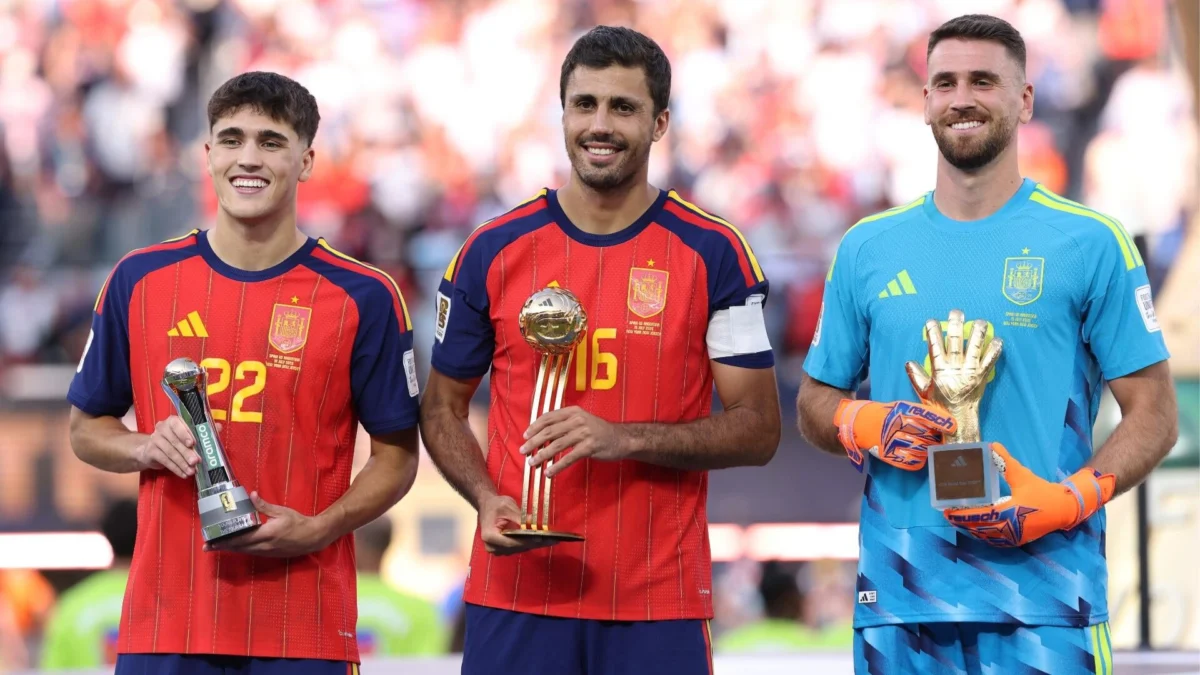
This performance was spearheaded by the emerging youth of the squad. Pau Cubarsi, only 19, was rightfully named the tournament’s Best Young Player. His maturity in the heart of the defense provided a calm presence that belied his age, serving as the perfect complement to the tactical engine room operated by Rodri.
The Yamal Phenomenon and the Changing of the Guard
The most terrifying prospect for Spain’s rivals is that Lamine Yamal—the wunderkind who had already announced himself on the world stage with a goal and four assists during Euro 2024—was not even the most statistically dominant teenager on his own team.
While Yamal’s output during the World Cup was modest by his own high standards—scoring once in the group stage—his presence remained a gravitational force that created space for others. At just 17, Yamal is already being discussed in the same breath as Kylian Mbappé and Erling Haaland. His potential is limitless, and with an average squad age of 26.2, Spain is uniquely positioned to remain at the peak of the mountain for years to come.
As Pedro Porro noted in the wake of the final, the maturity of these young players is striking: "He’s a young boy, but I think the most important thing for him now is to congratulate him… he’s an incredible player."
Official Perspectives: The De la Fuente Era
Luis de la Fuente has achieved the "Triple Crown" of international football: the UEFA Nations League, the European Championship, and the World Cup. His management style, which emphasizes preparation and adaptability, has turned a talented group into a professional machine.
Reflecting on the achievement, Unai Simón offered a glimpse into the team’s mindset: "Winning a World Cup, there is nothing else on a sporting level. It cannot be compared to the Euro Cup… winning a World Cup is unique. We had to wait 16 years. I think we only have to wait four to get another star."
The sentiment within the camp is one of humble pride. Despite the heated atmosphere of the final—which saw moments of tension, including an altercation involving Leandro Paredes—the Spanish players remained focused on the collective goal. For players like Porro, the victory was deeply personal, bridging the gap between childhood dreams and professional reality. "Since you are very little, you go in search of a dream," Porro shared. "My grandfather told me, ‘Bring it home, son.’ I’m just looking forward to getting out of here and calling him."
Implications for 2030: The Road to Home Glory
The implications of this victory extend far beyond the current trophy. With Spain set to co-host the 2030 World Cup alongside Portugal, Morocco, and select South American nations, the pressure to replicate this success will be immense. However, the conditions for a repeat performance are ideal.
- The Aging Curve: By 2030, Lamine Yamal will be 23 years old—entering the absolute prime of his athletic career. The current core of the team, provided they avoid major injury, will have hit their tactical zenith.
- Home Advantage: The emotional weight of winning a third star on home soil will serve as a massive psychological propellant. The home crowd, combined with the experience of the 2026 triumph, creates a high-pressure environment that this specific group has already proven they can handle.
- Tactical Continuity: De la Fuente has built a system that is not dependent on a single "hero" figure. By prioritizing a balanced, defensive-first approach that empowers individual creators like Yamal and Williams, he has created a system that is difficult for opponents to scout and even harder to break down.
While teams like France and the emerging talents of South America will undoubtedly challenge for the 2030 title, Spain has set the bar. They have proven that they can dominate the biggest stage, handle the pressure of being favorites, and evolve their tactics to counter the best players in the world.
The global football community should be on notice. The new kings of international football have arrived, and they have no intention of abdicating their throne. As the dust settles on the 2026 World Cup, the footballing world isn’t just looking at a winner; they are looking at the foundational pieces of a dynasty that could dominate the next decade of the beautiful game.