The 2025 college football coaching carousel was nothing short of a seismic event. From the storied halls of Ann Arbor to the intense pressure cookers of Baton Rouge and Gainesville, the sport’s landscape was irrevocably altered as blue-blood programs scrambled to reset their trajectories. As we pivot toward the 2026 season, the dust has finally settled, revealing the true winners and losers of the offseason’s frantic roster management.
The task for this new generation of head coaches was binary: either retain the talent already in the building or aggressively recruit through the transfer portal to fill the gaps. Today, we break down how these first-year head coaches have navigated the most volatile period in modern college football history.
The State of the Game: A New Era of Roster Construction
The modern college football roster is a fluid entity, no longer anchored solely by traditional high school recruiting cycles. In 2026, the power resides with those who can master the intersection of Name, Image, and Likeness (NIL) collectives and the transfer portal.
For programs like Ole Miss, Penn State, and LSU, the coaching transition wasn’t just about implementing a new playbook; it was about securing the foundation of a championship contender. The following analysis grades these programs not just on their acquisition of talent, but on their ability to cultivate continuity in an era defined by constant departure.
The Gold Standard: Ole Miss and the Art of Retention
Ole Miss (Grade: A+)
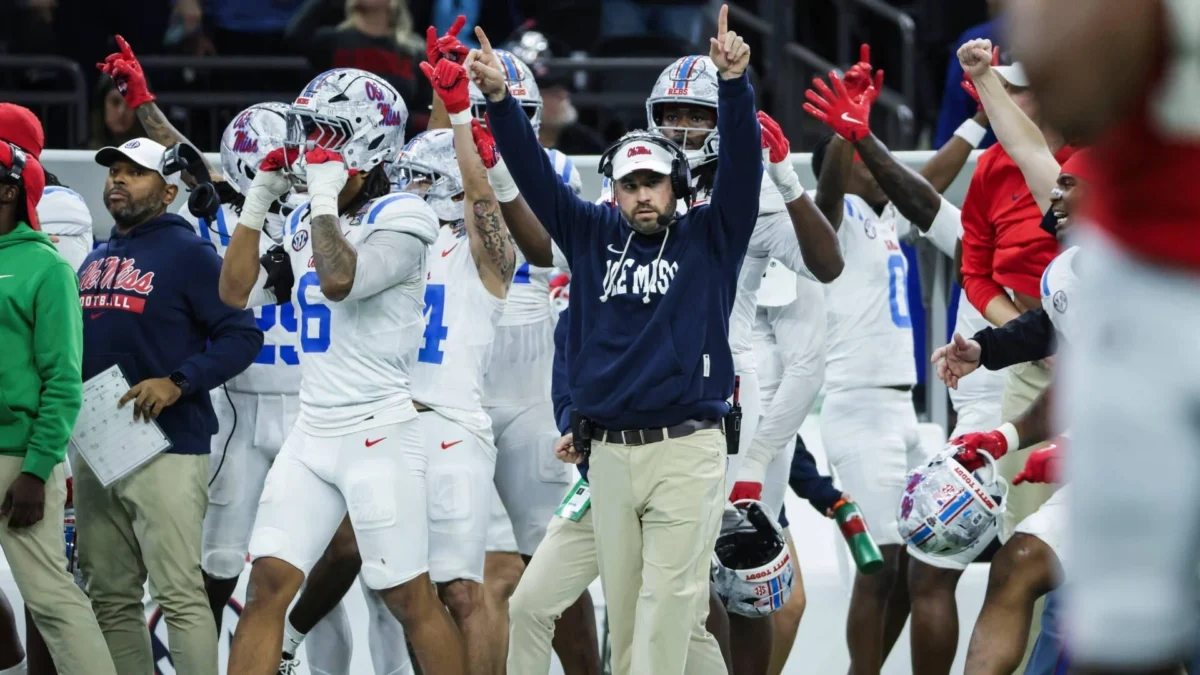
Under new head coach Pete Golding, Ole Miss has emerged as the clear leader in the post-carousel landscape. Golding’s strategy was twofold: capitalize on a sophisticated NIL operation to secure the nation’s No. 2 transfer class while simultaneously convincing the program’s existing stars to remain in Oxford.
The retention of quarterback Trinidad Chambliss and running back Kewan Lacy cannot be overstated. Chambliss, arguably the most talented signal-caller in the SEC, provides a level of stability that few first-year coaches enjoy. With a defense that returns key contributors across all three levels, the Rebels are rightfully positioned as a premier threat to make a second consecutive College Football Playoff appearance.
Penn State (Grade: A)
Matt Campbell’s arrival at Penn State has injected a "Nittany-Cyclone" hybrid identity into Happy Valley. By bringing 24 players with him from Iowa State, Campbell has bypassed the traditional "getting to know you" phase of a coaching transition. These imports, paired with the existing talent recruited by the previous regime, provide a roster that is deep, experienced, and hungry. Coupled with a 2026 schedule that is remarkably favorable, Penn State has the clearest path to the CFP among the first-year class.
The High-Stakes Gambles: LSU and Michigan
LSU (Grade: A-)
Lane Kiffin’s tenure at LSU begins with a clear objective: restore the Tigers’ status as an offensive juggernaut. While Kiffin secured the No. 1 transfer class in the country, the health of quarterback Sam Leavitt remains the program’s primary concern. After an injury-riddled 2025, Leavitt’s limited participation in spring practice leaves a cloud of uncertainty over the offense. With an offensive line currently ranked 29th nationally by Phil Steele, Kiffin’s primary challenge will be keeping his star quarterback upright.
Michigan (Grade: A-)
Kyle Whittingham inherited a roster in flux following the conclusion of the Sherrone Moore era. However, the outlook in Ann Arbor is surprisingly bright. The rushing attack, anchored by Jordan Marshall and five-star talent Savion Hiter, promises to be among the nation’s elite. Furthermore, sophomore Bryce Underwood is poised for a breakout season under new coordinator Jason Beck. While the defense lacks depth, the influx of Utah-bred talent should bridge the gap.
Tactical Shifts: Auburn, Oklahoma State, and Utah
Auburn (Grade: A-)
Alex Golesh’s arrival at Auburn brings a proven offensive philosophy from his time at South Florida and Tennessee. By importing his core, including dual-threat quarterback Byrum Brown, Golesh has established an immediate baseline for success. The defense, bolstered by the retention of coordinator D.J. Durkin and linebacker Xavier Atkins, adds a layer of continuity that should keep the Tigers competitive in the SEC.
Oklahoma State (Grade: B+)
Eric Morris is banking on the "Mean Green" connection to jumpstart Oklahoma State. With the arrival of quarterback Drew Mestemaker, running back Caleb Hawkins, and receiver Wyatt Young, the Cowboys have effectively imported a high-powered offense from North Texas. While the offensive firepower is undeniable, the defensive unit lacks the same degree of star power, raising questions about whether the team can maintain balance in a high-scoring Big 12.
Utah (Grade: B+)
The transition from Whittingham to Morgan Scalley was fraught with potential for disaster, but the Utes have managed to keep the core of the program intact. By supplementing their existing defensive identity with receiver transfers Kyri Shoels and Braden Pegan, Utah has prioritized incremental improvement over radical change. With Devon Dampier returning under center, the Utes remain a difficult out for any conference opponent.
Mid-Tier Transitions: Navigating the Middle Ground
- UCLA (Grade: B+): Bob Chesney’s "Indiana-style" approach—bringing his own players to build a new culture—is the right move for a program that has endured two years of sub-par performance. If Chesney can unlock the potential of Nico Iamaleava, the Bruins could be this year’s surprise team.
- Florida (Grade: B+): Jon Sumrall is taking a more conservative approach, focusing on retaining the defensive stalwarts of the previous regime. The success of the Gators will hinge on whether offensive coordinator Buster Faulkner can successfully integrate his former Georgia Tech pupils, Aaron Philo and Eric Singleton, into a winning rhythm.
- Virginia Tech (Grade: B): James Franklin’s move to Blacksburg has created an "unorthodox blend" of his former Penn State staff and the existing defensive personnel under Brent Pry. While the floor is significantly higher than last year’s 3-9 disaster, the talent ceiling remains a limiting factor for ACC contention.
- Cal (Grade: B): Tosh Lupoi’s advantage in the Bay Area is the ability to utilize the transfer portal more effectively than his rival, Stanford. With Jaron-Keawe Sagapolutele returning to lead the offense, the Bears have the pieces to avoid a sophomore slump.
- Kentucky (Grade: B): Will Stein’s aggressive portal strategy, specifically the addition of offensive tackle Lance Heard, shows he understands the requirements of the SEC. However, the risk associated with quarterback Kenny Minchey makes Kentucky a "wait-and-see" program in 2026.
The Rebuilds: Arkansas, Michigan State, Iowa State, and Stanford
At the bottom of the rankings, we find programs in the midst of true, structural rebuilds.
- Kansas State (Grade: B-): Collin Klein has the pieces for a competent offense, but the depth of the roster remains questionable for a serious Big 12 title run.
- Arkansas (Grade: C): Ryan Silverfield is betting everything on the trenches. If his offensive line, led by Bryant Williams and Caden Kitler, cannot protect the team’s inexperienced quarterbacks, it will be a long season in Fayetteville.
- Michigan State (Grade: C-): Pat Fitzgerald faces a daunting task. With little existing talent to work with, the Spartans are effectively starting from scratch, and bowl eligibility would be considered a major victory.
- Iowa State (Grade: C): Jimmy Rogers is overseeing a total tear-down. Importing 15 players from Washington State is a bold move, but it is unlikely to yield immediate dividends in the competitive Big 12.
- Stanford (Grade: D): The reality for the Cardinal is stark. In the NIL era, the lack of talent depth is nearing a critical state. Turning to a walk-on at quarterback highlights the massive chasm between Stanford and the rest of the conference.
Implications for the 2026 Season
The 2026 season will serve as the ultimate referendum on these coaching hires. While the transfer portal has allowed teams like Ole Miss and Penn State to reach "win-now" status, it has also created a disparity that threatens the competitive balance of the sport. Programs that successfully integrated their new arrivals during spring practice will likely see immediate results, while those relying on long-term culture shifts—like Michigan State and Stanford—face an uphill climb.
Ultimately, the 2026 season will be defined by which of these new coaches can bridge the gap between "roster potential" and "on-field production." In an era where the carousel never truly stops, stability, talent retention, and strategic portal usage remain the three pillars of championship success. The grades are in, but the final verdict will be written on the gridiron this fall.