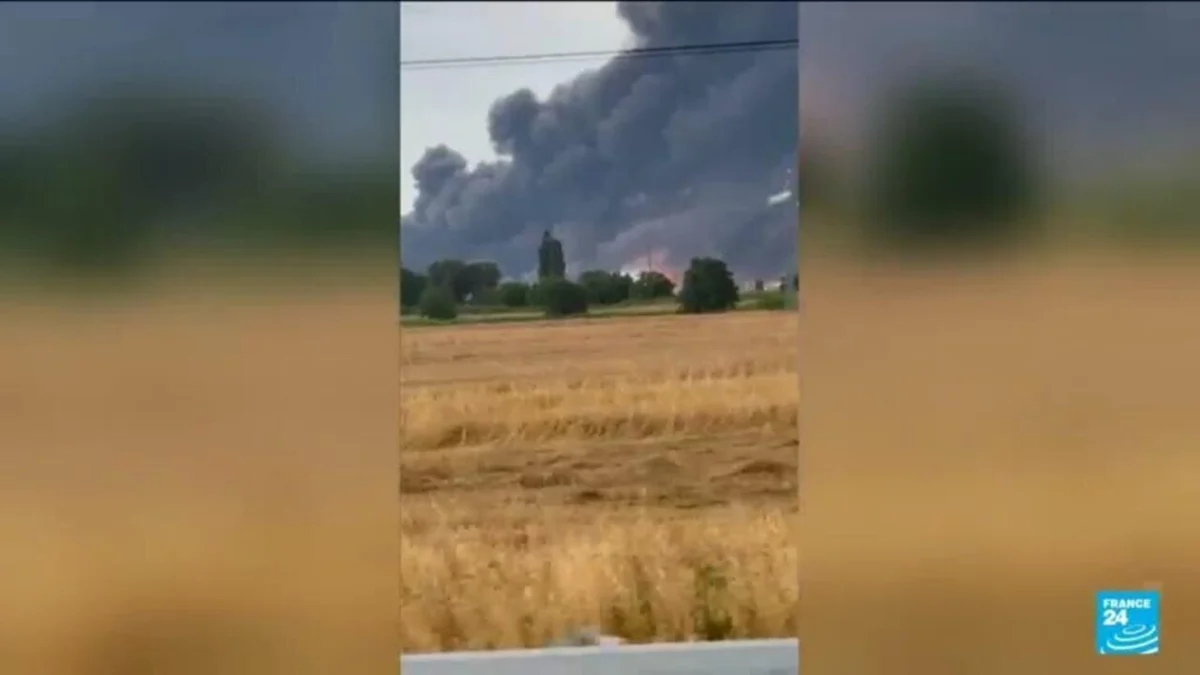
In a calculated escalation of its long-range aerial campaign, Ukraine has successfully struck another major Russian oil refinery, further tightening the vise on Moscow’s domestic fuel supply. The strike, which hit a critical facility deep within Russian territory, underscores Kyiv’s shifting military doctrine: moving beyond frontline engagements to systematically degrade the economic engines that fuel Vladimir Putin’s war machine. As the Kremlin officially acknowledges growing shortages and logistical bottlenecks, the geopolitical implications of these strikes are rippling across global energy markets.
Main Facts: A Shift in Tactical Priorities
The latest operation represents a sophisticated utilization of long-range, domestically produced suicide drones. These unmanned aerial vehicles (UAVs) have demonstrated an uncanny ability to penetrate sophisticated Russian air defense networks, which are largely concentrated around Moscow and the frontlines of occupied Ukraine.
The targeted refinery—a facility responsible for a significant percentage of Russia’s refined gasoline and diesel output—suffered substantial structural damage. Satellite imagery confirmed the destruction of primary distillation units, the "heart" of any refinery. By focusing on these specific components, Ukraine is not merely causing superficial damage; it is rendering these facilities inoperable for months, if not years, due to the difficulty of replacing specialized Western-made machinery under current international sanctions.
This campaign is not merely about tactical disruption; it is an economic offensive. By reducing domestic fuel availability, Kyiv aims to force the Kremlin to divert resources from its frontline military operations to stabilize internal civilian and logistical needs, thereby creating a feedback loop of systemic pressure.
Chronology: The Evolution of the Campaign
The targeting of Russian oil infrastructure is not a new development, but its intensity and sophistication have evolved rapidly since early 2024.
- Early 2024: Probing the Defenses: Initial strikes were sporadic, targeting peripheral storage depots near the border. These served as testing grounds for drone endurance and navigation capabilities.
- Spring 2024: The Strategic Pivot: As it became clear that Western long-range missile supplies were being constrained, Ukraine’s SBU (Security Service) and GUR (Military Intelligence) scaled up their indigenous drone programs. Multiple major refineries in the Nizhny Novgorod and Ryazan regions were hit, forcing temporary shutdowns.
- Summer 2024: Deep-Strike Precision: Strikes moved further inland, targeting facilities over 1,000 kilometers from the Ukrainian border. This demonstrated that no part of Russia’s European energy infrastructure is truly safe.
- The Current Phase: Recent weeks have seen a focus on "sustainability disruption." Instead of simply burning tanks, operators are now targeting the secondary processing units that convert crude oil into high-octane fuel for tanks, jets, and logistics trucks.
Supporting Data: The Impact on Russia’s Economic Engine
The Russian oil sector is the backbone of the Kremlin’s budget. While crude oil exports are the most visible revenue stream, the domestic refining sector is critical for sustaining the military’s daily operations.
Production Deficits
According to independent energy analysts, the cumulative impact of these strikes has resulted in a roughly 15% reduction in Russia’s total refining capacity. While Russia remains one of the world’s largest oil producers, the bottleneck is in refining—the ability to turn that oil into usable products like jet fuel and diesel.
The Cost of Repair
Sanctions have created a "technological iron curtain." Most Russian refineries utilize Western-manufactured catalytic cracking units, which are essential for producing high-quality fuel. With firms like Siemens, Honeywell, and others having exited the Russian market, the spare parts required for these repairs are increasingly difficult to procure. Even with "parallel imports" via third-party nations, the cost and lead time for these components have skyrocketed.
Domestic Price Volatility
The Kremlin has been forced to implement temporary bans on gasoline exports to prevent domestic price spikes. Despite these measures, wholesale fuel prices in Russia have hit record highs, a reality that is increasingly difficult for the state media to mask.

Official Responses: From Denial to Acknowledgment
The Russian response to these strikes has transitioned through distinct phases. Initially, the Ministry of Defense maintained a policy of near-total silence, claiming that all drones were "intercepted" and that only "minor debris" caused fires.
However, as the plumes of smoke became visible on satellite feeds and fuel stations across the country began to report shortages, the narrative changed. Vladimir Putin, in a recent address to his security council, was forced to acknowledge "logistical complications" and "fuel shortages" in specific regions. While he blamed these on "external sabotage," the admission marked a rare departure from the Kremlin’s standard messaging of total control.
Conversely, Ukrainian officials have been increasingly vocal about the legitimacy of these targets. "Russia uses its oil revenue to pay for the missiles that fall on our cities," stated a senior official in Kyiv. "Striking these refineries is not just a military operation; it is a moral and strategic necessity." The position of the Ukrainian government remains that since Russia is using its energy sector to sustain an illegal war, those facilities are legitimate military targets under international law.
Implications: A New Front in the War
The implications of this campaign are far-reaching, affecting both the immediate trajectory of the war and the long-term stability of the global energy market.
The Military Implications
The most immediate effect is the degradation of the Russian military’s logistical tail. Tanks, armored personnel carriers, and supply trucks require massive amounts of refined diesel. If the fuel supply is constrained, the speed and scale of Russian offensive operations are inherently limited. By forcing the Russian military to prioritize fuel for the frontlines over the civilian economy, Ukraine is effectively "taxing" the Russian population to pay for the war, potentially increasing domestic dissent.
Global Market Instability
Russia is a major player in the global fuel market. While the West has largely weaned itself off Russian oil, the global market is interconnected. When Russian refineries go offline, it forces Russia to import fuel from allies or divert its own crude oil differently, creating ripple effects in Asia and the Middle East. Analysts warn that if these strikes continue to escalate, we could see a return to the price volatility of 2022, potentially pressuring Western leaders who are already dealing with domestic inflation.
The Strategic "Red Line"
There remains a persistent, albeit fading, fear in Western capitals that these strikes could trigger an unpredictable escalation from the Kremlin, such as nuclear signaling or strikes on Western energy infrastructure. However, the success of the campaign has emboldened Kyiv. By proving that Russian air defenses are fallible, Ukraine has dismantled the myth of the "invulnerable Russian state," a psychological victory that is as significant as the physical damage to the refineries.
Conclusion: The Road Ahead
As the conflict grinds on, the energy war has become a defining feature of the struggle. Ukraine’s ability to strike deep into Russia’s industrial heartland is a testament to the country’s resilience and its innovative approach to asymmetric warfare.
The Kremlin now finds itself in a precarious position: it must either invest heavily in air defense systems—which are already stretched thin—to protect its refineries, or accept the slow degradation of its most vital economic asset. As the smoke clears over the latest facility, one thing is certain: the war for Ukraine is no longer just being fought in the trenches of the Donbas, but in the oil refineries that keep the Russian war machine running. The coming months will likely see even more sophisticated attempts to choke off the fuel that fuels the violence, marking a decisive shift in the geography of the war.