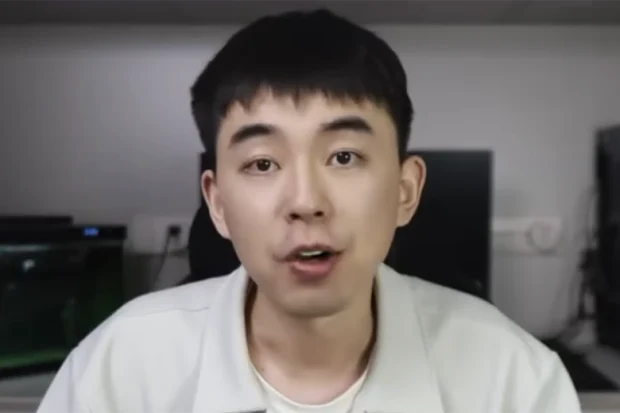
In the high-stakes world of global academia, where the “publish or perish” mantra often dictates the trajectory of careers, a new, unconventional player has emerged to challenge the status quo. Geng Hongwei, a former PhD candidate who dropped out of Beihang University to pursue a career as a full-time content creator, has become an unlikely titan of scientific accountability. With two million followers and a track record of triggering the downfall of prominent researchers, Geng is not just a social media personality; he is the face of a growing movement to cleanse the Chinese academic ecosystem of fraudulent data.
His rise, however, serves as a double-edged sword. While his efforts have been celebrated for their immediate impact, they have simultaneously cast a harsh spotlight on the systemic, institutional failures that allowed academic misconduct to fester in the shadows for decades.
The Rise of the Sleuth: From Dropout to Auditor
Geng Hongwei’s journey began in the halls of Beihang University, but his impact has been felt far beyond the confines of a traditional laboratory. Last year, Geng made the pivotal decision to exit his doctoral program, transitioning into the role of an independent digital investigator. Initially, his content focused on broad developments in biomedical research. However, he soon pivoted toward a more forensic approach, applying his analytical skills to scrutinize the methodologies and data sets underpinning papers authored by China’s most prestigious scholars.
Geng’s methodology is remarkably effective: he uses the reach of social media to perform “post-publication peer review” in the public square. When he identifies inconsistencies, fabricated figures, or suspect data in papers—including those published in world-leading journals such as Nature—he broadcasts his findings to his millions of followers. The velocity of his influence is staggering; within days of his posts going live, targeted universities, including powerhouses like Tongji, Nankai, and Shanghai Universities, have been forced to launch internal investigations. The result has been the swift termination of several high-profile researchers.
Chronology of a Crisis: Why Now?
The emergence of a figure like Geng is not an isolated phenomenon, but rather the culmination of years of institutional inertia.
- Early 2000s: The seed of the problem. Neuroscientist Yi Rao of Peking University notes that had the Chinese academic system implemented robust oversight and disciplinary measures at the turn of the millennium, the current crisis would not have ballooned into the systemic issue it is today.
- The Pre-AI Era: For years, academic misconduct was largely ignored or managed with "slap-on-the-wrist" policies, creating an environment where data manipulation became normalized among those chasing tenure and grants.
- The Present Day: The convergence of the AI revolution and the rise of digital vigilantism. AI tools have made it easier to generate fake data, creating a “minefield” for journals. Simultaneously, social media has provided a platform for individuals like Geng to bypass slow, opaque administrative processes.
Shaoxiong Brian Xu, a research integrity scholar at Hong Kong Polytechnic University, characterizes Geng as "China’s first full-time, widely recognized research integrity whistleblower on social media." This recognition marks a turning point where the power to police academia has shifted from the slow-moving bureaucracy of the university to the agile, unforgiving court of public opinion.
The Failure of Oversight: Supporting Data and Analysis
The success of Geng’s crusade is, paradoxically, a damning indictment of the institutions he monitors. According to experts, the fact that a single individual can accomplish what entire university ethics committees failed to do for years speaks to a profound systemic dysfunction.
The Reactive Trap
As Shaoxiong Brian Xu points out, Chinese universities and academic journals have historically been "largely reactive rather than proactive." When an institution only investigates misconduct after a viral social media post, it confirms that their internal oversight mechanisms are either inadequate or intentionally sluggish.

"Reliance on independent individuals to expose high-profile integrity cases highlights the inadequacy, sluggishness and opacity of institutional research integrity oversight," Xu asserts. This lack of transparency means that many cases of fraud likely remain buried, never reaching the public eye unless a "sleuth" happens to stumble upon them.
The AI Minefield
The challenge is compounded by the rapid adoption of artificial intelligence. AI-generated images and fabricated data sets have made it easier than ever for bad actors to bypass traditional peer review. Charlotte Goodburn, deputy director at the Lau China Institute at King’s College London, warns that this is a global issue, not one confined to China. However, in an environment where the incentive structures are heavily skewed toward high-volume publication, the ease of access to AI tools has created a "minefield" for academic integrity.
Official Responses and the Reputational Stakes
The speed with which Chinese universities have acted in response to Geng’s allegations suggests that the political and social appetite for misconduct is shifting. Historically, China’s academic reputation was shielded from such scrutiny, but the current climate is changing.
The "Reputational Issue"
Charlotte Goodburn suggests that the swift interventions are driven by a fear of national embarrassment. "If it becomes the case that people are saying that ‘Chinese research is all fake and Chinese journals will publish any old rubbish,’ then this is a huge challenge to China’s prestige in building itself up as an educational, intellectual powerhouse," Goodburn explains. Consequently, academic fraud is now being treated as a high-level reputational threat rather than a minor administrative hiccup.
The Need for Structural Reform
Despite these swift interventions, scholars remain skeptical that the problem will be solved without a fundamental overhaul of the system. Yi Rao is blunt in his assessment: "As long as China does not institute a system to punish wrongdoers, it is unclear that the problem will be solved."
The current model—relying on social media whistleblowers and reactive university investigations—is a stopgap measure, not a solution. True reform, according to experts like Xu, requires the intervention of academic publishers themselves.
Implications: The Future of Global Science
The case of Geng Hongwei serves as a microcosm for the global struggle to maintain trust in scientific literature. The implications for the future are significant:
- The Burden on Publishers: Shaoxiong Brian Xu argues that the "ultimate responsibility" rests with those who print the science. If academic journals cannot enforce rigorous standards, they face an existential crisis. The loss of trust in published research threatens the very survival of the academic publishing industry.
- The Shift in Surveillance: The era of the "lone wolf" whistleblower is likely just beginning. As digital tools for verifying data become more accessible, other countries may see the rise of their own "Geng Hongweis," effectively outsourcing the policing of science to the public.
- A Global Challenge: While the focus is currently on China, the underlying issues—the pressure to produce, the inadequacy of current peer-review models, and the rise of AI-assisted fraud—are universal. The Chinese experience, while unique in its speed of response, serves as a cautionary tale for the international scientific community.
In conclusion, the rise of the digital watchdog is both a symptom and a remedy. It exposes the rot in institutional oversight while providing a necessary, albeit chaotic, mechanism for accountability. For the global academic community, the lesson is clear: if institutions do not proactively safeguard their own integrity, the public will eventually step in to do it for them—and the results will be far more disruptive than an internal audit. Whether this leads to a cleaner, more honest scientific culture or merely a cycle of viral "gotcha" moments remains to be seen. What is certain, however, is that the days of unchecked academic misconduct, hidden behind the walls of ivory towers, are coming to a close.