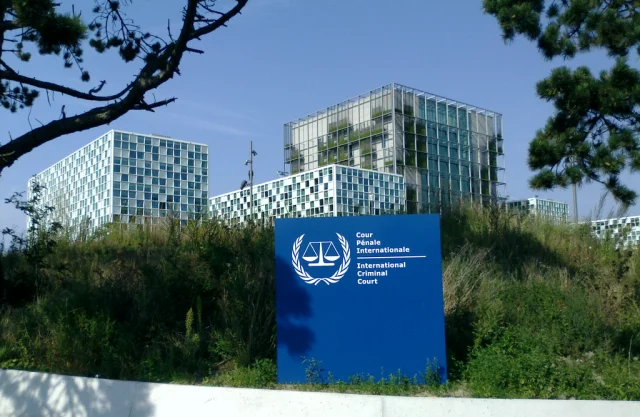
The International Criminal Court (ICC) has issued a significant legal ruling that reinforces its authority to prosecute individuals for atrocities committed in non-member states, provided there is a United Nations Security Council (UNSC) mandate. On Tuesday, Pre-Trial Chamber I officially confirmed that the Court maintains jurisdiction over the case of The Prosecutor v. Khaled Mohamed Ali El Hishri, a former senior official within Libya’s notorious Special Deterrence Force (SDF).
This decision, which effectively rejects a defense challenge based on the principle of state sovereignty, marks a pivotal moment in the ICC’s long-standing investigation into the Libyan conflict. El Hishri stands accused of 17 counts of crimes against humanity and war crimes, allegedly committed between May 1, 2014, and June 30, 2020. The charges center on his command role at the Mitiga prison, a facility near Tripoli that has become synonymous with allegations of systematic abuse, torture, and extrajudicial killing.
The Legal Battle: Challenging the Court’s Authority
The defense team for El Hishri had filed a formal challenge to the ICC’s jurisdiction on April 30, 2026, invoking Article 19 of the Rome Statute. The core of their argument rested on the fact that Libya is not a signatory to the Rome Statute. Defense counsel contended that because El Hishri is a Libyan national and the alleged crimes occurred entirely within Libyan territory, the ICC lacked the legal standing to exercise authority over his person or his actions.
However, the three-judge panel of Pre-Trial Chamber I issued a unanimous ruling dismissing these arguments. The Chamber pointed to the unique legal framework established by the UN Security Council in 2011. Under Resolution 1970, the UNSC, acting under Chapter VII of the UN Charter, referred the situation in Libya to the ICC Prosecutor.
This referral, executed under Article 13(b) of the Rome Statute, provides the Court with a "trigger mechanism" that bypasses the requirement for a state to be a party to the Statute. The Chamber reaffirmed that the 2011 resolution remains the definitive legal anchor for all ICC proceedings concerning the North African nation, regardless of the nationality of the accused.
Chronology of the El Hishri Case
The legal trajectory of the El Hishri case highlights the complex and often protracted nature of international criminal proceedings.
- 2011: The UN Security Council adopts Resolution 1970, referring the situation in Libya to the ICC, citing widespread and systematic attacks against civilians.
- 2014–2020: The period during which El Hishri is alleged to have held senior command at the Mitiga prison, overseeing a period of intense conflict and human rights violations.
- July 2025: El Hishri is detained by German law enforcement, following an international arrest warrant issued by the ICC.
- December 2025: El Hishri is transferred to the custody of the ICC and makes his initial appearance before the Court in The Hague.
- April 30, 2026: Defense counsel files a motion challenging the Court’s jurisdiction, arguing against the applicability of the Rome Statute to a non-member national.
- May 19–21, 2026: The ICC conducts the confirmation of charges hearing, a critical stage to determine if there is substantial evidence to proceed to trial.
- June 2026: Pre-Trial Chamber I formally rejects the defense challenge, affirming the Court’s jurisdiction and clearing the path for a potential trial.
The Mitiga Prison: A Hub of Alleged Atrocities
The charges against El Hishri are grounded in the brutal reality of the Libyan civil conflict. As a senior official within the Special Deterrence Force—a powerful militia that has functioned as an auxiliary to various Libyan security apparatuses—El Hishri is alleged to have exerted comprehensive control over the Mitiga detention facility.
According to the Office of the Prosecutor, the evidence against him is extensive. Witnesses and survivor testimonies describe a environment of pervasive violence. El Hishri is accused of personally participating in and ordering acts of:
- Torture: Use of physical and psychological trauma to extract information or punish detainees.
- Sexual Abuse: Systematic degradation and assault of individuals held within the facility.
- Extrajudicial Killings: Summary execution of those deemed enemies of the militia or those who failed to meet demands.
The confirmation of charges hearing held in May served as a "mini-trial" of sorts. Prosecutors presented a dossier of evidence, including internal logs, intercepted communications, and victim statements, to demonstrate that the acts were not isolated incidents but part of a widespread policy of state-sanctioned violence.
Official Responses and Procedural Next Steps
The Office of the Prosecutor (OTP) has lauded the ruling as a victory for the rule of law. In a brief statement following the announcement, a spokesperson noted that the decision ensures "there is no vacuum of justice" for victims of the Libyan conflict.
Conversely, the defense has remained tight-lipped regarding further appeals, though the rejection of their jurisdiction motion is a significant blow to their strategy. Under ICC rules, the next major milestone is the formal decision on the confirmation of charges. The Pre-Trial Chamber is required to deliver this decision within 60 days of the conclusion of the May hearing.
If the charges are confirmed, the case will be handed over to a Trial Chamber. This new body will then begin the process of scheduling a full trial, which will involve the presentation of witnesses, cross-examination, and the final determination of guilt or innocence.
Implications: The Reach of International Justice
The confirmation of jurisdiction in this case sends a strong signal to perpetrators of war crimes in non-member states. It reaffirms the potency of UNSC referrals as a tool to hold officials accountable, even when their home countries attempt to shield them behind the veil of non-membership in the ICC.
1. Strengthening the UNSC Referral Mechanism
Critics of the ICC often point to the limitations of its reach, particularly in nations like Libya, Syria, or Sudan. By consistently upholding the validity of Article 13(b) referrals, the Court is establishing a robust body of precedent that deters domestic actors from believing they are immune to international prosecution.
2. The Role of Global Cooperation
The detention of El Hishri by German police demonstrates the essential role of state cooperation. Without the willingness of individual nations to execute arrest warrants and facilitate the transfer of suspects, the ICC would be little more than a symbolic institution. The El Hishri case serves as a model for how international warrants can lead to actual arrests in third-party countries.
3. Impact on Future Libyan Accountability
This ruling may pave the way for further investigations into other militia leaders and government officials in Libya. As the ICC continues to build its case, the documentation gathered in the El Hishri proceedings will likely serve as a roadmap for investigating broader patterns of command responsibility within the SDF and other armed groups in the region.
4. Challenges Ahead
Despite the legal victory, the case remains fraught with difficulties. Collecting evidence in an active conflict zone is notoriously difficult, and the security of witnesses remains a primary concern for the Court. Furthermore, the political instability in Libya means that local authorities are unlikely to provide meaningful assistance, forcing the ICC to rely heavily on international intelligence and the courage of those who escaped the detention centers.
As the Court prepares to issue its decision on the confirmation of charges, the international community watches closely. For the victims of Mitiga prison, the ICC’s assertion of jurisdiction is the first concrete step toward an acknowledgment of their suffering and the potential for a trial that could finally strip away the immunity that has long protected the perpetrators of Libya’s darkest chapters.