For decades, the silent, invisible march of the chytrid fungus, Batrachochytrium dendrobatidis (Bd), has been described by biologists as one of the most significant threats to vertebrate biodiversity in human history. The pathogen, which induces the lethal skin disease chytridiomycosis, has driven hundreds of frog and toad species toward the precipice of extinction, leaving a trail of silent wetlands and empty ponds across the globe.
However, a glimmer of hope has emerged from the rugged landscapes of the Pyrenees. A collaborative research effort led by University College London (UCL), the ZSL Institute of Zoology, and Imperial College London has uncovered a biological mechanism that explains why some amphibian populations are successfully rebounding in the face of this fungal plague. The secret, it appears, lies not in the strength of the adult immune system, but in the precision of its timing.
The Scourge of the Chytrid Fungus
To understand the significance of this discovery, one must first understand the devastating lifecycle of Bd. The fungus targets the keratinized skin of amphibians, disrupting their ability to regulate vital water, salts, and minerals—processes that are fundamental to their survival.
For the majority of an amphibian’s early life, they are effectively invisible to the fungus. Tadpoles and larvae lack the keratin-rich skin that Bd requires to colonize and thrive. Consequently, these aquatic youngsters exist in a state of relative safety. The crisis occurs during metamorphosis. As the tadpole undergoes the radical transformation into an adult frog or toad, its skin keratinizes, becoming a lush, nutrient-rich environment for the fungus. For many populations, this transition period is a death sentence, leading to mass die-offs as the fungus strikes the moment the host becomes vulnerable.
Investigating the Rebound: A Comparative Study
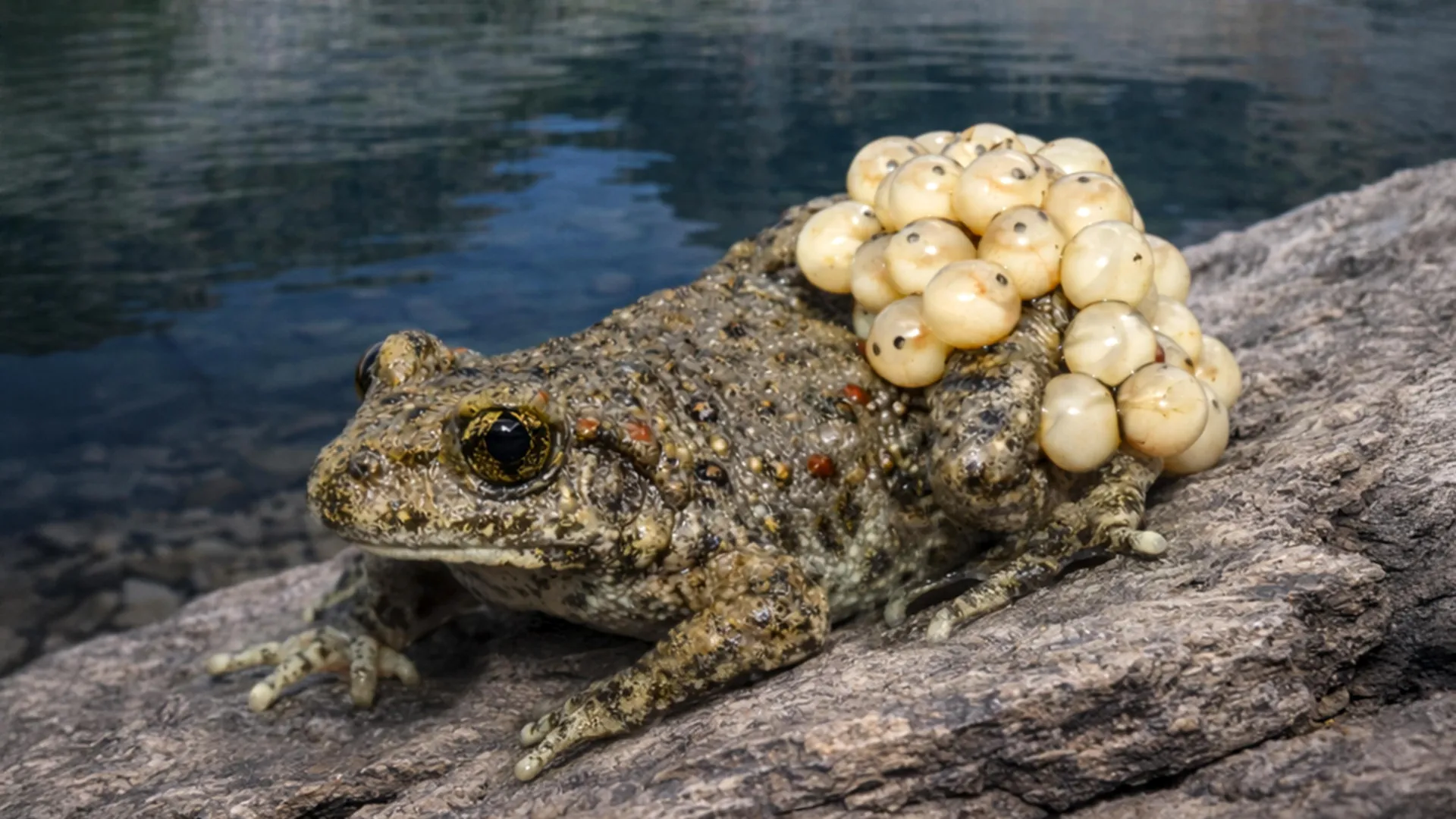
The research team, whose findings were recently published in the journal Nature Chemical Biology, focused their investigation on common midwife toads inhabiting four lakes across the Pyrenees mountains in France and Spain. Each of these lakes had suffered severe, documented outbreaks of Bd.
The researchers observed a startling divergence in outcomes. At one lake, the toad population remained in a state of terminal decline, nearing local extinction. In contrast, at three other nearby lakes, the populations had rebounded to stable levels, despite the continued, persistent presence of the Bd fungus in the environment. This discrepancy provided the perfect natural laboratory to identify what factors—environmental, genetic, or biological—separated the survivors from the victims.
Chronology of the Immune "Arms Race"
By analyzing the biochemical defenses of the toads across these four sites, the research team identified a critical "developmental window." The primary weapons in the toads’ arsenal are antimicrobial peptides (AMPs)—natural chemical compounds secreted by the skin that serve as the first line of defense against pathogens.
The team’s analysis revealed a distinct chronology in how these peptides are produced:
- The Struggling Populations: In the toads that were failing to survive the Bd outbreak, the production of these protective peptides remained low throughout the tadpole stage. By the time these individuals underwent metamorphosis and their skin became vulnerable to the fungus, their immune systems were essentially caught "off guard," leaving them defenseless against the fungal assault.
- The Recovering Populations: Toads from the recovering lakes exhibited a "pre-emptive" immune strategy. They began producing high levels of diverse antimicrobial peptides while they were still in the tadpole stage. By the time they emerged as adults, their skin was already primed with a robust chemical shield. Their immune defenses were not just reactive; they were well-established long before the threat became acute.
Supporting Data: Unlocking the Peptidome
The methodology behind this discovery was as impressive as the findings themselves. To map the toads’ chemical defenses, the team utilized advanced mass spectrometry—a high-precision technique capable of measuring the mass of molecules to an extraordinary degree.
The results of this analysis were transformative for our understanding of amphibian immunity. The researchers identified a staggering 1,152 distinct peptides, of which only seven had been previously documented in scientific literature. This "peptidome" provided the data necessary to confirm that diversity matters: the toads with the highest survival rates were those that produced a much wider array of these protective chemicals during their development.
The researchers used tandem mass spectrometry to break these molecules into smaller, identifiable fragments, allowing them to reconstruct the structure of each peptide. This process, as described by co-author Dr. Kersti Karu of UCL Chemistry, represents a shift in biological research. "The ability to analyze hundreds to thousands of molecules in parallel has only emerged over the past decade," Karu noted. "While this approach is common in human oncology—used to distinguish cancerous cells from healthy tissue—applying it to environmental conservation and wildlife disease is a growing, vital frontier."
Official Perspectives and Expert Analysis
Dr. Phillip Jervis, the lead author of the study from UCL Chemistry, ZSL, and Imperial College London, emphasized that this discovery shifts the narrative from one of inevitable extinction to one of potential resilience.
"Our study shows species that have declined heavily from this disease can still recover," Dr. Jervis stated. "They have the tools to fight off infection—it just depends on timing. The disease kills toads and frogs as they turn from tadpoles to adults. Getting mature immunity at the tadpole stage helps these toads survive and the population to continue."
When asked about the next steps, Dr. Jervis highlighted the need to understand the "why" behind the timing. "We need to look at what factors prevent these immune systems from maturing early. Is it a genetic trait that can be passed down, or is it triggered by environmental stressors?"
He pointed to specific ecological pressures, such as temperature fluctuations or the presence of non-native trout. Trout, for instance, are major predators of tadpoles; their presence can force tadpoles to accelerate their metamorphosis to escape the water faster. This "rushed" development might leave them with less time to properly synthesize their immune peptides, inadvertently making them more vulnerable to the fungus later on.
Future Implications: From Frogs to Human Medicine
The implications of this study extend far beyond the conservation of midwife toads. Senior author Professor Alethea Tabor (UCL Chemistry) pointed to the potential for these findings to aid human medicine, particularly in the face of the global crisis of antimicrobial resistance (AMR).
"We discovered a far greater diversity of peptides than we expected," Professor Tabor said. "A lot of medicines for humans were initially found in the natural world—penicillin came from fungi, for example. These peptides are new leads that could be used to help human health, especially as we have our own problems with the rise of antimicrobial resistance, which is requiring us to find new ways to treat infections."
The discovery of over 1,100 peptides provides a massive new library for pharmaceutical researchers. By understanding how these natural compounds control pathogens in the wild, scientists may be able to synthesize new, more effective antibiotics that can bypass the resistance mechanisms currently hindering medical treatments in human hospitals.
Conclusion: A Pathway to Persistence
The research, funded by the UK’s Natural Environment Research Council (NERC) and the Leverhulme Trust, serves as a poignant reminder that nature often holds the solutions to the crises we inflict upon it. By documenting the "immune clock" of the midwife toad, scientists have identified a key indicator of survival.
Moving forward, the challenge for conservationists is to determine how to manage habitats to support this early immune development. Whether through restoring water temperatures or controlling invasive predators that force early metamorphosis, the goal is clear: provide the amphibians with the time they need to arm themselves. In the battle against the chytrid fungus, time, quite literally, is the difference between life and death.