Main Facts: A Disquieting Discovery in the English Countryside
In a significant finding that challenges long-held assumptions about pollinator safety, researchers from the University of Cambridge have unveiled a stark disparity between two of our most vital pollinators. A new study, published in the journal Ecological Entomology, reveals that bumblebees accumulate up to seven times more heavy metals in their pollen than honeybees, even when both species forage in the exact same environment.
While honeybees have long been heralded as the "canaries in the coal mine" for environmental health, this research suggests they may not be the most accurate indicators for the broader insect population. Bumblebees, it appears, are significantly more vulnerable to the silent, invisible accumulation of toxins—including arsenic, cadmium, chromium, cobalt, lead, and tin. This discovery raises urgent questions regarding the long-term viability of bumblebee populations, as even sub-lethal exposure to these contaminants can impair their neurological function, reproductive success, and overall colony stability.
Chronology of the Research
The study, conducted by a team at the University of Cambridge’s Department of Zoology, took place over several months in the rolling, largely rural landscape of Cambridgeshire, England.
- Initial Observation: Researchers noted that while both honeybee and bumblebee populations were active in the region, the biological impact of local soil and air quality on these species remained under-researched.
- Methodology Development: To ensure a direct comparison, the team strategically positioned honeybee and bumblebee colonies side-by-side. This controlled for geographical variables, ensuring that both species were foraging within the same environmental radius.
- Data Collection: Using specialized pollen traps and biological sampling of adult bees, the team meticulously gathered data on the concentration of heavy metals in both the food sources collected and the insects themselves.
- Analysis and Peer Review: The data was subjected to rigorous statistical analysis, confirming that the discrepancy was not a result of localized pollution spikes but a consistent biological and behavioral trend.
- Publication: The findings were formally presented in Ecological Entomology, the flagship journal of the Royal Entomological Society, highlighting the necessity of reassessing how we monitor environmental health.
Supporting Data: By the Numbers
The data compiled by the Cambridge researchers paints a concerning picture of the "hidden" chemical landscape. The study measured concentrations of several heavy metals across multiple samples.
The Disparity in Pollen
The most striking finding centered on the purity of the pollen collected. In samples taken from the same fields, bumblebee-collected pollen contained between two and seven times the level of heavy metals found in honeybee-collected pollen. This suggests that the bumblebees are either selecting different floral resources or are unable to avoid contaminated sources with the same efficiency as their honeybee counterparts.
Body Burden
Beyond what the bees carry back to the nest, the bees themselves are becoming reservoirs for toxins. The researchers found that bumblebee bodies contained, on average, three times the concentration of heavy metals compared to honeybees. This "body burden" is particularly alarming because it suggests that the toxic exposure is not merely dietary but potentially absorbed through their physical interactions with the environment.
The Metal Spectrum
The metals analyzed—arsenic, cadmium, chromium, cobalt, lead, and tin—are often associated with industrial runoff, tire wear, and agricultural fertilizers. While the levels detected in the Cambridgeshire study were not immediately lethal—meaning they did not cause instantaneous death upon ingestion—the scientists emphasized that they were well within the range known to interfere with biological development and cognitive function.
Official Responses and Expert Insights
Dr. Sarah Scott, who spearheaded the research while at the University of Cambridge and is currently affiliated with Newcastle University, notes that the nuance of the findings is critical. "Most metal levels we found were not high enough to kill bees," she stated. "However, even low levels can still harm bee health and colony success in subtle but important ways, such as affecting their ability to forage and reproduce."
Professor Lynn Dicks, the study’s senior author from the University of Cambridge, highlighted the misconception that rural areas are "safe" zones. "Even in areas that we usually consider safe or lower risk for heavy metals—typically rural areas, away from industrial or mining areas—bees can pick up toxic metals," Dicks remarked. "Bumblebee colonies tend to have fewer workers available to perform tasks, so the loss of individuals can have a big impact on overall colony function."
The "Why": Anatomy, Biology, and Behavioral Differences
The study posits that the difference in toxicity levels is not merely an accident of geography, but a consequence of the fundamental biological differences between the two species.
1. The Hairy Variable
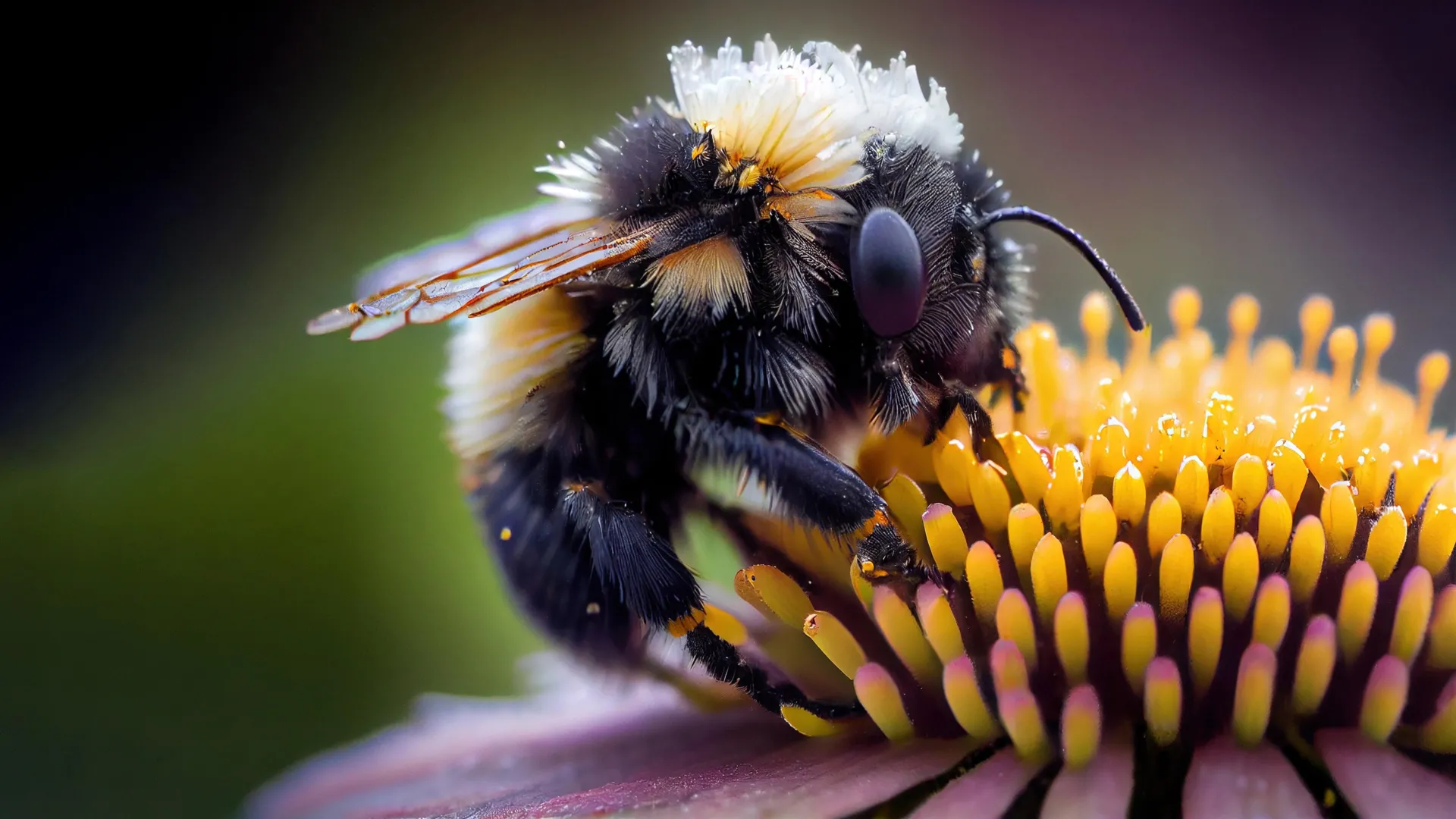
One of the most physical differences is the body composition of the insects. Bumblebees are notoriously "hairy," possessing a dense, fuzz-like coat that is highly efficient at picking up pollen. Unfortunately, this same texture makes them highly effective at capturing airborne particles, dust, and microscopic soil contaminants. As they move through the landscape, they essentially act as biological vacuum cleaners, collecting heavy metals on their bodies which are then groomed and potentially ingested.
2. Nesting and Foraging Dynamics
The life cycle of the colony also plays a massive role.
- Honeybees: A honeybee colony is a massive, complex machine of 30,000 to 60,000 individuals. They nest in protected cavities, such as hollow trees or managed hives. Because they have a vast workforce, they are capable of foraging up to 10 kilometers away from the hive, allowing them to dilute their risk by visiting a wide variety of flowers across a massive territory.
- Bumblebees: By contrast, bumblebees are small-scale operators. A colony typically contains only 50 to 500 individuals. They nest in the ground or in leaf litter, putting them in direct, daily contact with the soil where heavy metals settle. Their foraging radius is much smaller, usually limited to 1.5 kilometers. This geographic limitation means they lack the luxury of "shopping around" for cleaner food sources if their immediate environment is contaminated.
3. Floral Preference
Different species of bees have different nutritional requirements and tongue lengths, dictating which flowers they visit. Because certain plants are "hyper-accumulators" of heavy metals—meaning they pull more toxins from the soil than others—the dietary preferences of bumblebees may inadvertently lead them to choose more contaminated plants than the generalist honeybee.
Implications: A Call for Caution, Not Abandonment
The findings of the University of Cambridge study serve as a warning about the unseen pollutants that threaten our ecosystems. When bees suffer, the repercussions are felt throughout the food chain. Bees are critical to biodiversity and the global food supply; their decline affects everything from wild plant pollination to the yields of our agricultural crops.
However, the researchers are careful to avoid a message of despair. "Bees play a critical role in both biodiversity and food security," Dr. Scott noted. "We’d still encourage people to plant flowers to help them, even if you live in an area more likely to be contaminated."
The rationale is simple: while the pollen in a backyard garden might contain trace amounts of heavy metals, a starving bee is at much greater risk of colony failure than a well-fed bee dealing with low-level toxicity. The consensus among the researchers is that the solution is not to stop gardening, but to be more aware of soil health. Avoiding the use of fertilizers and pesticides, which can contain or facilitate the uptake of heavy metals, remains one of the best ways for homeowners and farmers alike to create a safer environment for our pollinators.
Future Research Directions
The scientific community now faces the challenge of scaling these findings. If bumblebees are being hit this hard in the English countryside, what is happening in more industrial or urbanized zones? Future studies are expected to examine the cumulative effect of these heavy metals over multiple generations of bumblebee colonies. There is also a growing need to determine which specific plants are the most efficient at pulling these metals from the soil, so that land managers can prioritize safer, less-absorptive vegetation in future restoration projects.
Ultimately, the University of Cambridge study acts as a vital reminder that our impact on the environment is often invisible. By understanding the unique vulnerabilities of bumblebees, we can move toward more targeted conservation efforts that protect these fuzzy, essential workers from the heavy burden of our industrial legacy. The future of our ecosystems may very well depend on how effectively we can clean up the dirt beneath our feet.