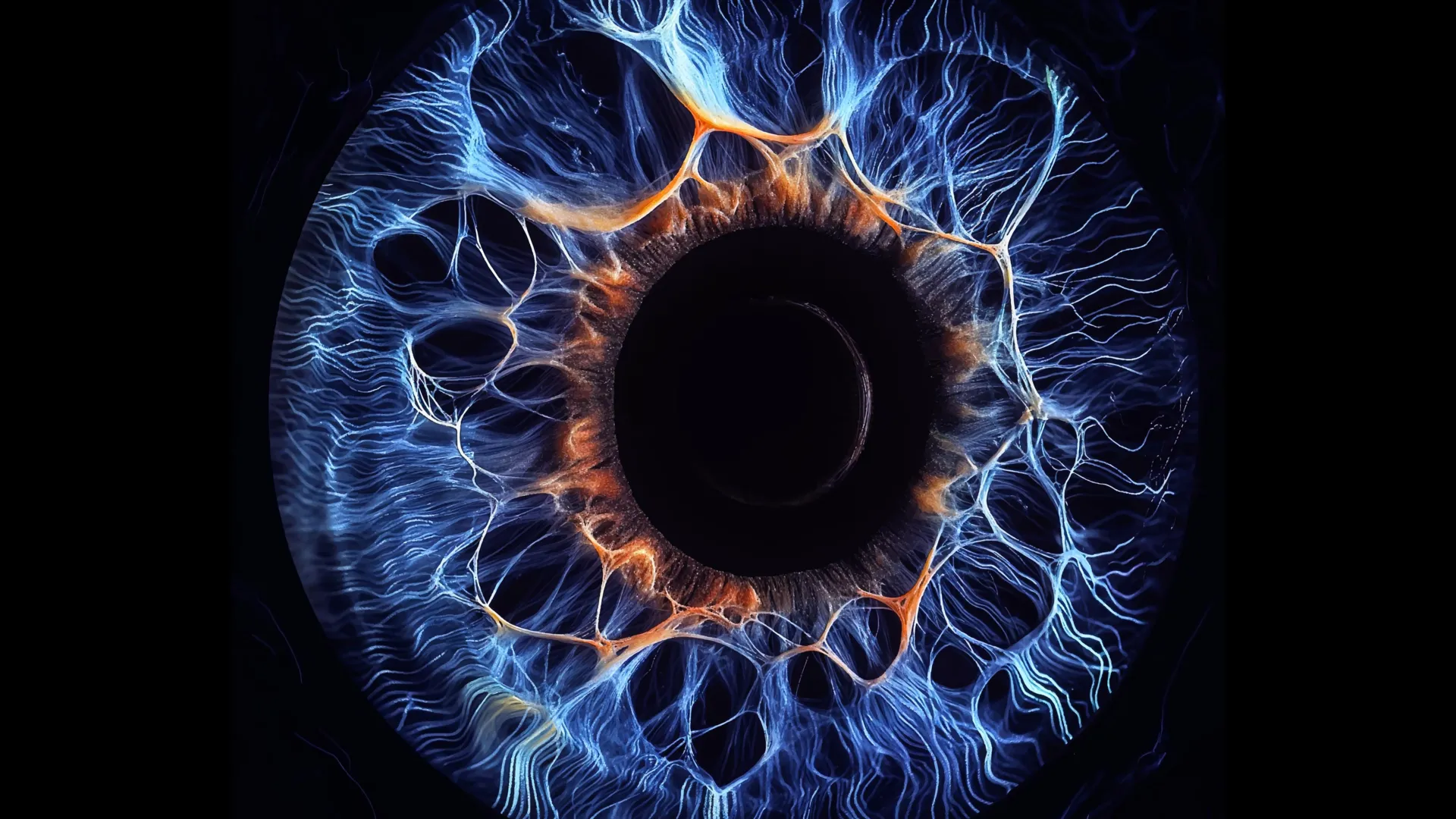
For decades, the standard model of human vision has relied on a "parallel processing" framework. Much like a high-speed computer network sending data packets through dedicated, isolated cables, the human retina was thought to channel visual information—color, contrast, motion, and shape—through strictly independent pathways. Once these signals entered the eye, they were believed to travel along private lines, untouched by neighboring cells, until they reached the brain.
However, a groundbreaking study from the Yale School of Medicine (YSM) has dismantled this long-standing assumption. By mapping the intricate electrical circuitry of the retina, researchers have discovered that these supposedly isolated channels are, in fact, highly interconnected. This hidden network of communication suggests that our eyes are far more collaborative than previously imagined, a revelation that may explain how we detect faint, low-contrast objects in challenging lighting conditions.
The Architecture of Vision: A New Paradigm
The visual system is tasked with a monumental job: capturing a chaotic stream of photons and converting them into a coherent, real-time image. This process begins in the retina, where photoreceptors—rods and cones—detect light and transmit signals to an intermediate layer of neurons known as bipolar cells.
Historically, neuroscientists categorized bipolar cells into more than a dozen distinct types, each acting as a specialized filter for specific visual features. Under the old model, a "daylight" bipolar cell would never dream of sharing information with a "motion-detection" cell. The Yale team’s findings, published in the journal Neuron, prove that this segregation is an illusion.
The researchers discovered that bipolar cells are physically linked by electrical synapses, also known as "gap junctions." While chemical synapses—the traditional method of neural communication—rely on neurotransmitters to bridge gaps between cells, electrical synapses allow for the direct, near-instantaneous flow of electrical current. This discovery implies that the retina does not just process information; it integrates it through a massive, web-like architecture.
Chronology of the Discovery
The road to this discovery was paved by technical innovation and a commitment to curiosity-driven research. For years, the study of bipolar cells remained a "holy grail" of neurobiology because these cells are tucked deep within the retinal tissue. Traditional investigative methods required slicing the retina into thin sections, an invasive process that inevitably severed the delicate connections researchers were attempting to study.
The Yale team, led by principal investigator Z. Jimmy Zhou, PhD, overcame this hurdle by utilizing a dual patch-clamp technique on fully intact mouse retinas. By stimulating individual bipolar cells with microscopic electrodes while recording the activity of their neighbors, the team was able to watch the network in action.
The results were immediate and startling. Rather than a localized "blip" of activity, stimulation of a single cell triggered a widespread, cloud-like pattern of activation across multiple cell types. The team then validated these findings in human retinas provided by the Department of Pathology’s Legacy Tissue Donation Program—marking the first time such intricate electrical recordings have been achieved in intact human tissue.
Decoding the Network: The Role of BC6
Perhaps the most significant finding in the study is the existence of a hierarchical "commander" cell. Among the various bipolar cell types, the researchers identified one, labeled BC6, that acts as the primary coordinator of the retinal network.
The team observed that signals originating from BC6 flow outward into multiple visual pathways in a highly organized, predictable manner. This suggests that the retina is not just a disorganized mesh of connections but a structured, purposeful system. By acting as a central hub, BC6 ensures that when visual signals are weak—such as in near-darkness or when observing a tiny, low-contrast object—the retina can pool resources to amplify the signal before it is sent to the brain.
Supporting Data: Why Integration Matters
The mathematical reality of visual processing is that signals are often degraded by the time they reach the retina. In low light, individual photoreceptors may only catch a handful of photons. If the retina were strictly compartmentalized, these weak signals might be lost entirely, resulting in "visual noise."
The Yale study posits that electrical connectivity provides a "best of both worlds" scenario. The system maintains specialized pathways for high-resolution tasks in bright light, but when sensitivity is paramount, the electrical synapses "open," allowing cells to share information and strengthen the signal.
"If the signal is already very weak and is divided into several channels, there isn’t much left for each channel to process," explains Seunghoon Lee, PhD, a research scientist at YSM and co-corresponding author. "The integration is particularly useful for detecting low-contrast signals or signals from very small objects. It essentially acts as a signal-to-noise booster."
Official Perspectives from the Yale Team
The study is being hailed as a "tour de force" of experimental electrophysiology. Dr. Z. Jimmy Zhou, the Marvin L. Sears Professor of Ophthalmology and Visual Science, emphasizes that the discovery shifts the fundamental understanding of how the nervous system operates.
"People had assumed that the different types of bipolar cells were more or less autonomous," Dr. Zhou stated. "But we found a driver among all these cell types that creates this network with a hierarchy. It changes the way we think about the retina from a simple relay station to an active, collaborative processor."
Yao Xue, PhD, the study’s lead author, underscores the importance of moving away from predefined hypotheses. "We found that while different channels can deliver their own features, they’re also interconnected by underlying electrical circuitry. And the cells aren’t cooperating in a random way. There’s a commander within them—BC6—that leads them in relaying signals to the downstream target."
Broad Implications: From Eyesight to Neural Health
The impact of this discovery extends far beyond the study of human vision. Because the retina is an extension of the central nervous system, the mechanisms discovered by the Yale team may provide a blueprint for understanding how other parts of the brain process complex information.
Clinical Applications
The medical community is particularly interested in how this new understanding of retinal architecture might inform the treatment of degenerative eye diseases. Conditions such as:
- Macular Degeneration: Often characterized by a loss of central vision, this disease involves the death of photoreceptors. If researchers can understand how the remaining network compensates for signal loss, they may be able to develop therapies that "boost" the remaining healthy cells.
- Glaucoma: This condition damages the optic nerve and disrupts the flow of information. Understanding the hierarchical communication network of bipolar cells could lead to better diagnostic tools that detect functional, rather than just structural, decline.
- Congenital Night Blindness: This study provides a new framework for exploring why certain individuals cannot process low-light information effectively, potentially pointing to defects in the electrical synapses or the "commander" cell network.
The Value of Curiosity-Driven Science
Perhaps the most lasting legacy of this study is its defense of fundamental research. In an era where funding is often directed toward targeted, hypothesis-driven clinical trials, the Yale team’s work serves as a reminder that observing the "how" of nature without a specific end goal can lead to revolutionary insights.
"Our experiments didn’t begin with a specific hypothesis but revealed a fundamental processing mechanism in the visual system," Dr. Lee noted. "It’s an important reminder of how essential curiosity-driven research is to discovery."
As scientists continue to map the electrical topography of the human eye, the "separate-channel" model of vision will likely be viewed as a historical stepping stone. The future of ophthalmology and neuroscience will now be focused on the "invisible" connections—the electrical whispers between neurons—that allow us to see the world in all its complex detail.