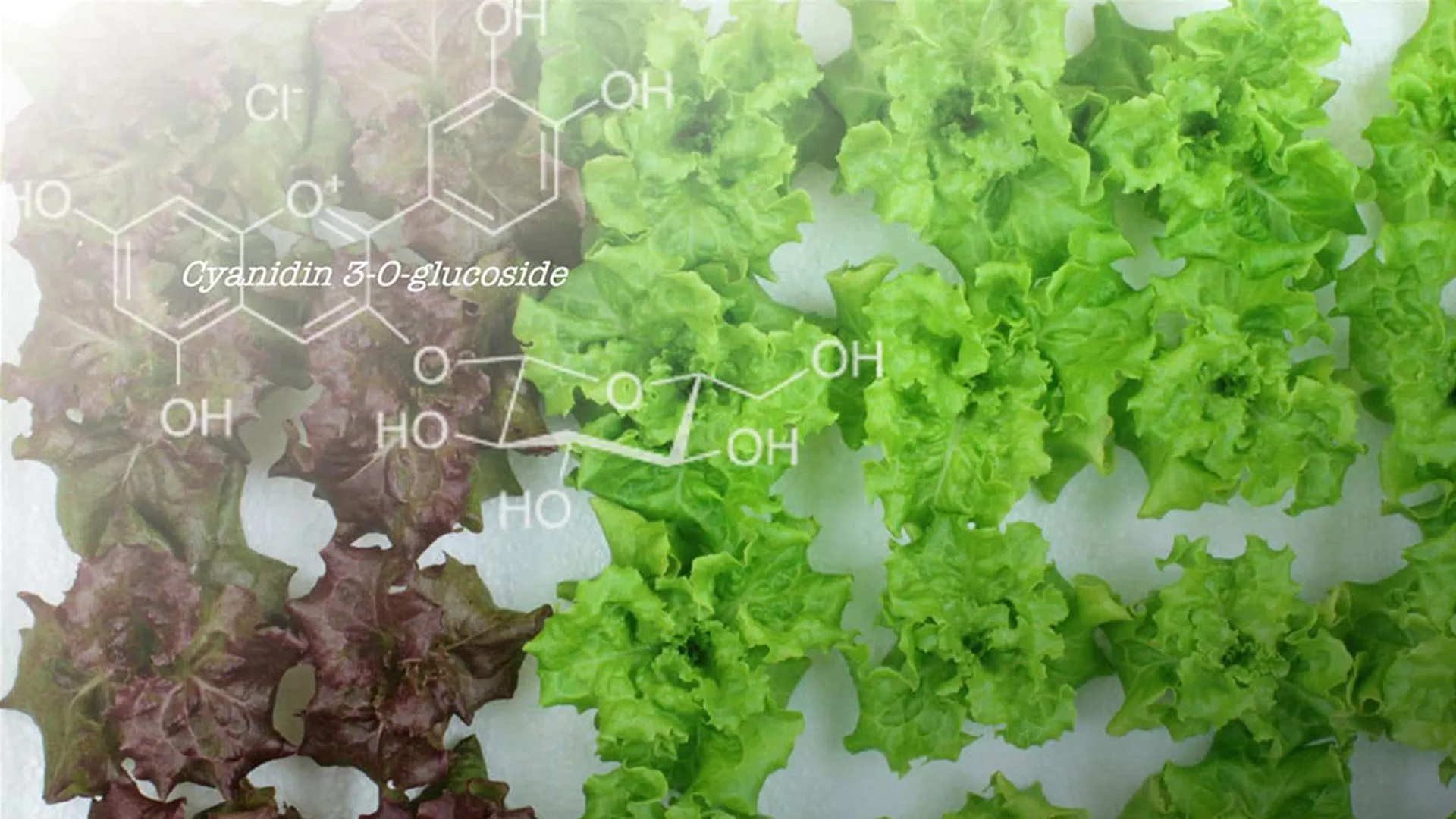
The vibrant, ruby-hued leaves of red leaf lettuce have long been a staple in culinary arts and a darling of the health-conscious consumer. Beyond their aesthetic appeal, these leaves are biological storehouses of anthocyanins—a class of polyphenol pigments renowned for their potent antioxidant properties. However, a groundbreaking study from the Ezura research group has recently peeled back the curtain on the complex biochemical pathways that govern these colors, revealing that by precisely manipulating a single genetic switch, scientists can fundamentally rewire the nutritional profile of the plant without sacrificing its vitality.
This discovery does more than change the color of a salad; it provides a blueprint for the future of "functional foods," where crops can be bioengineered for specific health-promoting compounds within the controlled environments of modern vertical farms.
The Biochemical Architecture of Pigmentation
To understand the significance of this breakthrough, one must first look at the internal chemistry of the plant. The red color in lettuce is not merely a decorative trait; it is the culmination of a sophisticated metabolic journey. Plants synthesize anthocyanins through a series of enzyme-driven reactions that begin with a humble amino acid: phenylalanine.
As the plant processes this precursor, it traverses a complex biosynthetic highway, creating a diverse array of flavonoids. These compounds act as the plant’s internal defense mechanism, serving a multitude of functions—from UV protection to stress response—before a final set of chemical conversions transforms them into the anthocyanins that give red lettuce its signature hue.
For years, the pathway was understood in its general form, but the precision with which researchers could manipulate it remained limited. That has changed with the advent of advanced genome editing.
Chronology: A Step-by-Step Genetic Intervention
The research team, led by experts in plant biotechnology, sought to understand what would happen if they could "throttle" this pathway at a specific, critical juncture. The experiment proceeded through several distinct stages:
- Target Identification: Researchers identified the gene responsible for producing dihydroflavonol 4-reductase (DFR). DFR acts as a metabolic gatekeeper; it is an enzyme involved in the final, critical step immediately preceding the formation of anthocyanins.
- Genetic Modification: Utilizing CRISPR-Cas9 genome-editing technology, the team successfully "switched off" the DFR gene. The hypothesis was that by disabling this specific enzyme, they could prevent the final conversion into anthocyanins.
- Phenotypic Observation: As expected, the modified lettuce plants ceased the production of their characteristic red pigmentation, emerging as green plants despite their genetic lineage as red leaf lettuce.
- Metabolomic Analysis: The team then conducted a deep-dive analysis of the chemical composition of these "green-modified" leaves. They discovered a significant rise in other flavonoid precursors, most notably quercetin—a compound widely recognized for its anti-inflammatory and antiviral properties.
- Growth Verification: The final phase involved monitoring the plants for physiological stress. Surprisingly, the modified lettuce showed no discernible reduction in growth, yield, or biomass compared to their wild-type counterparts.
Supporting Data: Redirecting the Metabolic Stream
The data collected from this study provides a fascinating look at plant plasticity. By blocking the final output of the anthocyanin pathway, the plant did not simply shut down its flavonoid production. Instead, it behaved like a dammed river: when the primary channel was blocked, the biochemical "flow" was diverted into secondary channels, resulting in a significantly higher concentration of upstream flavonoids.
The increase in quercetin levels is particularly noteworthy. Quercetin is a bioflavonoid often sought after in supplement form for its role in cardiovascular health and immune support. The researchers’ ability to effectively "force" the plant to stockpile this compound suggests that the flavonoid biosynthesis pathway is highly flexible. By carefully choosing the site of genetic intervention, scientists can effectively "program" a plant to produce higher concentrations of one beneficial compound over another.
Implications for Indoor Cultivation and "Plant Factories"
Perhaps the most transformative aspect of this research lies in its application to controlled-environment agriculture (CEA), or "plant factories."
In traditional outdoor farming, flavonoid production is at the mercy of the weather. Light intensity, temperature fluctuations, and soil composition can drastically alter the phytochemical profile of a crop, making it difficult to guarantee nutritional consistency. However, in indoor vertical farms, every variable is adjustable.
The Ezura group’s findings suggest that these modified lettuce varieties are ideal candidates for indoor systems. Because growers can control light and temperature—the two primary environmental triggers for flavonoid synthesis—they can create a "perfect storm" of conditions that maximize the accumulation of the desired compounds. This synergy between genetic modification and environmental control could lead to the production of "designer lettuce," customized to have specific health benefits or enhanced shelf-life, all while maintaining the high growth rates required for commercial viability.
Official Responses and Scientific Context
The research, which was supported by the Japan Science and Technology Agency (JSTOPERA, JPMJOP1851), marks a significant step forward in the field of plant metabolic engineering. While the team has not yet conducted a direct head-to-head comparison between these modified plants and conventional green lettuce varieties, the existing data is compelling.
"The goal," notes a representative of the research group, "is not to replace conventional produce, but to expand the spectrum of what is possible. By understanding the bottlenecks in plant metabolism, we can create crops that are not only more nutritious but also more resilient and better suited for the high-tech agriculture of the 21st century."
Critics and industry observers have long been concerned that genetically modifying a plant to change its metabolism might result in a "stunted" or less productive plant. However, the fact that the DFR-disabled lettuce maintained normal growth and productivity is a major milestone. It proves that the "cost" of the metabolic shift is not so high as to cripple the plant’s biological health, providing a green light for further research into other leafy greens and vegetables.
The Broader Landscape: Biofortification and the Future of Food
This study is situated within the broader, ongoing global efforts toward biofortification—the process of increasing the nutritional value of food crops through either conventional breeding or genetic engineering.
As the global population continues to climb and climate change threatens traditional farming regions, the ability to produce nutrient-dense food in small, indoor footprints becomes increasingly vital. If scientists can effectively manipulate the flavonoid pathways in lettuce, they could theoretically apply similar techniques to spinach, kale, or even medicinal herbs.
Potential Benefits to Consumers
- Tailored Nutrition: In the future, consumers might purchase "quercetin-enriched" lettuce, specifically grown to support heart health.
- Consistency: Standardized nutritional profiles would ensure that consumers receive a predictable dose of health-promoting compounds in every serving.
- Sustainability: By optimizing the plant’s internal chemistry, we may reduce the need for external chemical supplements, as the plants themselves become more efficient at producing the nutrients we need.
Addressing Regulatory and Ethical Concerns
Of course, the transition from lab-grown success to the supermarket shelf is not without hurdles. Genetic editing, particularly regarding food, remains a subject of intense public debate. Regulatory frameworks across the globe—from the FDA in the United States to the EFSA in Europe—maintain rigorous standards for the introduction of genome-edited crops.
The Ezura group acknowledges that for this technology to reach the consumer, transparency will be key. The focus must remain on the nutritional benefits and the potential for these crops to address "hidden hunger"—a condition where individuals receive enough calories but lack essential micronutrients.
Conclusion: A New Paradigm for Agriculture
The research into dihydroflavonol 4-reductase in red leaf lettuce is a masterclass in modern biotechnology. By simply disabling one enzyme, the researchers have unlocked a new way to look at the internal machinery of plants. They have demonstrated that the plant is not a static object, but a dynamic, malleable system capable of being tuned to meet human nutritional needs.
As we look toward a future where indoor vertical farming plays an increasingly large role in our food supply chain, the ability to engineer the very chemistry of our produce will be a vital tool. The red leaf lettuce of today may be a precursor to the specialized, nutrient-dense crops of tomorrow. With further research, the "red" that once signaled simple antioxidant content may be replaced by a rainbow of possibilities, each designed to optimize human health and food security in an ever-changing world.
This study stands as a testament to the power of precise genetic intervention. It is not just about changing the color of a leaf; it is about rewriting the script of plant development to create a more resilient, more nutritious, and more efficient agricultural future. As the Ezura group continues its work, the scientific community will be watching closely, eager to see which metabolic pathway—or which vegetable—will be the next to reveal its secrets.