In the windswept, craggy landscape of Stora Karlsö, a small Swedish island in the Baltic Sea, archaeologists have unearthed a mystery that challenges the foundational narrative of human history. For decades, the story of how humans transitioned from hunter-gatherers to modern society has been inextricably linked to the domestication of the wolf. We have long believed this process was a linear, predictable path: wild wolves, drawn to the scraps of human camps, gradually evolved into the submissive, domesticated companions we call dogs.
However, a groundbreaking study published in the Proceedings of the National Academy of Sciences (PNAS) suggests that this narrative is far too simplistic. By analyzing remains dating back 3,000 to 5,000 years, an international team of researchers has uncovered evidence of a "forgotten chapter" in the history of human-animal relations—a period when prehistoric communities weren’t just killing wolves or avoiding them; they were potentially keeping, feeding, and caring for them in ways that defied the traditional trajectory of domestication.
The Stora Karlsö Discovery: An Impossible Passenger
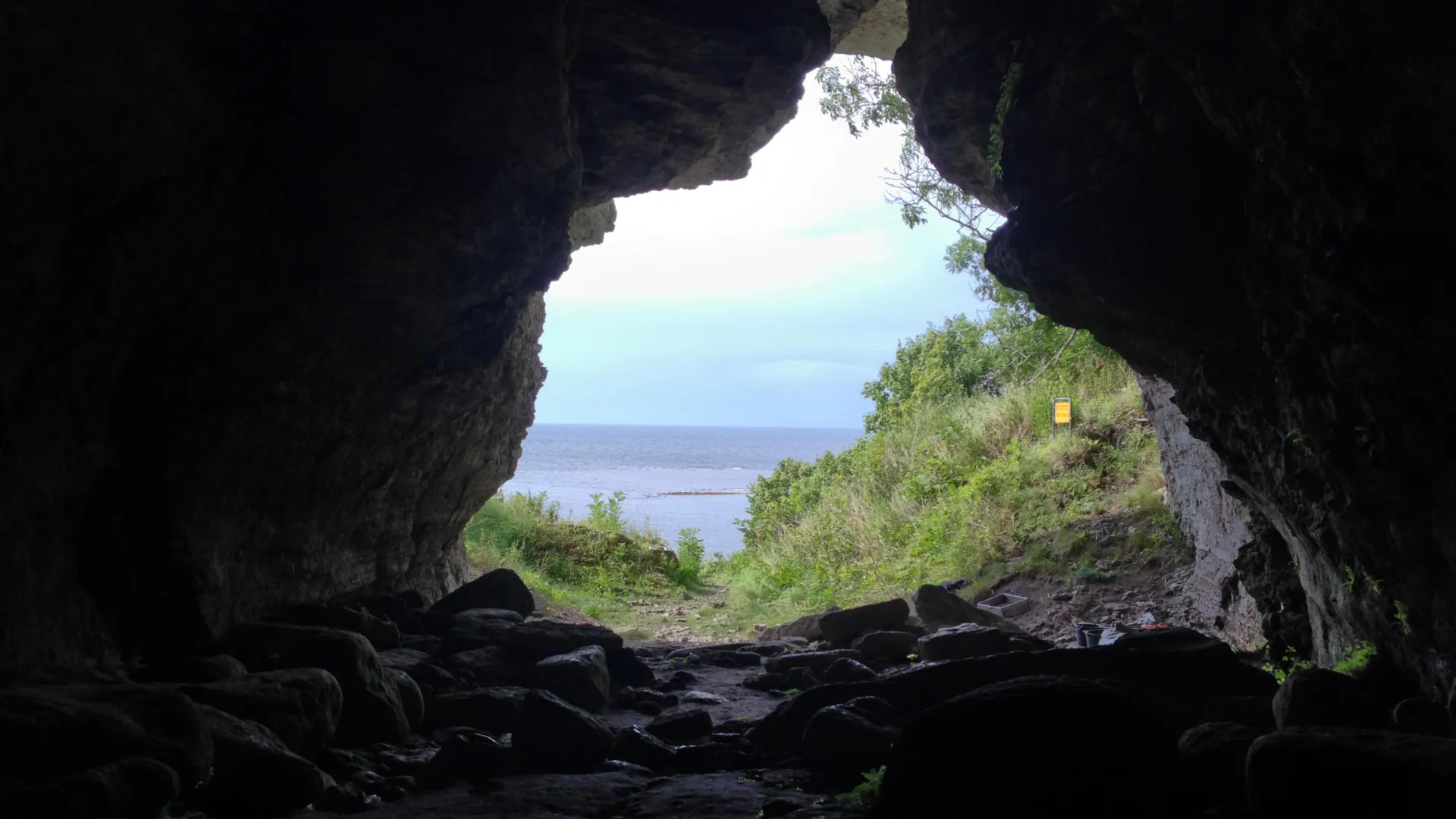
The discovery centers on the Stora Förvar cave, a site that served as a hub for seal hunters and fishers during the Neolithic and Bronze Ages. Stora Karlsö is a small, isolated outcrop of limestone rising from the Baltic Sea, covering a mere 2.5 square kilometers. Crucially, the island lacks any native land mammals. Because wolves cannot traverse open sea, the presence of their remains on the island represents a scientific paradox: the animals could not have reached the site through natural migration.
"The discovery of these wolves on a remote island is completely unexpected," notes Dr. Linus Girdland-Flink of the University of Aberdeen, a lead author of the study. "Not only did they have ancestry indistinguishable from other Eurasian wolves, but they seemed to be living alongside humans, eating their food, and in a place they could have only have reached by boat."
The implication is inescapable: ancient humans must have intentionally transported these wolves across the water. This act of transport suggests that these animals were not merely pests to be eradicated or game to be hunted, but entities valued enough to be brought into a restricted, human-dominated environment.
Chronology of Coexistence: A Deep Dive into the Past
To understand the significance of this finding, one must look at the timeline of the remains. The fossils date back to the Neolithic and Bronze Age transition, a time when human societies were undergoing radical shifts in technology and social organization.
The Neolithic/Bronze Age Context
During these eras, the inhabitants of Stora Karlsö were highly mobile, relying heavily on the seasonal migration of seals and the abundance of Baltic fish. The Stora Förvar cave acted as a base camp for these activities. As researchers excavated the cave, they found two distinct canid specimens. Initial osteological assessments suggested they were wolves. When genetic testing was applied, the results were definitive: these were pure wolves, devoid of the genetic markers that distinguish the earliest dogs.
A Life of Human Provisioning
The researchers utilized isotope analysis—a sophisticated technique that examines the chemical signatures in bones—to reconstruct the diets of these wolves. The findings were striking. The isotopes revealed that the wolves were consuming high levels of marine protein, specifically from seals and fish. This diet perfectly mirrored the dietary habits of the human inhabitants of the island.
This is the "smoking gun" for intentional management. It suggests that these wolves were not hunting independently; they were being provided for by their human hosts. Furthermore, the physical remains of one wolf revealed a severe, healed limb injury. In the wild, such an injury would be a death sentence, preventing the animal from hunting and leaving it vulnerable to starvation or predation. The fact that this wolf survived for a significant period after the injury is strong evidence of human intervention—a primitive form of animal care or "taming" that preceded the formal domestication process.
Supporting Data: Genetic Clues and Morphological Shifts
The study, a collaboration between the Francis Crick Institute, Stockholm University, the University of Aberdeen, and the University of East Anglia, relied on a synthesis of advanced genetic and skeletal data.
Genetic Bottlenecks
One of the most compelling pieces of evidence is the genetic diversity of the wolves. Anders Bergström of the University of East Anglia, co-lead author of the research, highlights the findings: "We found that the wolf with the most complete genome had low genetic diversity, lower than any other ancient wolf we’ve seen. This is similar to what you see in isolated or bottlenecked populations, or in domesticated organisms."
This "bottleneck" effect—where a population becomes restricted in size—is often a hallmark of human management. When humans control the breeding or the movement of a population, they inadvertently limit its genetic pool. While natural factors cannot be entirely ruled out, the combination of the island’s isolation and the low genetic diversity points to an anthropogenic influence.
Physical Divergence
Beyond the genetics, the wolves were physically smaller than their mainland counterparts. This reduction in size, coupled with the genetic data, paints a picture of a population that was adapting—or being forced to adapt—to a lifestyle of human-provided food and limited roaming space.
Official Perspectives and Scientific Implications
The research team has approached these findings with both excitement and scientific caution, emphasizing that this discovery forces a rethink of the "dog domestication" model.
"It was a complete surprise to see that it was a wolf and not a dog," says Pontus Skoglund, senior author and head of the Ancient Genomics Laboratory at the Francis Crick Institute. "This is a provocative case that raises the possibility that in certain environments, humans were able to keep wolves in their settlements, and found value in doing so."
Professor Jan Storå of Stockholm University, an expert in osteoarchaeology, adds that the study’s multidisciplinary nature was key. "The combination of data has revealed new and very unexpected perspectives on Stone Age and Bronze Age human-animal interactions in general and specifically concerning wolves and also dogs," Storå explains.
The researchers posit that these findings suggest that the relationship between humans and canids was far more fluid than we previously imagined. Rather than a binary choice between "wild wolf" and "domestic dog," there may have existed a spectrum of semi-tamed, managed, or co-habitating wolf populations that were eventually abandoned in favor of the more reliable, domesticated dog.
Challenging the Dogma: Rethinking Domestication
For years, the scientific community has relied on a linear model: humans and wolves met, a small percentage of wolves were "bold" enough to approach camps, and through natural selection—and later, artificial selection—those wolves became dogs.
The Stora Karlsö wolves disrupt this narrative in several ways:
- The Intention Gap: These wolves were not passive scavengers; they were brought to an island, suggesting an active, intentional relationship.
- The "Failed" Experiment: The lack of dog ancestry implies that these wolves did not evolve into the modern dog. They represent a different type of interaction—perhaps one where the animals provided companionship or security, but were not subjected to the long-term breeding programs that created the modern dog.
- The Sustainability of Coexistence: The fact that these communities were feeding wolves and allowing them to live in their settlements suggests that wolves were viewed as assets in specific ecological niches, such as the seal-hunting camps of the Baltic.
A Legacy of Coexistence
The findings at Stora Karlsö serve as a poignant reminder of the complexity of our ancestors’ lives. They were not merely focused on survival; they were experimentalists. They sought to bridge the gap between the wild and the domestic, testing the boundaries of what nature would allow.
The wolves of Stora Karlsö represent a forgotten path in our history—a moment where a different kind of bond was formed. Though these specific animals did not leave a direct lineage in the dogs we keep today, they testify to a time when the lines between human and wolf were blurred by necessity, curiosity, and perhaps, the first, tentative steps toward a relationship that would eventually define the human experience.
As we continue to analyze the remnants of our past, the Stora Karlsö discovery stands as a testament to the fact that history is rarely as linear as we think. It is a messy, complex, and fascinating mosaic of experiments in coexistence, of which the wolf, the sailor, and the island are only the beginning.