If you recall the formative ritual of racing home after the final school bell, dropping your backpack, and rushing to the kitchen to claim the family landline for a pre-dinner catch-up with your best friend, you are likely part of a generation that remembers a time before "doomscrolling." Today, that specific, tethered experience is being resurrected—not as a relic of the past, but as a deliberate, high-tech intervention for the modern child.
Pinwheel, the kid-focused technology firm known for its guarded approach to children’s electronics, announced on Tuesday the launch of "Pinwheel Home." This new device is a contemporary reimagining of the classic household phone, designed specifically to bridge the gap between childhood independence and the pervasive, often overwhelming influence of modern smartphone culture.
The Evolution of the "First Phone"
Pinwheel is positioning its latest hardware as the ideal "introductory phone" for children between the ages of 5 and 10. By focusing strictly on voice-based communication, the company aims to offer an alternative to the high-stakes digital environments of social media and text-based apps that often characterize the "first smartphone" experience.
This launch marks a significant expansion for the company, which has spent the last several years carving out a niche in the parenting-tech market. After gaining traction with its line of kid-friendly smartphones—which emphasize parental control and limited app access—and a smartwatch featuring an integrated AI chatbot, the Pinwheel Home represents a move toward stationary, distraction-free interaction.
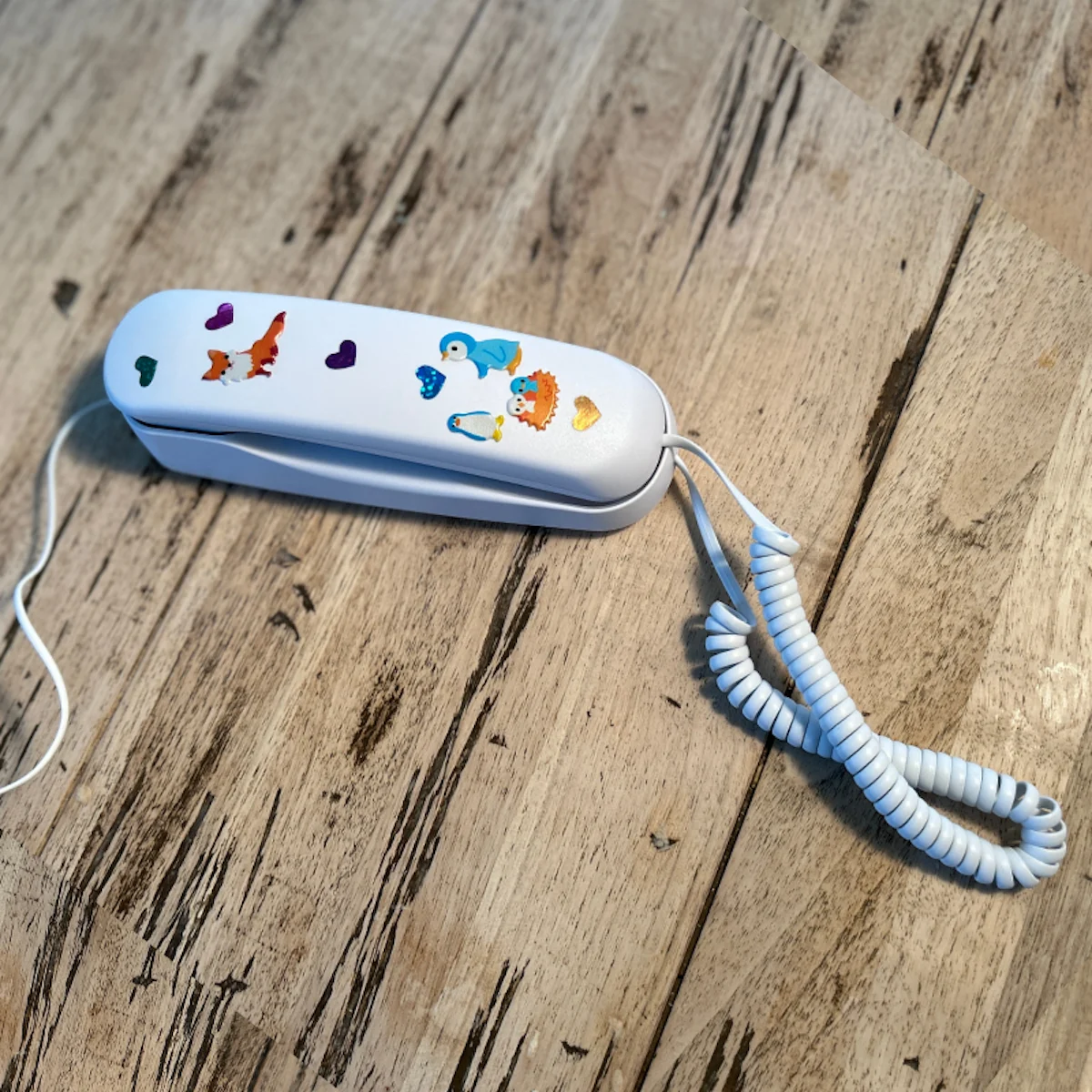
Unlike the landlines of the 1990s, which required hardwired phone jacks and copper cabling, the Pinwheel Home operates entirely over Wi-Fi. This design choice effectively modernizes the hardware while maintaining the physical simplicity that parents find appealing. The device is available in two distinct tiers: the "Spark," a minimalist model starting at $68, and the "Classic," priced at $79, which leans into nostalgia with a traditional handset silhouette and a suite of customizable stickers for personalization.
A Strategic Pivot Away from Screens
The impetus behind Pinwheel Home is not merely aesthetic; it is rooted in growing clinical concerns regarding the impact of screen time on cognitive development. As parents increasingly grapple with the "digital dilemma"—the need to keep their children safe and reachable without exposing them to the psychological pitfalls of algorithmic feeds—Pinwheel is offering a hardware-based solution.

Recent academic research has underscored the urgency of this pivot. A study from the University of Georgia, for instance, found a correlation between heavy social media usage and weakened vocabulary development, noting that children who spend significant time on visual-first platforms show greater difficulty with linguistic recognition and verbal fluency. By stripping away texting, web browsing, and social media, Pinwheel Home forces a return to the one skill that screen-centric devices often erode: the art of conversation.
"We aren’t just selling a phone," says a company representative. "We are selling the ability for a child to practice the fundamental human skill of speaking with a friend, without the anxiety of a like-count, the distraction of an ad-supported game, or the pressure of a group chat."
Chronology: Building a Guarded Ecosystem
The trajectory of Pinwheel’s product development reveals a company consistently moving toward more restrictive, safe-by-design hardware:
- Initial Entry: Pinwheel began by addressing the smartphone problem, launching hardware that allows parents to curate every app and contact on a child’s phone.
- Expansion into Wearables: Recognizing that a child may not always be at home, the company introduced a kid-friendly smartwatch. This allowed for GPS tracking and voice calls, providing safety without the need for a full mobile device.
- The AI Integration: By integrating an AI chatbot into their watch last year, the company demonstrated a commitment to using technology for educational purposes, provided it remains within a "sandbox" environment.
- The "Home" Era: With the launch of the Pinwheel Home this week, the company has completed its ecosystem, offering a solution for the home, the wrist, and the pocket.
This progression suggests a future where the Pinwheel Home acts as a central hub. Future firmware updates are expected to enable three-way calling and, crucially, cross-device integration. This would allow a child to use a single phone number across their watch, their smartphone (when they are older), and the home phone, creating a seamless, parent-managed identity that evolves with the child’s age.
Data and Competitive Landscape
The market for "dumbphones" and kid-safe communication is heating up. As global regulators—including those in Australia and the U.K.—move toward strict legislative bans on social media for minors, consumer demand for screen-free alternatives has spiked.
Pinwheel Home enters a competitive landscape that includes "Tin Can," a $100 Wi-Fi-enabled device that mirrors many of the same functionalities. Both companies utilize a subscription-based model to keep the devices functioning.

Pinwheel’s service structure is broken down as follows:
- Internal Communication: Calls between two Pinwheel devices are entirely free via the "Pinwheel Circle" network.
- Standard Calling: For families who need to reach grandparents or friends on standard mobile networks, plans start at $6.99 per month for five approved contacts.
- Unlimited Access: A $9.99 per month plan provides unlimited calling to any number, offering a competitive alternative to the traditional, high-cost landline service.
Parental Control: The Caregiver Portal
The backbone of the Pinwheel experience is the "Caregiver Portal." In an era where spam calls and digital harassment are commonplace, the portal serves as a digital fortress. Parents retain full administrative rights, including:
- Contact Approval: No one can call the device unless the parent has vetted and approved the number.
- Spam Shielding: Automatic blocking of robocalls and unrecognized callers.
- Scheduling: Parents can set "quiet hours," ensuring that the phone cannot ring during homework time or after bedtime.
- Audit Logs: While the focus is on privacy, parents have the visibility to ensure the device is being used for its intended purpose.
Implications for Future Development
The rise of the "smart landline" carries significant implications for the future of child development and family dynamics. By reintroducing a stationary device into the home, parents are effectively creating a "phone zone." This mimics the environment many parents grew up in, where calling a friend was a deliberate act performed in a shared space, rather than a clandestine, 24/7 habit facilitated by a pocket-sized screen.
Furthermore, as schools and governments continue to debate the role of technology in the classroom and the home, products like Pinwheel Home serve as a middle-ground solution. They acknowledge that connectivity is necessary for modern safety and logistics, while simultaneously rejecting the notion that a child’s first experience with technology must be a gateway to the high-stimulation environment of the modern internet.
As the Pinwheel Home rolls out to the company’s website and hits Amazon this fall, the tech industry will be watching closely. If the device succeeds, it may signal a broader cultural shift: a move away from the "all-in-one" smartphone mentality for children, and toward a modular, age-appropriate approach to digital citizenship. For the generation of parents who once hovered over a landline to whisper to a crush or coordinate a weekend plan, this new hardware is not just a phone—it is a way to reclaim a slower, more intentional kind of childhood.