In an era defined by rapid technological shifts and an overwhelming abundance of life choices, many individuals find themselves paralyzed by the "paradox of choice." We often feel trapped in a singular, linear narrative, susceptible to the creeping nihilism that our daily routines—taxes, errands, and fracturing relationships—are all there is to life. However, a compelling intersection between contemporary cinema and structured design theory suggests that we are far more capable of crafting our destinies than we realize. By viewing our lives through the lens of the "multiverse," we can dismantle the fear of stagnation and actively prototype the futures we desire.
The Existential Mirror: Everything Everywhere All at Once
The 2022 film Everything Everywhere All at Once has emerged as more than just a critical darling; it has become a cultural touchstone for those grappling with the existential weight of the modern age. The plot follows Evelyn Wang, a laundromat owner struggling with a failing business, a strained marriage, and a disconnect with her daughter, Joy. During a mundane audit with the IRS, Evelyn is thrust into an interdimensional conflict where she discovers she is one of many versions of herself across the multiverse.
A Journey Through Chaos
The film’s brilliance lies in its structure: it begins with the crushing mundanity of tax receipts and broken appliances before spiraling into a high-octane, bizarre, and often juvenile exploration of infinite possibility. Critics note that the film’s "madness" is not merely a stylistic choice; it is a narrative requirement. The audience must endure the tedium of Evelyn’s primary reality to fully appreciate the catharsis of the film’s conclusion.
For many viewers, the film serves as a Rorschach test for their own life struggles. The antagonist, Jobu Tupaki, represents the ultimate nihilistic threat: the belief that because everything exists, nothing matters. In contrast, the character of Waymond Wang represents the counter-argument—that in a universe of infinite, meaningless noise, kindness and intentionality are the only things that anchor us to reality.
The Practical Application: Designing Your Life
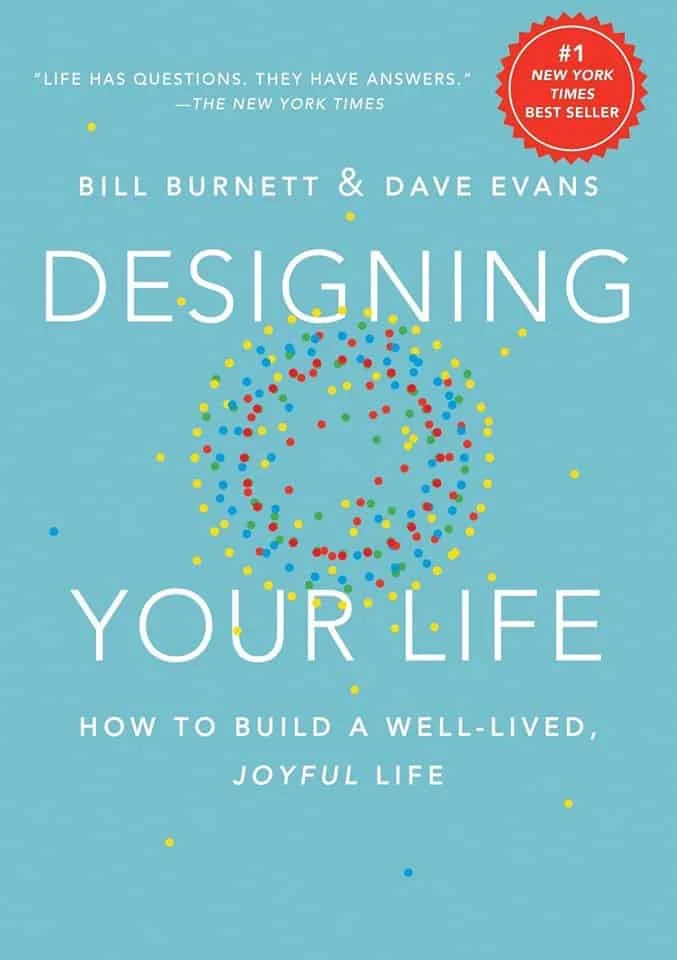
While the multiverse remains a theoretical construct in physics and a narrative device in cinema, the principles of design thinking offer a bridge to bring these concepts into our daily lives. Bill Burnett and Dave Evans, directors of the Stanford Design Program and the Life Design Lab, respectively, codified this approach in their seminal work, Designing Your Life.
The Core Philosophy of Coherence
The book challenges the traditional notion that a "well-designed life" is a static goal. Instead, it defines a successful life as one of "coherence"—a state in which who you are, what you believe, and what you do are in alignment. When these three elements clash, individuals feel the dissonance of a life that feels "off."
The methodology is rooted in five design disciplines:
- Be Curious: Engaging with the world to discover new possibilities.
- Try Stuff: Prototyping life changes through small, low-risk experiments.
- Reframe Problems: Changing the perspective on stuck points.
- Know It’s a Process: Accepting that life is iterative.
- Ask for Help: Leveraging community and mentorship.
Chronology of Personal Transformation
To understand how these concepts move from theory to practice, one must look at the timeline of personal evolution. For many who embrace this philosophy, the process follows a distinct path:
- The Phase of Disillusionment: This is the "IRS audit" stage of life, characterized by burnout, questioning of career paths, and the creeping suspicion that one’s current trajectory is insufficient.
- The Encounter with "The Multiverse": A moment of inspiration—perhaps triggered by a book like The Midnight Library or a film like Everything Everywhere All at Once—that reveals the reality of alternative paths.
- The Design Iteration: The conscious act of applying "Odyssey Plans" to one’s life.
- The Integration: Aligning one’s current work (Workview) with one’s personal values (Lifeview) to achieve lasting, coherent meaning.
Designing the "Odyssey Plan"
Perhaps the most potent tool in the life-design toolkit is the "Odyssey Plan," a five-year roadmap that forces the individual to visualize three distinct versions of their future.
Future #1: The Incremental Evolution
This plan focuses on the current trajectory. It is the "what if I continue on this path?" scenario. For a writer or a content creator, this might involve refining existing platforms, eliminating external distractions like social media, and focusing on creating "evergreen" resources. It is about sharpening the blade of one’s current craft.
Future #2: The Pivotal Pivot
This is the "what if my current job vanished tomorrow?" scenario. It forces the individual to identify their core skills—writing, analysis, empathy, storytelling—and apply them to an entirely different domain. For example, a person with communication skills might transition into end-of-life care or oral history preservation, helping others document their legacies.
Future #3: The "Wild Card" Dream
This is the path where money, ego, and the judgment of others are removed from the equation. It is the pursuit of long-suppressed creative passions. For a financial expert, this might mean going to art school to create a satirical webcomic about fiscal responsibility. This plan is crucial not necessarily because it is the most logical, but because it identifies what brings true joy to the individual.
Implications for Modern Professionalism
The shift toward "life design" has significant implications for how we view career stability. Historically, society dictated a singular, linear career path. The current paradigm, however, suggests that the most successful individuals are those who can navigate multiple identities.
Bridging the Gap Between Mission and Action
Many professionals possess a "Personal Mission Statement" but struggle to operationalize it. The Odyssey Plan acts as the missing link. By creating concrete, five-year projections, individuals turn abstract values into actionable steps. This reduces anxiety, as the realization that "there are many lives to live" replaces the fear of being locked into a single, failing reality.
The Role of Mentorship and Education
Educational institutions are increasingly adopting these principles. The Stanford Life Design Lab is a prime example of institutionalizing these methods, moving away from rigid career counseling toward a more fluid, design-oriented approach. By treating life as a project to be prototyped, students and mid-career professionals alike are better equipped to handle the volatility of the modern economy.
A Note on Limitations: The Missing Index
Despite the efficacy of the Designing Your Life framework, the medium through which these ideas are delivered is not without its flaws. Critics and readers have noted that the book, while dense with life-changing insights, lacks a formal index. For a text grounded in "design principles," this is a significant oversight. A book that encourages readers to constantly reference their Workview and Lifeview needs a map; the absence of one forces readers to rely on bookmarks or manual page-flipping, which can hinder the iterative process of study. Nevertheless, the value of the content remains high enough to warrant the inconvenience.
Conclusion: The Universe is Waiting
Whether you find your inspiration in the chaotic, high-concept multiverse of a film or the structured, analytical exercises of a design manual, the message is the same: You are not a victim of your current timeline.
The concept of the multiverse is not just a trope of science fiction—it is a mental model for your own existence. By acknowledging the various versions of yourself that could exist, you gain the agency to select the elements you value and discard the ones that drain you. The "boring part" of your current life is not a trap; it is merely the first act. With careful design, intentional reflection, and the courage to iterate, you have the power to write a second act that is not only coherent but profoundly, personally meaningful. The universe is not just happening to you; you are the architect of your own potential realities.