By International News Desk
July 14, 2026
Executive Summary: A Region on Edge
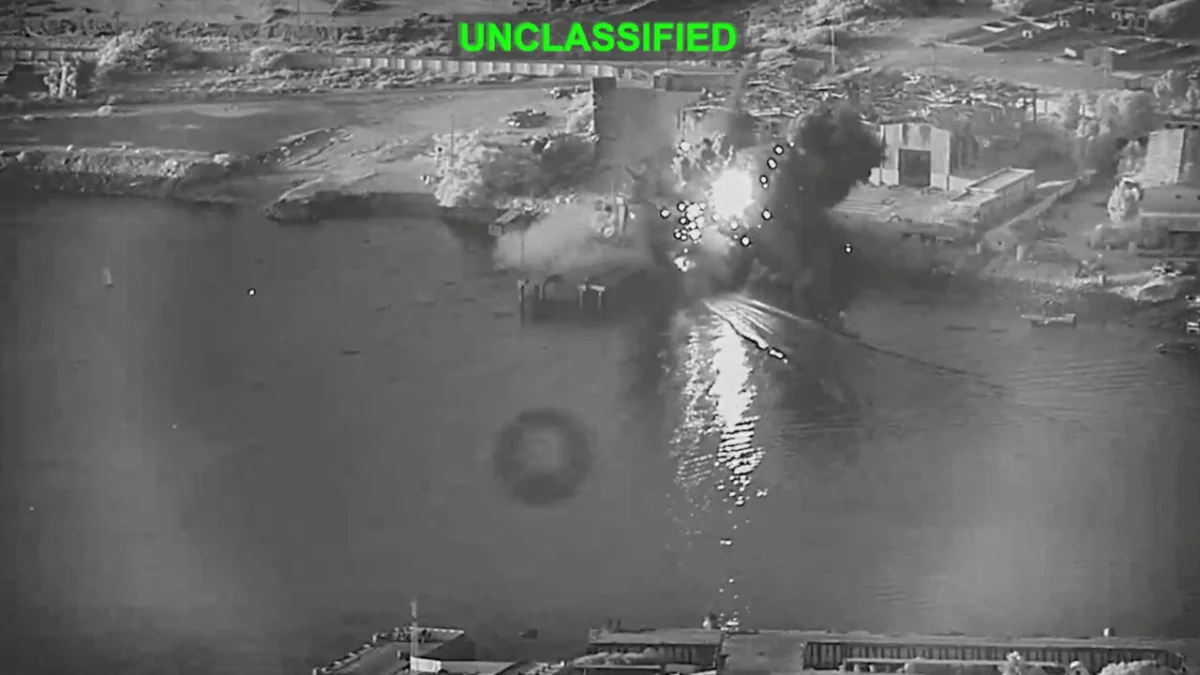
The geopolitical landscape of the Middle East shifted dramatically in the early hours of Tuesday, July 14, 2026, as the United States executed a series of high-precision military strikes against strategic Iranian facilities in Bandar Abbas. According to official statements from U.S. Central Command (CENTCOM), the operation utilized one-way attack surface drones to neutralize a critical submarine and ship maintenance facility.
The strike, which resulted in visible plumes of smoke rising over the port city, represents a significant intensification of hostilities. This military action occurs against a paradoxical backdrop: even as Washington authorizes the use of lethal force, President Donald Trump has maintained that a diplomatic resolution with Tehran remains a viable—and perhaps even desirable—path forward. The dual-track approach of "pressure and potential negotiation" has left global markets and regional observers attempting to decipher the administration’s long-term strategy.
Chronology of the Recent Flare-up
The events of July 13 and 14 are the culmination of weeks of deteriorating maritime security in the Strait of Hormuz.
- July 12, 2026: Tensions spiked as reports surfaced regarding targeted disruptions in the Gulf, with CENTCOM reporting "unprovoked maneuvers" by the Iranian Islamic Revolutionary Guard Corps (IRGC) Navy against international shipping lanes.
- July 13, 2026 (Evening): U.S. forces positioned in the region were placed on high alert. Intelligence reports suggested that the facility at Bandar Abbas was preparing to deploy advanced underwater drones intended for intelligence gathering and potential sabotage.
- July 14, 2026 (01:26 GMT): The U.S. launched its strike package. Utilizing advanced loitering munitions, the military targeted the logistical backbone of Iran’s submarine fleet.
- July 14, 2026 (02:02 GMT): CENTCOM confirmed the strikes were successful, emphasizing that the operation was "defensive in nature" and aimed at protecting the freedom of navigation.
The Strategic Importance of Bandar Abbas
The choice of Bandar Abbas as a target is not incidental. As the primary hub for Iran’s Southern Fleet, the facility provides the logistical support necessary for Iran to project power across the Persian Gulf and the Gulf of Oman.
Military analysts suggest that by targeting a "maintenance facility," the U.S. is signaling a preference for "attritional containment." Rather than engaging in a full-scale kinetic war that would necessitate an invasion or massive aerial bombardment, the U.S. is attempting to degrade the Iranian military’s ability to sustain long-term maritime operations.
"This is a calculated effort to handicap the IRGC’s reach," said Dr. Elena Vance, a senior fellow at the Center for Maritime Security. "By damaging the maintenance infrastructure, the U.S. forces Iran into a position where it cannot repair or deploy its underwater assets, effectively neutralizing a significant asymmetric threat without requiring a full-scale regional conflict."
Official Responses and the Diplomatic Paradox
The White House Position
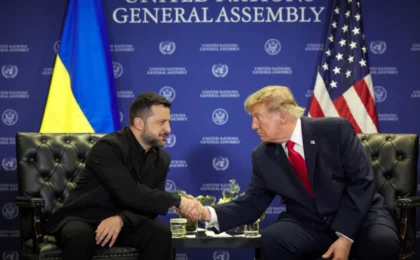
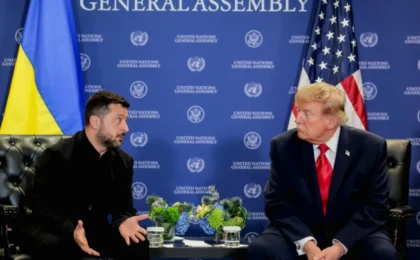
President Donald Trump addressed the media briefly from the White House, balancing the narrative of strength with the prospect of peace. "We will not tolerate threats to our sailors or our global economic interests," the President stated. "However, the door remains open. We are ready to talk to Tehran whenever they are ready to act in good faith. A deal is still very much on the table."
This rhetoric mirrors the administration’s historical approach to international crises—coupling maximum pressure campaigns with the promise of "the deal of the century." Critics, however, argue that such contradictory signaling confuses allies and emboldens hardliners within the Iranian regime.
Tehran’s Reaction
Iranian state media has characterized the strike as an "act of state-sponsored terrorism" and a violation of international sovereignty. Officials in Tehran have vowed a "crushing response," though they have stopped short of declaring an all-out war. The rhetoric coming out of the Supreme Leader’s office suggests that Iran may look to asymmetric retaliation, potentially through cyber-attacks or proxy forces operating in neighboring states, rather than a direct conventional military engagement that they are currently ill-equipped to win.

Implications: Global Markets and Regional Stability
The Energy Sector
The Strait of Hormuz is the world’s most important oil chokepoint, with roughly 20% of global petroleum consumption passing through it daily. Following the news of the strikes, Brent Crude prices saw an immediate spike, climbing by nearly 4% in pre-market trading. Shipping companies have already begun rerouting vessels, and insurance premiums for tankers operating in the region are expected to reach record highs.
The "Shadow War" Escalates
The current situation highlights the transition from a "cold" shadow war to an active, albeit localized, conflict. If this escalation continues, the primary concern for the international community is the potential for miscalculation. In the congested waters of the Gulf, a single stray drone or a misidentified civilian vessel could trigger a wider regional conflagration that would be difficult to contain.
Geopolitical Alignments
Regional powers are currently navigating a delicate tightrope. Saudi Arabia and the UAE have expressed support for the U.S. efforts to ensure maritime security but remain wary of being caught in the crossfire. Meanwhile, China and Russia have called for "restraint on all sides," framing the U.S. actions as destabilizing for the global order.
Supporting Data: Military Capabilities and Risks
The U.S. reliance on "one-way attack surface drones" highlights a shift in modern warfare. These systems are cost-effective, difficult to detect by traditional radar, and provide the U.S. with a low-risk, high-impact tool for targeted strikes.
Conversely, Iran’s reliance on "swarming" tactics—using hundreds of smaller, faster boats and drones—remains a persistent threat. Military assessments indicate that while the U.S. possesses clear technological superiority, the "density of threats" in the Gulf makes complete defense nearly impossible. The current military engagement is a test of whether precision strikes can deter a regime that relies on decentralized, swarming capabilities.
Future Outlook: What Happens Next?
The coming 48 hours will be critical. The international community is watching for three key indicators:
- Direct Retaliation: Will Iran strike back directly at U.S. assets, or will they utilize proxies?
- Diplomatic Backchannels: Will the reported "open door" for a deal actually lead to communication, or will the silence from Tehran deepen?
- Regional Containment: Will the conflict remain localized to the naval infrastructure in Bandar Abbas, or will it expand to include land-based assets or energy infrastructure?
As the sun sets over the Persian Gulf on this tense Tuesday, the world remains in a state of suspended animation. The U.S. administration insists that it is protecting the peace, while Iran insists it is defending its home. Between these two positions lies a volatile reality that threatens to disrupt the global economy and redraw the security architecture of the Middle East.
For now, the liveblog continues to track the pulse of the region, as diplomats scramble and militaries wait for the next command. The situation remains fluid, and as history has shown in this volatile corridor, the next move is rarely predictable.
Disclaimer: This report incorporates verified information from U.S. Central Command, Reuters, and international news agencies. Further developments will be updated as they occur.