For years, the drone industry has followed a predictable trajectory: larger sensors, longer battery life, and more complex mechanical gimbals. However, as of late 2025, the market has witnessed a paradigm shift. The Antigravity A1, a revolutionary 360-degree aerial system, has arrived to challenge the status quo, effectively rendering traditional, gimbal-stabilized cameras obsolete for a vast segment of the creator economy. By prioritizing post-production reframing over real-time piloting, the A1 is transforming the sky from a space to be "captured" into a digital canvas to be explored.
Main Facts: The End of the Gimbal Era
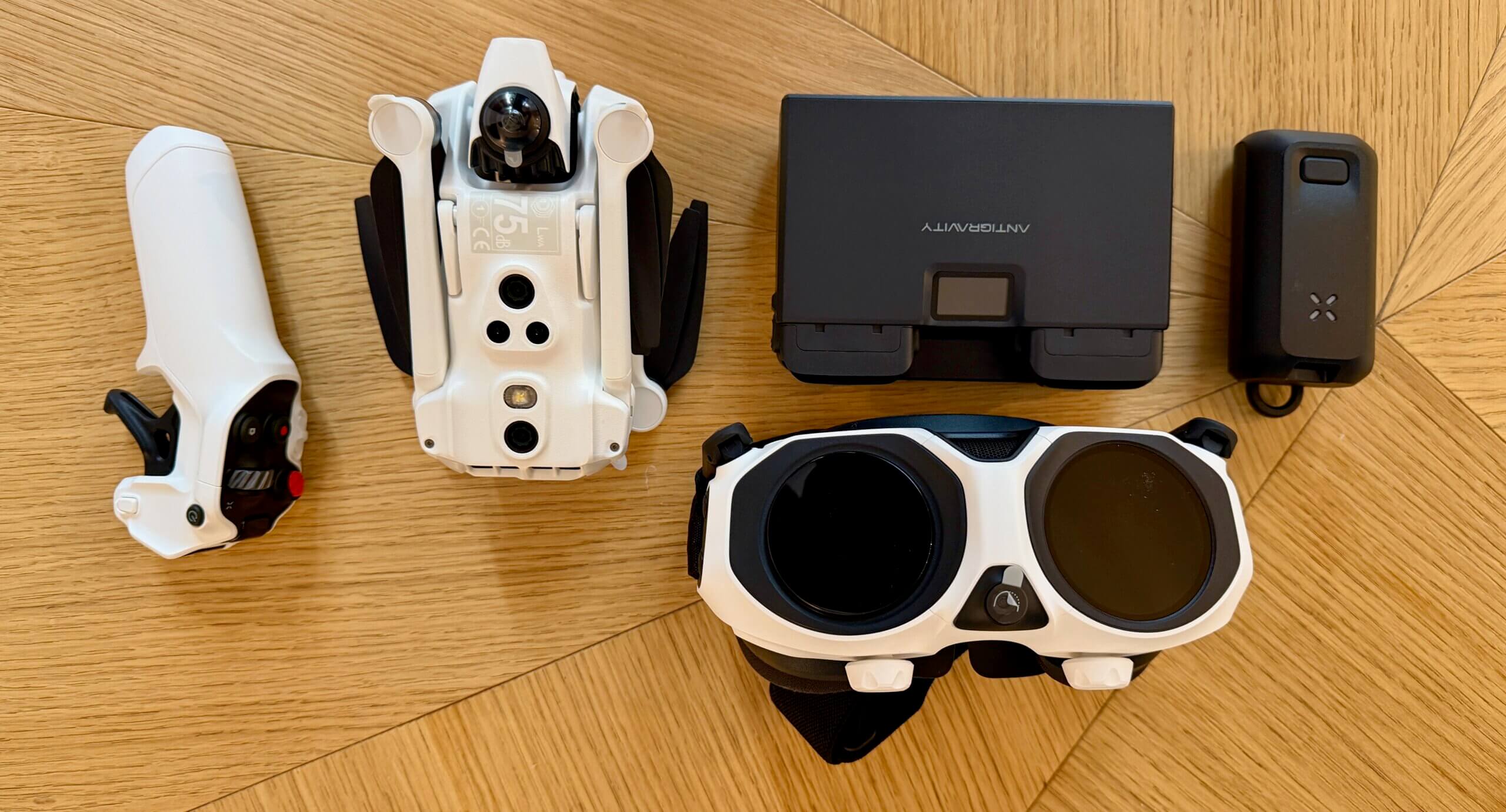
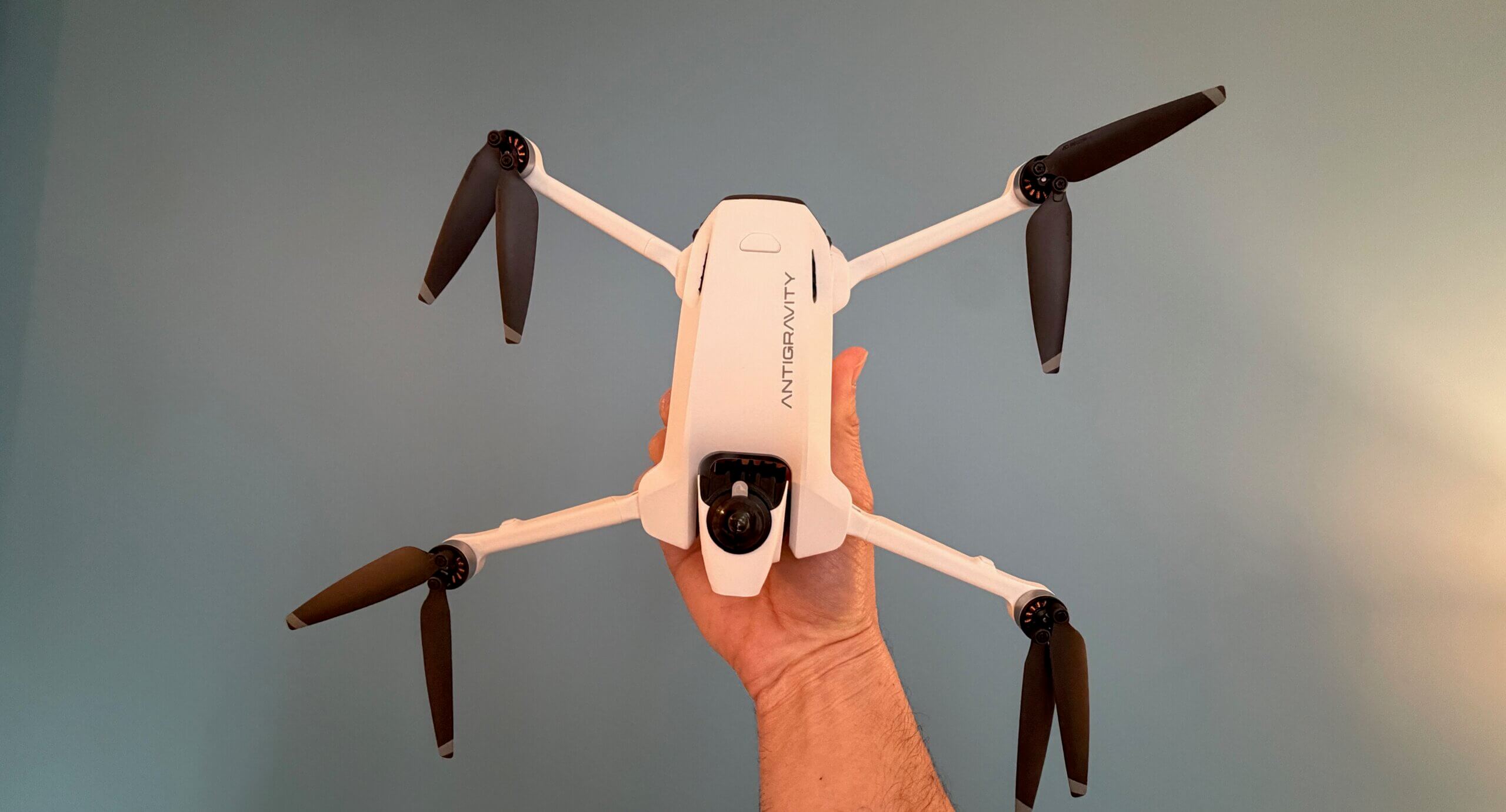
At the heart of the Antigravity A1’s appeal is its dual-lens, 360-degree architecture. Unlike standard drones that rely on a single, forward-facing lens mounted on a fragile, motorized gimbal, the A1 utilizes two ultra-wide-angle lenses—one atop the fuselage and one beneath. Each lens boasts a 200-degree field of view, creating a seamless, overlapping sphere of visual data.
This design choice creates a "fly now, frame later" workflow. When the footage is exported, the drone’s frame is digitally erased, leaving the viewer with the uncanny sensation of a camera floating independently in mid-air. It is a liberating experience for travelers and content creators, as it removes the anxiety of perfect framing during the flight itself. Instead, the pilot focuses on navigation, knowing that every angle is being recorded in stunning 8K resolution.
Chronological Evolution: From Niche Curiosity to Mainstream Tool
The trajectory of the Antigravity A1 began with the rapid maturation of 360-degree sensors in the early 2020s. While early iterations of 360 cameras were relegated to action-sports mounts, the integration of these sensors into a stabilized flight platform was the logical next step.
- Q1 2025: Initial prototypes were leaked to the FPV (First-Person View) community, generating buzz for their unique "invisible drone" capability.
- Late 2025 (Launch): Antigravity officially unveiled the A1, positioning it as a consumer-friendly drone that required no FAA registration (or international equivalent) due to its precise 249-gram takeoff weight.
- Early 2026: Widespread adoption among travel vloggers and indie filmmakers, who found the "Auto-Frame" AI features in the companion app significantly reduced editing time, moving the product from a niche toy to a professional-grade production tool.
Supporting Data: Engineering and Performance Metrics
The technical specifications of the A1 are designed to balance portability with high-end performance.
Sensor Technology and Optics
The A1 features dual 1/1.28-inch CMOS sensors. While these are technically smaller than the 1-inch sensors found in top-tier "Pro" photography drones, they vastly outperform the sensors typically found in compact 360-degree action cameras. This results in superior low-light performance and a higher dynamic range—a critical factor for travelers shooting under the high-contrast conditions of the midday sun.
Flight Dynamics and Durability
Constructed from high-grade, carbon-fiber-reinforced polymer, the A1 offers an exceptional strength-to-weight ratio. The folding mechanism is engineered for tactile precision, allowing the unit to fold down to the approximate volume of a smartphone. In flight, the A1 functions as a "cinewhoop" style drone—stable, predictable, and capable of speeds up to 36 mph. The inclusion of "Turtle Mode" is a notable quality-of-life feature; if the drone lands inverted, it can flip itself over, preventing the dreaded "walk of shame" to retrieve a downed craft.
The Power Bottleneck
Battery life remains the primary challenge. The standard Intelligent Flight Battery offers a 24-minute theoretical flight time, which translates to about 19–20 minutes in real-world, wind-affected conditions. While this may seem brief, the "work per minute" is higher than traditional drones; because the A1 captures a 360-degree sphere, a single flight provides multiple angles that would otherwise require three or four separate, time-consuming sorties with a conventional drone.
Official Responses and User Experience
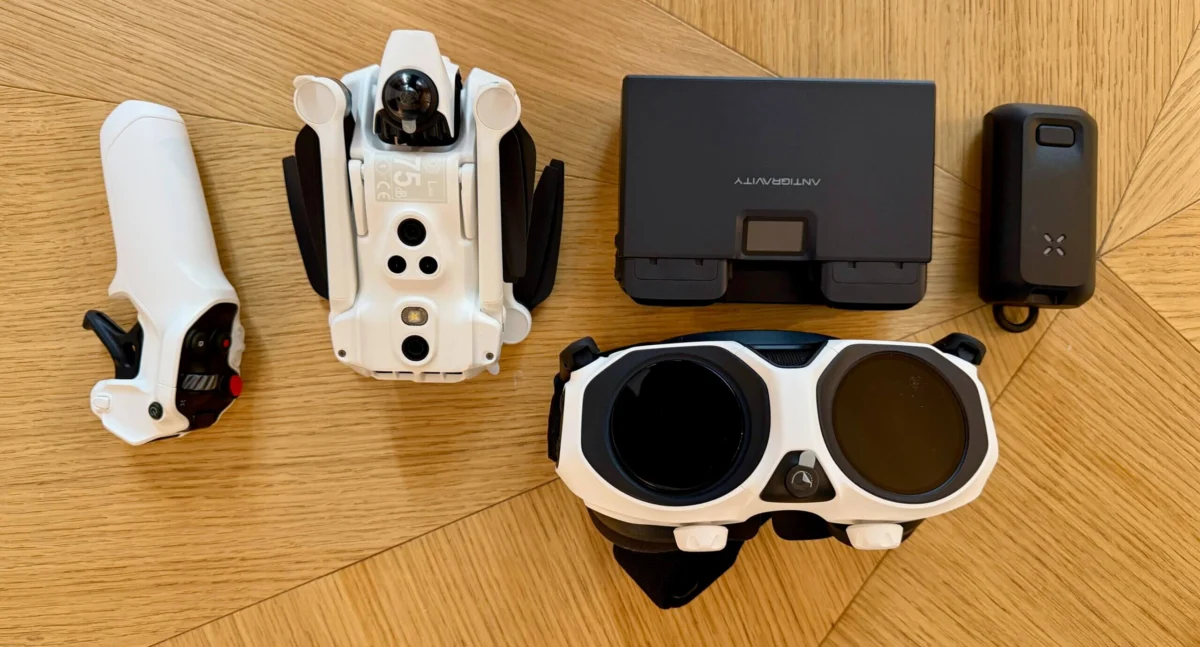
Feedback from early testers and professional cinematographers has been overwhelmingly positive regarding the "Vision Goggles." These goggles utilize dual 4K micro-OLED displays with a 120Hz refresh rate. The integrated head-tracking allows the pilot to look around the environment in real-time, providing a level of spatial awareness that is impossible with a fixed-camera feed.
The motion controller, a single-handed device that translates wrist movements into flight maneuvers, has been praised for its intuitive nature. While the A1 supports a traditional "Mode 2" stick controller for professional FPV pilots, the motion-control system is so fluid that it is quickly becoming the standard for the average creator.
The Software Ecosystem
The "Antigravity Studio" app acts as the command center for the experience. With wireless transfer speeds of up to 80MB/s, users can quickly pull 8K files to their mobile devices. The AI-driven "Auto-Frame" feature is the standout software component; it can identify subjects, maintain focus, and generate cinematic pans automatically, effectively serving as a virtual camera crew for solo travelers.
Implications for the Industry
The arrival of the Antigravity A1 has profound implications for the future of travel content.
- Creative Liberation: By decoupling the act of piloting from the act of cinematography, the A1 allows for more creative risks. Pilots can focus on navigating through tight gaps or around complex terrain without worrying about the camera angle.
- Regulatory Navigation: The decision to keep the drone at 249 grams is a masterstroke of design. By staying under the 250-gram threshold, Antigravity has bypassed the most restrictive international flight regulations, making the A1 the ultimate travel companion for those crossing borders.
- The Shift Toward VR: The A1 is effectively a bridge between 2D cinematography and the immersive world of Virtual Reality. As more viewers demand interactive, immersive content, the ability to record in 360 degrees will become a baseline expectation rather than a premium feature.
Conclusion: A New Toolkit for Explorers
The Antigravity 360 (A1) is not merely a gadget; it is a fundamental shift in how we document our journeys. While it may not possess the sheer pixel-peeping quality of a dedicated cinema drone with a full-frame sensor, it offers a degree of creative freedom that renders such comparisons moot for most users.
For the traveler looking to push the boundaries of their visual storytelling, the A1 represents the most significant leap forward in drone technology in years. It is an essential addition to the modern creator’s toolkit, proving that sometimes, the best way to move forward is to record everything at once. Whether you are navigating the dense streets of Tokyo or the rugged cliffs of Iceland, the A1 ensures that you never miss the shot—because you’re already filming the entire world around you.
Disclaimer: As with all drone usage, please check your local aviation authority regulations before flight. Always respect privacy laws, adhere to "no-fly zone" restrictions, and ensure your equipment is well-maintained for safe operation in diverse environments.