By International Affairs Desk
Updated: July 13, 2026 – 00:55 GMT
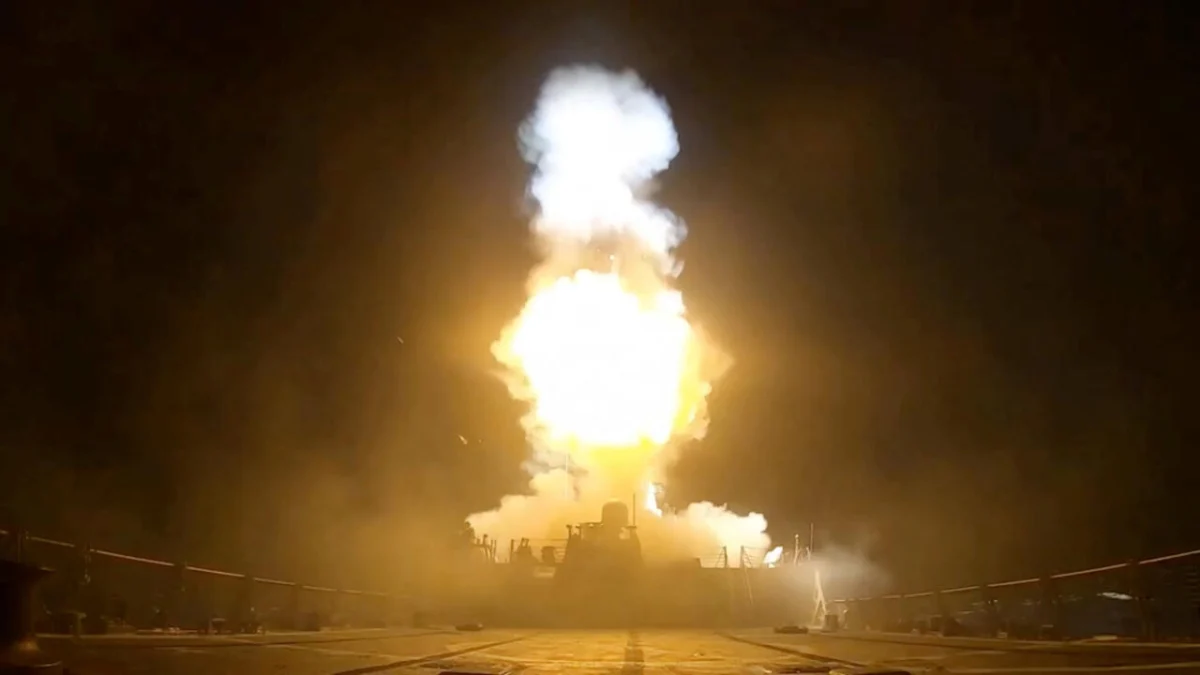
The volatile standoff in the Middle East reached a new precipice this weekend as the United States military confirmed it had launched a third wave of targeted strikes against Iranian infrastructure. The military action, which occurred in the early hours of Sunday, July 12, follows a rapid deterioration of security in the Strait of Hormuz, a critical global maritime chokepoint that has become the primary theater for the ongoing conflict between Washington and Tehran.
The latest escalation marks a significant breach of an fragile interim ceasefire, throwing the already tenuous peace process into further disarray. As global markets react to the renewed instability, the international community remains on high alert, fearing that the months-long war—which has already sent shockwaves through the global energy sector—may be entering its most dangerous phase to date.
The Strategic Context: A War Without End
Since hostilities formally commenced in late February 2026, the conflict has been characterized by sporadic but intense naval skirmishes, cyber warfare, and targeted air campaigns. The Strait of Hormuz, through which roughly 20% of the world’s petroleum passes, has been the epicenter of this struggle.
The most recent flare-up was triggered by a series of attacks on maritime vessels belonging to several of Washington’s key Gulf allies. According to reports from the US Central Command (CENTCOM), these strikes involved anti-ship missiles and drone swarms, which prompted an immediate and decisive response from US naval and air forces stationed in the region.
The interim agreement, which was designed to de-escalate tensions and provide a humanitarian corridor for civilian shipping, now appears to be in name only. Military analysts suggest that the frequency of these engagements is effectively eroding the diplomatic progress made over the past two months.
Chronology of the Escalation: July 2026
The following timeline outlines the rapid sequence of events leading up to the most recent military strikes:
- July 10: Tensions began to mount as unidentified projectiles struck two commercial tankers near the Omani coast. Intelligence reports indicated the weapons originated from coastal batteries controlled by Iranian-backed proxies.
- July 11: US Central Command confirmed the tracking of "hostile intent" as Iranian naval assets maneuvered to block civilian shipping lanes. Washington issued a stern warning to Tehran, demanding an immediate cessation of harassment tactics.
- July 11 (Late Evening): A coordinated drone strike was launched against a coalition base in the Gulf. While no US casualties were initially reported, the attack was deemed a "significant crossing of red lines."
- July 12 (Early Morning): The US military commenced a series of retaliatory strikes. According to Pentagon sources, these targeted command-and-control centers, radar installations, and coastal artillery sites utilized in the recent attacks.
- July 13 (Present): International diplomatic efforts have entered "crisis mode," with the UN Security Council scheduled to convene an emergency session to discuss the collapse of the interim agreement.
Supporting Data: The Economic and Military Impact
The economic consequences of this conflict have been immediate and profound. Since the outbreak of war in February, global oil prices have surged by nearly 45%, driven by fears of a total closure of the Strait of Hormuz.
Global Market Volatility
- Brent Crude: Prices hit a record high of $142 per barrel following the reports of the latest strikes, reflecting the heightened risk premium on global energy supply chains.
- Insurance Premiums: Maritime insurance for vessels transiting the Gulf has skyrocketed, with many carriers refusing to enter the region without significant military escort, further choking supply lines.
- Inflationary Pressures: Economists warn that if the current level of conflict persists through the third quarter, the resulting energy costs will likely trigger a sharp spike in global inflation, potentially threatening a recession in major European and Asian economies.
Military Capability and Deployment
The US deployment in the region is at its highest level since the conflict began. Utilizing carrier strike groups and land-based air assets, Washington has maintained a posture of "deterrence through projection." Conversely, Iran has relied on its "asymmetric warfare" doctrine, utilizing swarming tactics, mines, and localized precision strikes to negate the technological superiority of the US-led coalition.

Official Responses: A Divided World Stage
Washington’s Stance
In a statement released via the Pentagon, the US Department of Defense maintained that the strikes were "proportional, necessary, and purely defensive." A spokesperson emphasized that the United States does not seek a wider war, but will not hesitate to defend its personnel, its allies, and the principle of freedom of navigation in international waters. "The onus is on Tehran," the statement read. "They must choose whether to adhere to the commitments they made in the interim agreement or continue to isolate themselves from the international order."
Tehran’s Rebuttal
Iranian state media has characterized the US strikes as an "act of blatant aggression" and a violation of its sovereign territorial waters. Tehran’s Ministry of Foreign Affairs accused the US of using the maritime incidents as a "pretext for colonial expansion" in the Gulf. Iranian officials warned that any further escalation by the "Great Satan" would be met with a response that would extend far beyond the maritime domain, hinting at potential retaliation against regional allies who host US military infrastructure.
The Global Reaction
- European Union: Brussels has called for an immediate cessation of hostilities and a return to the negotiating table. High Representative for Foreign Affairs expressed "grave concern" that the collapse of the interim agreement could lead to a permanent regional conflagration.
- The United Nations: The UN Secretary-General has urged both sides to exercise "maximum restraint," warning that the world cannot afford a prolonged disruption of the energy markets during this precarious economic period.
- Regional Actors: Gulf Cooperation Council (GCC) members remain caught between the hammer and the anvil. While many rely on the US for security, there is deep anxiety that they will bear the brunt of any direct conflict between Washington and Tehran.
Implications: What Comes Next?
The situation is currently at a critical impasse. There are three primary scenarios that analysts are closely monitoring:
1. The "Containment" Scenario
In this scenario, the current cycle of strikes and counter-strikes remains localized to the Strait of Hormuz. Both Washington and Tehran continue to dance on the edge of a full-scale war, but both sides remain cognizant of the catastrophic costs of a total conflict. This would likely result in a "frozen conflict" status, characterized by constant, low-level military friction.
2. The Diplomatic "Reset"
This outcome relies on the intervention of third-party mediators (potentially including regional powers or neutral international entities) to convince both sides to return to the terms of the interim agreement. This would require significant concessions from both sides—a prospect that currently seems unlikely given the hardening domestic rhetoric in both Washington and Tehran.
3. The Escalation Spiral
The most dangerous scenario involves a miscalculation. A stray missile hitting a civilian passenger ship or the accidental loss of a major US naval asset could force the hand of the US administration, leading to a massive, conventional military campaign against Iranian domestic infrastructure. Such a move would likely draw in regional actors, potentially turning the conflict into a full-scale regional war that would be difficult to contain.
As the world wakes up to the news of the third wave of strikes, the prevailing sentiment is one of exhaustion and fear. The "Strait of Hormuz crisis," as it has come to be known, is no longer just a regional dispute; it is a fundamental challenge to the global security architecture. For now, the world waits, watching the horizon, as the drums of war continue to beat in the Gulf.
This report is part of a continuous liveblog. For the latest developments, real-time updates from the field, and expert analysis on the shifting geopolitical landscape, follow our rolling coverage throughout the day.