In an unprecedented move that threatens to fracture the already strained diplomatic relationship between Mexico City and Washington, Mexican President Claudia Sheinbaum announced on Thursday that her administration is preparing to file criminal complaints against the United States Department of Justice (DoJ). The legal action is a direct response to a mounting toll of deaths involving Mexican nationals while in the custody of US Immigration and Customs Enforcement (ICE) or during aggressive anti-immigration operations.
This development marks a decisive shift in strategy for the Sheinbaum administration. Having previously relied on diplomatic notes, formal protests, and petitions to international bodies like the Inter-American Commission on Human Rights (IACHR), Mexico is now pivoting toward direct litigation. The President’s declaration signals that the Mexican government no longer believes the current US domestic oversight mechanisms are sufficient to address what it characterizes as a systemic pattern of human rights abuses.
The Catalyst: A Pattern of Fatal Encounters
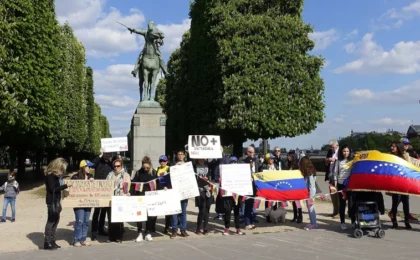
The immediate impetus for this escalation was the killing of Lorenzo Salgado Araujo, a 52-year-old Mexican national. Araujo, who had resided in Houston for three decades and was deeply embedded in his local community, was shot and killed by an ICE agent during an enforcement operation on Tuesday. His death, which sparked widespread protests in both Houston and various cities across Mexico, is not an isolated incident but rather the latest in a series of fatal confrontations.
Since the inauguration of President Donald Trump in early 2025 and the subsequent launch of a federal campaign focused on mass deportations, the environment for undocumented immigrants in the United States has become increasingly volatile. Data indicates that at least 14 Mexican nationals have perished while in ICE custody since the start of this administrative crackdown. Furthermore, three individuals have been confirmed dead specifically during high-risk arrest operations conducted by the agency. In total, at least six people have been shot dead by ICE agents since the beginning of 2025, a statistic that has drawn sharp condemnation from human rights advocates and international observers alike.
Chronology of Escalation: From Diplomacy to Litigation
The trajectory of the current diplomatic crisis can be traced through the following key milestones:
- Early 2025: President Donald Trump returns to office, prioritizing a "maximum pressure" campaign on immigration. ICE operations see a significant surge in frequency and intensity, leading to an increase in detention numbers.
- Spring 2025: As reports of detainee mistreatment and fatalities begin to circulate, the Mexican Ministry of Foreign Affairs issues its first series of formal diplomatic protest letters. These letters demand "prompt and thorough investigations" into the deaths of Mexican citizens.
- Late 2025: Faced with what it perceives as a lack of transparency and an absence of accountability from US authorities, the Mexican government escalates its response by filing a petition with the Inter-American Commission on Human Rights (IACHR), seeking external oversight.
- July 2026: The fatal shooting of Lorenzo Salgado Araujo serves as a breaking point. Protests erupt in Texas, highlighting the disconnect between the administrative "mass deportation" policy and the reality of long-term residents being targeted.
- July 9, 2026: President Sheinbaum holds a press conference declaring the intent to pursue criminal charges within the US judicial system, framing the issue as a fundamental defense of human rights for Mexican citizens abroad.
Supporting Data: The Human Cost of Policy
The figures cited by the Mexican government underscore a systemic problem that goes beyond individual cases of police misconduct. Human rights organizations have long pointed to the "militarization" of immigration enforcement as a primary driver of these fatalities.
The 14 deaths reported in ICE custody involve a range of causes, including inadequate medical care, custodial negligence, and, in the most severe instances, direct use of lethal force. When analyzed against the backdrop of the current mass deportation strategy, critics argue that the sheer volume of arrests—often conducted in residential areas and during early morning hours—increases the statistical probability of violent outcomes.
Foreign Secretary Robert Velasco, during the same briefing as the President, emphasized that these are not merely "statistics" but individuals who were often productive, non-violent members of the US economy. "We are talking about people whose only ‘crime’ was working honestly to support their families," Velasco remarked. The demographic profile of those deceased often includes long-term residents who have lived in the US for decades, further complicating the administration’s narrative regarding the nature of those being targeted by the current enforcement dragnet.
Official Responses and Strategic Rationale
President Sheinbaum’s rhetoric has been uncompromising. During her daily briefing, she stated, "We cannot turn a blind eye to the Mexicans who have died. We cannot allow the mistreatment of our brothers and sisters who are in the United States—our fellow citizens. Therefore, we will propose other measures."
The strategy behind filing criminal complaints in US courts is twofold. First, it is intended to exert legal pressure on the Department of Justice, forcing the agency to publicly defend its enforcement protocols in a judicial setting. Second, it serves as a powerful political signal to the Mexican electorate and the international community that Mexico is fulfilling its obligation to protect its diaspora.
In addition to the domestic legal path, Foreign Secretary Velasco announced that Mexico is reaching out to the United Nations. Specifically, the government plans to petition Volker Türk, the UN High Commissioner for Human Rights, to demand enhanced protections for Mexican nationals currently held in ICE detention centers. By involving international human rights monitors, Mexico aims to create a "surveillance" effect that might discourage further instances of excessive force by US agents.
Implications for US-Mexico Relations
The decision to pursue criminal charges is likely to have profound implications for the bilateral relationship, which has already been under considerable strain due to trade disputes, fentanyl trafficking concerns, and immigration policy.
1. Diplomatic Friction
Washington may view this move as a direct challenge to its national sovereignty. The US Department of Justice has traditionally been resistant to external interference in its internal law enforcement operations. By attempting to insert Mexican legal teams into the process of holding US federal agents accountable, the Sheinbaum administration is essentially challenging the legal immunity and operational autonomy often enjoyed by ICE.
2. The Domestic Political Climate in the US
The announcement will likely become a talking point in the ongoing US political debate. Supporters of the current administration’s immigration policies may view Mexico’s move as an infringement on US domestic policy, while opponents and immigration advocates will likely use the legal complaints as evidence that the "mass deportation" policy has crossed the line into human rights violations.
3. Legal Precedent
If the Mexican government successfully manages to initiate or influence criminal proceedings in US courts, it could establish a significant precedent for how foreign nations interact with the US judicial system regarding the treatment of their citizens abroad. This could invite similar scrutiny from other Latin American nations, potentially creating a wave of international litigation against US immigration enforcement practices.
Conclusion
The standoff between Mexico and the United States regarding the safety and treatment of Mexican nationals in US custody represents one of the most significant challenges to their bilateral relations in recent years. As President Sheinbaum moves to internationalize the issue through the UN and localize it through the US court system, the pressure on the Trump administration to provide accountability will only intensify.
For the families of those like Lorenzo Salgado Araujo, this shift in strategy represents a glimmer of hope for justice. For the diplomatic community, however, it serves as a grim indicator that the "mass deportation" era is not only costing lives but is also dismantling the collaborative spirit that once defined the relationship between these two neighbors. As the legal filings progress, the world will be watching to see if the US judicial system can provide the transparency and accountability that Mexico so adamantly demands.