By Editorial Staff
July 6, 2026
The sporting world is currently reeling from a weekend of monumental upsets and tactical masterclasses that have fundamentally altered the trajectory of the 2026 World Cup and beyond. From the hallowed turf of East Rutherford to the grueling climbs of the Pyrenees and the grass courts of SW19, the sporting calendar has delivered a series of narratives that will be discussed for decades.
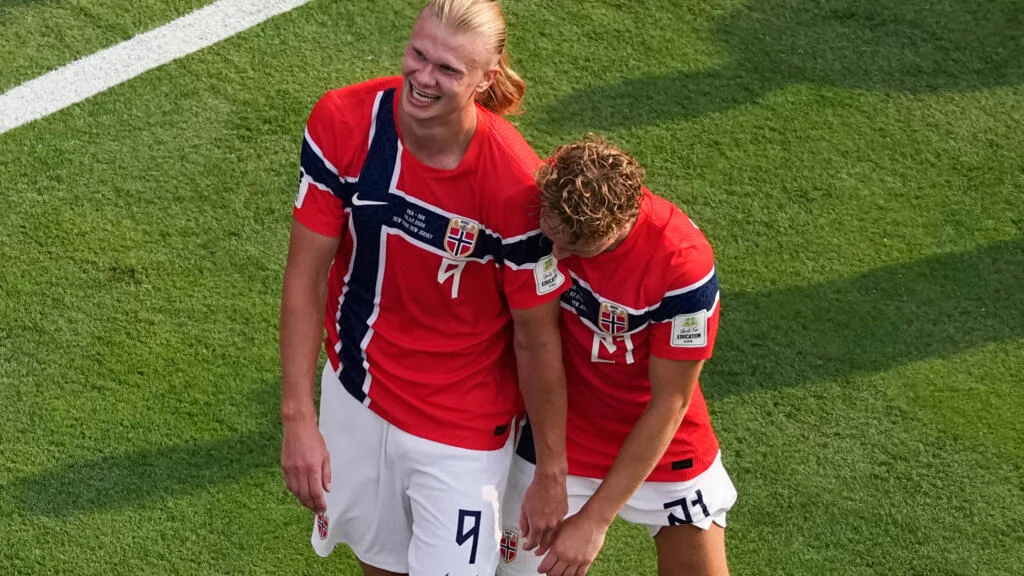
At the center of this whirlwind is the FIFA World Cup, where Erling Haaland has firmly cemented his status as the tournament’s most lethal predator, orchestrating a historic victory for Norway over the perennial favorites, Brazil.
The East Rutherford Miracle: Haaland Silences the Samba
Main Facts: The Norway-Brazil Clash
On Sunday, July 5, 2026, the MetLife Stadium in East Rutherford, New Jersey, served as the stage for one of the most significant upsets in recent World Cup history. Facing a Brazilian side heralded for its technical flair and deep squad, Norway—an underdog entering the Round of 16—defied the odds with a disciplined, defensive masterclass punctuated by the clinical brilliance of Erling Haaland.
The match remained a tense, scoreless stalemate for the majority of the first half, with Brazil controlling possession but failing to crack the Norwegian low block. It was not until the 79th minute that the deadlock was broken, and then again in the 90th, that Haaland etched his name into the annals of football history.
Chronology of the Decisive Minutes
- 79th Minute: A rapid counter-attack initiated by Andreas Schjelderup saw the ball find Haaland on the edge of the box. With a characteristic burst of acceleration, the Manchester City striker evaded his marker and slotted a low drive past the Brazilian keeper, sending the Norwegian contingent into a frenzy.
- 85th Minute: Brazil responded with a frantic offensive surge, resulting in a late equalizer that briefly restored parity and threatened to send the game to extra time.
- 90th Minute: Just as the match seemed destined for additional periods, Norway launched a final desperate ball forward. Haaland out-muscled the Brazilian central defenders, creating space to fire a thunderbolt into the top corner, securing a 2-1 victory and a spot in the Quarter-Finals.
The Golden Boot Race and Tactical Implications
Supporting Data: Haaland’s Record-Breaking Campaign
With his brace against Brazil, Erling Haaland has now tallied seven goals in the 2026 World Cup. This performance places him in a three-way tie at the top of the goalscoring charts alongside icons Lionel Messi and Kylian Mbappé.
The statistical significance of this achievement cannot be overstated. While Messi and Mbappé have relied on playmaking and intricate link-up play, Haaland’s efficiency—scoring seven goals from limited touches—has become the defining tactical narrative of the tournament. Norway’s ability to "park the bus" and transition with vertical speed has proven to be the "Kryptonite" for possession-based teams like Brazil.
Official Responses and Team Sentiment
In the post-match press conference, Norwegian manager Ståle Solbakken praised the collective resilience of his squad. "We knew Brazil would dominate the ball," Solbakken remarked. "But football is not about who has the ball; it is about who does the most with the space provided. Erling is a phenomenon, but this was a victory for every player who put their body on the line for 90 minutes."
Conversely, the mood in the Brazilian camp was somber. The Brazilian head coach acknowledged that the squad failed to adapt to Norway’s transition game, stating, "We allowed ourselves to be drawn into their trap. We pushed too high, and when you have a striker of Haaland’s caliber, you pay the ultimate price."

A Weekend of Sporting Transformation
While the World Cup took center stage, the broader sporting world witnessed significant shifts in power across three other major disciplines.
The "Mexican Trap": England Advances
England’s path to the quarter-finals was far from serene. Facing a highly tactical Mexican side, the Three Lions were forced to battle for every inch of the pitch. England’s eventual victory was a testament to their squad depth, as tactical substitutions in the final fifteen minutes provided the necessary impetus to break down a stubborn Mexican defense. This victory sets up a high-stakes encounter in the next round, with analysts questioning whether England possesses the defensive solidity to counter the momentum of the Norwegian juggernaut.
The Tour de France: The Rise of Isaac del Toro
In the world of cycling, the Tour de France produced a moment of profound sportsmanship and tactical intrigue. Tadej Pogačar, widely considered the favorite for the Yellow Jersey, allowed his teammate Isaac del Toro to take the stage victory. This move has been interpreted by cycling experts as a strategic consolidation of team power. By sacrificing a stage win, Pogačar has effectively secured the loyalty and tactical support of del Toro for the high mountain stages, signaling that the UAE Team Emirates is prioritizing the overall General Classification over individual accolades.
Formula 1: Leclerc’s Resurgence
On the tarmac, Charles Leclerc secured his first Grand Prix victory since 2024, a result that has sent shockwaves through the Formula 1 paddock. For nearly two seasons, the Ferrari driver has been plagued by technical failures and strategic errors. His dominant performance this weekend suggests that the Maranello-based team may have finally unlocked the performance potential of their chassis. This victory reopens the Driver’s Championship race, as the gap to the current leaders has been narrowed significantly.
Wimbledon: The Old Guard vs. The New Wave
At the All England Club, the drama of the second week continues to unfold. Novak Djokovic and Jannik Sinner both advanced to the next round, looking in formidable form. However, the tournament lost one of its biggest stars as Aryna Sabalenka was eliminated in a shock defeat. The loss of Sabalenka underscores the unpredictability of the grass-court season, where surface speed and serve consistency often trump world rankings.
Strategic Implications and Future Outlook
As we look toward the remainder of July 2026, the implications of this weekend are profound.
- The Decline of Possession-Heavy Football: The success of Norway and England’s struggle against Mexico suggest that the "tiki-taka" style of play is being increasingly challenged by teams that prioritize physical transition and high-speed counter-attacking.
- The Shift in Cycling Dynamics: Pogačar’s selfless act marks a turning point in team-based cycling. Expect other teams to adopt similar "sacrificial" strategies as the Tour heads into the Alps.
- The Competitive Parity in F1: With Leclerc’s return to the top step of the podium, the F1 season is poised for a three-way battle that will likely be decided in the final races of the season.
Conclusion: The "Haaland Effect"
The 2026 World Cup has reached a boiling point. With Brazil out, the tournament is now wide open. All eyes will be on Norway in the upcoming Quarter-Finals, where their ability to sustain their high-intensity defensive structure will be tested once more. As for Erling Haaland, the young striker has moved beyond the status of a club icon to that of a national hero, with the world watching to see if he can carry Norway to an unprecedented World Cup title.
The sporting world, in its vast and varied glory, is currently in a state of flux. Whether it is the tactical shift on the football pitch or the psychological warfare on the tennis court, the themes of 2026 are clear: speed, sacrifice, and the relentless pursuit of victory against the weight of expectation. As the matches continue, one thing remains certain: the records of yesterday are being rewritten today, and the stars of tomorrow are being forged in the heat of this extraordinary summer.