For nearly three decades, the 1995 film Jumanji has held a vaulted position in the pantheon of 1990s family cinema. Fueled by the immense star power of Robin Williams and the nostalgic charm of a magical board game that unleashes jungle chaos into suburbia, it remains a touchstone for a generation. However, when Sony Pictures announced a reboot in 2017, the prospect of modernizing the franchise felt, to many, like a sacrilegious cash grab.
Yet, history has a way of defying initial skepticism. With the success of Jumanji: Welcome to the Jungle (2017) and Jumanji: The Next Level (2019), the franchise underwent a radical transformation that arguably elevated the intellectual property beyond its origins. By pivoting from a board game to a video game and leaning into high-concept comedic tropes, the rebooted films have proven to be more cohesive, more technically proficient, and ultimately more fun than the original.
The Chronology of a Franchise Evolution
To understand the shift in quality, one must first look at the trajectory of the series. The original Jumanji (1995), directed by Joe Johnston, was adapted from Chris Van Allsburg’s 1981 children’s book. It established the core mythos: a game that draws its players into a dangerous, supernatural conflict. It was a film defined by its "fish-out-of-water" premise, where the jungle comes to the players.
The 2017 reboot, Welcome to the Jungle, inverted this trope. Instead of the jungle entering the domestic sphere, the players were transported into the heart of the jungle via an antiquated game console. This was a critical narrative evolution. By shifting from a board game—which is inherently static—to a video game, the filmmakers introduced "lives," "NPCs," and specific character archetypes. This framework allowed for the Freaky Friday-style body-swapping mechanics that would become the franchise’s comedic engine.
The 2019 sequel, The Next Level, expanded this further, introducing aging characters played by Danny DeVito and Danny Glover. This ensured the franchise didn’t stagnate, proving that the premise was flexible enough to accommodate different comedic styles and generational shifts.
Technical Limitations vs. Modern Execution
One of the most persistent criticisms of the 1995 original is its reliance on computer-generated imagery (CGI) that has aged poorly. While the 1990s were a transitional era for visual effects, Jumanji sits in a particularly awkward position. The film features a mix of practical animatronics and early-stage digital effects that often clash on screen.
When the lion or the monkeys appear, the jarring transition between a physical prop and a 1995-era digital render breaks the audience’s immersion. While it is easy to excuse these flaws as "part of the charm," the reality is that they distract from the narrative tension. The filmmakers were attempting to realize a scale that the technology of the time could not support.
In contrast, the modern reboots benefit from the maturity of digital animation. While no film is immune to the eventual aging of its VFX, Welcome to the Jungle and The Next Level utilize effects that serve the action sequences rather than detracting from them. The digital jungle is a character in itself, built with a sense of depth and physics that makes the stakes feel tangible. By accepting the "video game logic" of their own world, the reboots provide a consistent visual language that the original lacked.
The Robin Williams Paradox
Perhaps the most sensitive topic for critics and fans is the legacy of Robin Williams. As one of the most beloved comedians of the 20th century, his presence is often cited as the sole reason the original film remains relevant. However, a dispassionate look at his role as Alan Parrish reveals a wasted opportunity.
In Jumanji, Williams is curiously restrained. The film occupies a strange middle ground: it is too dark and intense for very young children, yet it fails to utilize the manic, high-octane improvisational genius that defined his work in Aladdin or Good Morning, Vietnam. Parrish is a character defined by trauma and long-term isolation, leaving little room for the comedic spontaneity that fans expected from Williams.

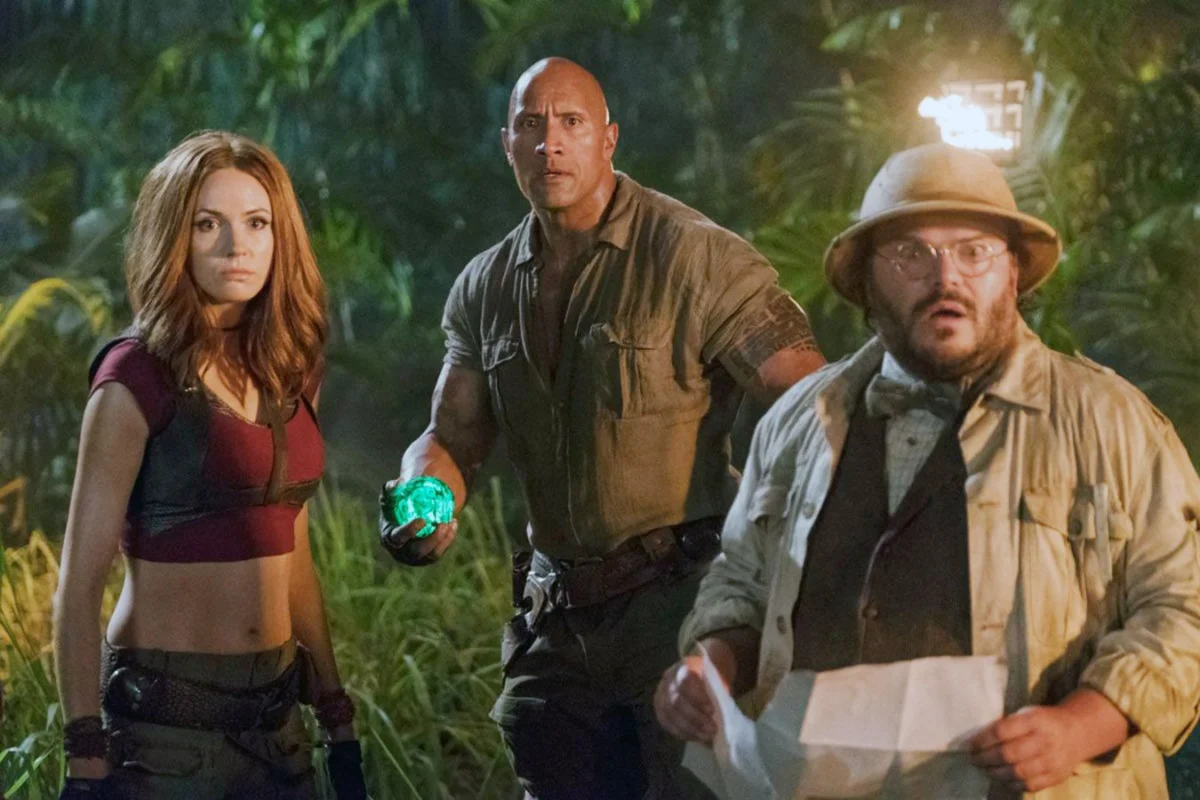
Conversely, the modern reboots—led by Dwayne Johnson, Kevin Hart, Jack Black, and Karen Gillan—are explicitly designed to exploit the specific comedic strengths of their cast. By placing high school students inside the bodies of these archetypal avatars, the films create a playground for character work. Watching Jack Black inhabit the personality of a shallow teenage girl, or seeing Dwayne Johnson channel the curmudgeonly grumpiness of Danny DeVito, creates a layer of meta-humor that the original film simply never achieved. The reboots understand that their strength lies in the performance of the characters, not just the danger of the game.
Supporting Data: Commercial and Critical Reception
The shift in quality is not merely a matter of subjective preference; it is reflected in the commercial and critical trajectory of the franchise. While the 1995 film was a respectable hit, earning approximately $262 million against a $65 million budget, the reboots shattered expectations.
Welcome to the Jungle grossed over $960 million worldwide, making it one of the highest-grossing films of 2017. The Next Level followed suit, grossing over $800 million. This sustained success indicates that the "video game" reinvention was not a one-off gimmick but a successful brand revitalization that resonated with a global audience.
Critically, the reboots have maintained a higher consistency. On review aggregators, Welcome to the Jungle holds a significantly higher approval rating than its 1995 predecessor. Critics praised the modern films for their self-awareness and pacing, noting that while the original felt like a "creature feature" struggling to find its tone, the modern entries have embraced their identity as high-energy, character-driven action comedies.
Official Responses and Industry Impact
The industry’s reception of the Jumanji reboot serves as a case study in how to handle a legacy property. When the project was first announced, executives at Sony faced significant backlash from fans who feared a "reboot fatigue" epidemic. However, the decision to hire director Jake Kasdan—who understood that the goal was not to replace the original, but to build a new world upon its foundation—was instrumental.
In various interviews, the cast members have emphasized that they viewed the project as an homage rather than a remake. Dwayne Johnson has frequently spoken about the importance of capturing the "heart" of the original while allowing the ensemble cast to find their own rhythm. This respectful approach allowed the films to avoid the "pale imitation" trap. By keeping the title but changing the rules of the game, the studio allowed the audience to enjoy the nostalgia of the brand while engaging with a fresh narrative.
Implications for Future Franchise Building
The success of the Jumanji reboots provides a blueprint for Hollywood studios navigating the modern era of intellectual property management. The lesson is clear: if a studio chooses to revisit a classic, it must either provide a revolutionary visual upgrade or a complete tonal pivot that makes the new version distinct from the source material.
The original Jumanji will always be a piece of cinema history, important for its time and for the memory of Robin Williams. However, it is fundamentally a product of its limitations. The reboots succeeded because they moved past the constraints of the board game and the technological hurdles of the mid-90s, opting instead for a format that prioritized character comedy and high-adventure spectacle.
For adults looking back at their childhood, the original Jumanji offers a comfortable blanket of nostalgia. But for the viewer seeking a film that is genuinely funny, technically sound, and narratively daring, the Jumanji reboots have firmly eclipsed their predecessor. They represent a rare instance where a franchise not only survived a reboot but emerged stronger, smarter, and more entertaining than when it began.