By [Your Name/Journalistic Desk]
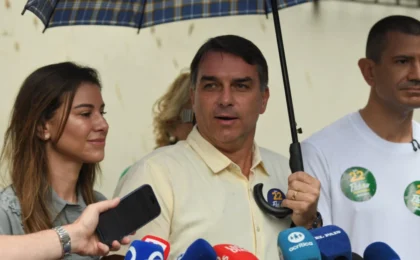
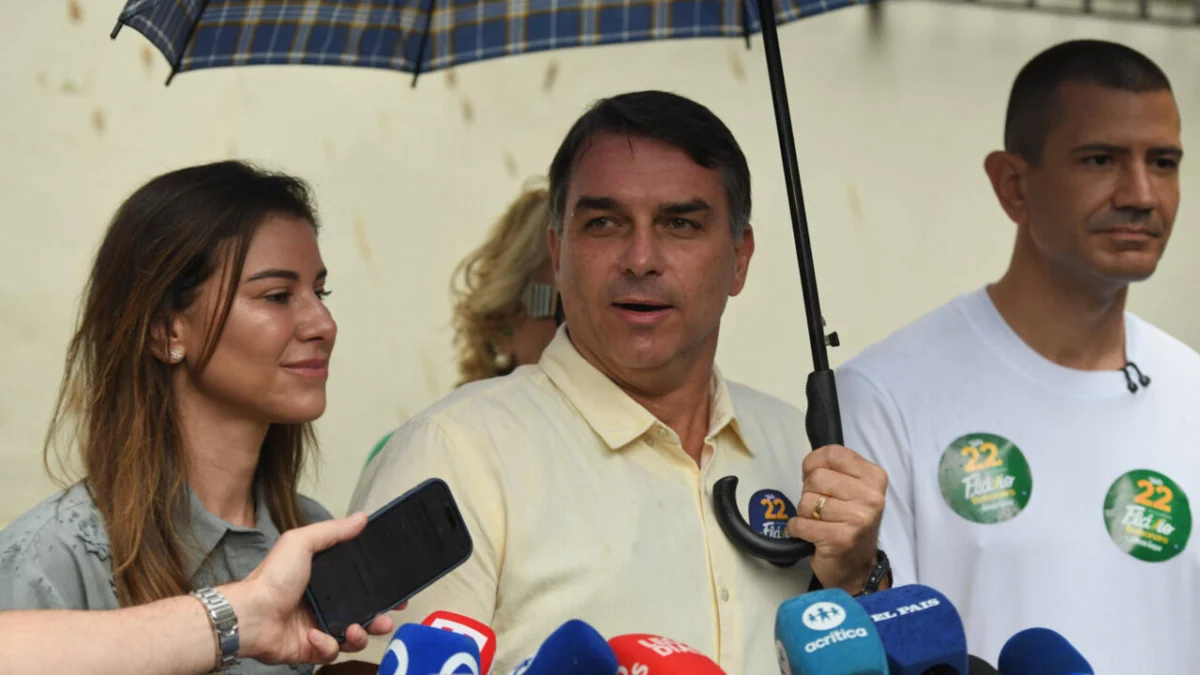
In a dramatic escalation of the political instability currently gripping Brazil, Senator Flavio Bolsonaro—the eldest son of the incarcerated former president, Jair Bolsonaro—announced on Monday that he has been formally barred from leaving the country. The travel ban, imposed by a Supreme Court justice, comes just 24 hours after a polarizing presidential election in which Flavio Bolsonaro failed to secure victory against incumbent Luiz Inácio Lula da Silva.
The senator, who garnered 48.2 percent of the vote against Lula’s 51.8 percent, took to Instagram to broadcast his reaction to the judicial order. In a video message that has since circulated widely across social media, he confirmed that he had been served with a warrant requiring him to surrender his passports. He characterized the move as an act of political persecution, describing it as "a clear attempt to intimidate" him and his family as they navigate the aftermath of a bruising electoral defeat.
Main Facts: The Judicial Lockdown
The Supreme Court’s decision to restrict the movement of the senator is not an isolated incident but rather a significant development in a broader, long-running legal battle. Flavio Bolsonaro is currently the subject of several high-profile investigations regarding alleged corruption and money laundering. Specifically, federal prosecutors are scrutinizing the financial arrangements surrounding the production of a biopic based on the life of his father, the former president.
The senator has consistently maintained his innocence, labeling these investigations as "lawfare"—a term often used by the Brazilian right to describe the perceived weaponization of the judicial system against political opponents. However, the court’s decision to seize his travel documents suggests a growing concern among judiciary officials that the senator might seek to evade ongoing legal proceedings.
Chronology of a Political Crisis
To understand the gravity of the current situation, one must look at the timeline of events that have defined the post-election period:
- Pre-Election Tensions: Throughout the campaign, the Bolsonaro family, including the former president’s other sons, frequently suggested that the judicial system was biased in favor of Lula’s Workers’ Party.
- The Election Night (Sunday): As the results were tabulated, the narrow margin of victory for Lula intensified the atmosphere of distrust. Flavio Bolsonaro, despite his own electoral loss, refused to concede immediately, echoing the rhetoric of his father.
- The Catalyst (The "Flight" Allegation): Tensions reached a breaking point following comments made by the senator’s brother, Eduardo Bolsonaro. The US-based former lawmaker suggested in a public forum that, should the family lose their political influence, they would be forced to seek refuge outside of Brazil. While Flavio has vehemently denied ever planning to flee, the Supreme Court cited these public remarks as grounds for the flight-risk assessment.
- The Monday Ruling: Early Monday morning, the Supreme Court justice issued the order to confiscate the senator’s passports and enforce a travel ban, catching the Bolsonaro camp off-guard.
- The Monday Video: By afternoon, Flavio Bolsonaro had released his video statement, framing the court’s action as a desperate move to silence the opposition.
Supporting Data and The Electoral Dispute
The statistical breakdown of the election remains a central point of contention for the Bolsonaro camp. With a final tally of 51.8 percent to 48.2 percent, the election was one of the closest in Brazilian history. Despite the margin, the defeated candidate has refused to acknowledge the legitimacy of the results.
Flavio Bolsonaro has explicitly stated his intention to file legal motions to annul the election results. His primary argument centers on the extension of voting hours on Sunday. Curiously, the senator’s own legal team had previously requested an extension of hours in certain districts to accommodate long queues. Now, he argues that the extension created a procedural irregularity that skewed the results in favor of President Lula.
Independent electoral observers and the Superior Electoral Court (TSE) have repeatedly affirmed that the election was conducted with high standards of security and transparency. The move to contest the results is widely viewed by political analysts as a strategic attempt to galvanize the populist base rather than a genuine pursuit of electoral evidence.

Official Responses and Internal Dynamics
The reaction from the judiciary has been firm. The Supreme Court has maintained that its actions are purely procedural, aimed at ensuring that individuals under investigation remain available for questioning and trial. "The judiciary acts based on the rule of law, not political convenience," a spokesperson for the court noted in a brief comment to the press.
In contrast, the Bolsonaro camp is attempting to pivot from a defensive legal posture to an offensive political strategy. Flavio Bolsonaro has made it clear that he views his role in the coming years as the primary architect of the opposition to the new Lula administration. "To withstand the chaos, I’m going to organize the opposition," he declared in his Instagram broadcast. This suggests that even as he faces severe legal hurdles, he intends to remain a central figure in Brazilian right-wing politics.
Implications for Brazil’s Political Landscape
The implications of this episode are profound for a nation that remains deeply divided. Several key themes emerge:
1. The Erosion of Institutional Trust
The conflict between the Bolsonaro family and the Supreme Court highlights a deep-seated crisis of confidence. A significant portion of the Brazilian electorate believes the judiciary is acting as an activist political player, while another segment believes the court is the only institution capable of holding the former ruling family accountable for alleged systemic corruption.
2. The Future of the Opposition
By positioning himself as the leader of the "resistance," Flavio Bolsonaro is attempting to consolidate the support base previously held by his father. However, his legal entanglements may hinder his ability to lead effectively. If the investigations into money laundering and corruption lead to formal indictments or prison time, the opposition could find itself leaderless and fractured.
3. International Scrutiny
The international community is watching Brazil closely. The country’s democratic health is vital for regional stability in Latin America. The use of travel bans and passport seizures against prominent politicians, while legally grounded in the eyes of the court, is being painted by the global right-wing media as a sign of authoritarian overreach. This creates a complex diplomatic environment for the incoming Lula administration, which must balance internal stabilization with international perceptions of democratic fairness.
4. The Legacy of the Bolsonaro Era
The "Bolsonarismo" movement is clearly not dissipating with the loss of the presidency. Instead, it is shifting into a militant opposition mode. The saga of the seized passports will likely become a rallying cry for supporters, who view the senator not as a defendant in a criminal case, but as a political martyr.
Conclusion: A Nation at a Crossroads
As the dust settles on the election, the reality for Brazil is a period of intense volatility. The judicial restrictions placed on Flavio Bolsonaro are symptomatic of a broader friction between a new, left-leaning executive branch and a conservative, highly influential political dynasty that refuses to fade into the background.
The senator’s promise to "organize the opposition" suggests that the next four years will be defined by institutional friction. Whether the courts can successfully navigate these investigations without further inflaming the public, and whether the opposition can transition from protest to constructive governance, remains the defining question for the South American giant. For now, the borders are closed to the senator, but the political battlefield is wide open.