At its inaugural Config event in India—a market that has rapidly become the company’s largest user base outside of the United States—Figma announced a transformative suite of tools aimed at fundamentally altering how software teams conceptualize, document, and ship products. By introducing a new Markdown-based editor and deepening its integration with the Payload headless CMS, the design giant is moving beyond static visual layouts to create a living, intelligent system where design intent and production code exist in lockstep.
The announcements underscore a critical shift in the design industry: the need to control the "non-deterministic" nature of generative AI. As design tools become increasingly capable of creating layouts and code, Figma is positioning itself as the "source of truth" to ensure that AI-driven outputs adhere strictly to established brand and engineering standards.
The Core Innovation: Figma Specs and Contextual Design
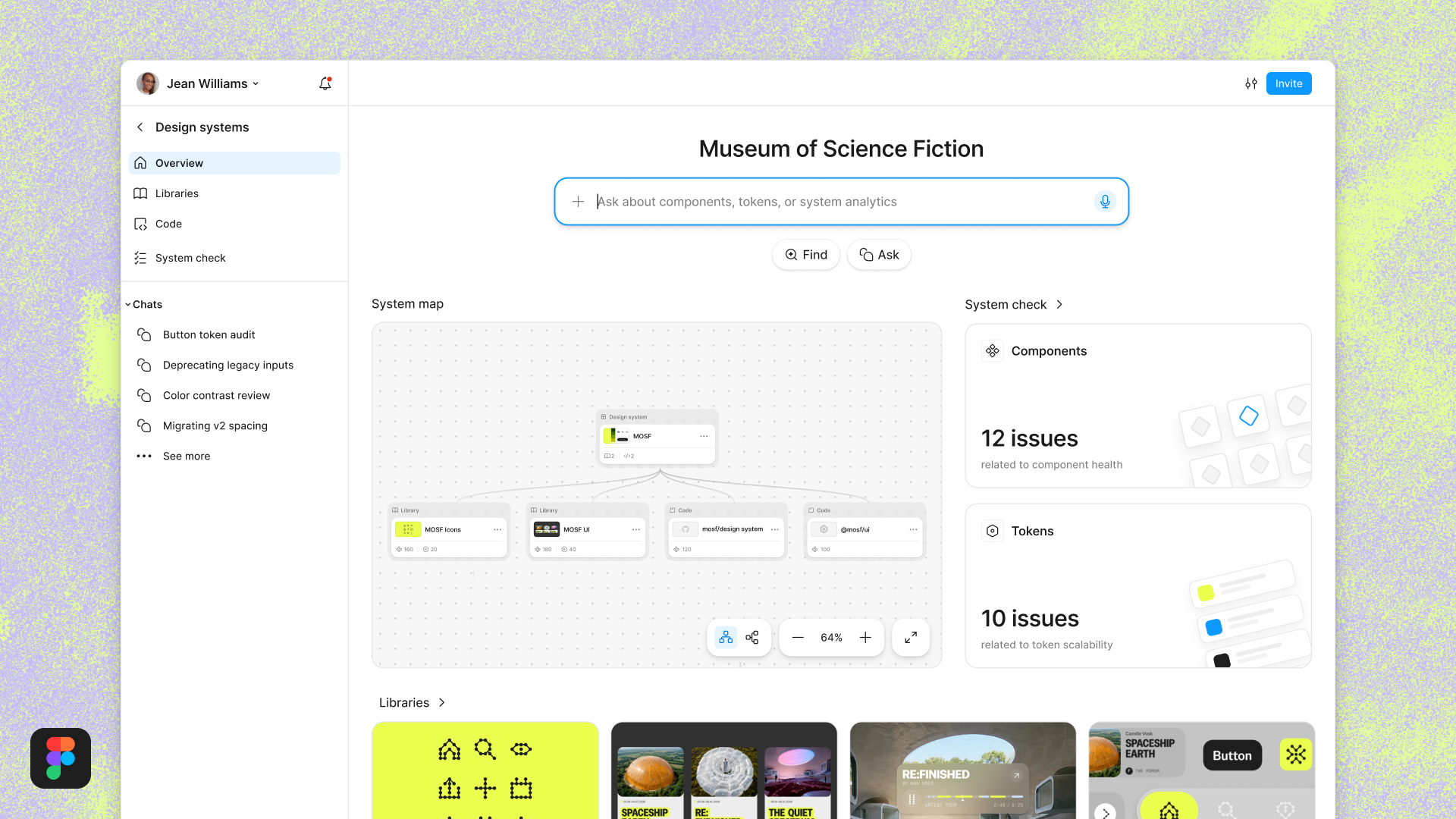
At the heart of the new product suite is Figma Specs, a powerful Markdown-based editor designed to replace scattered documentation and disconnected wikis.
Bridging the Gap Between Canvas and Documentation
Traditionally, design systems were housed in separate documentation platforms (like Notion or zeroheight), often becoming obsolete as the actual Figma files evolved. Figma Specs addresses this fragmentation by allowing users to define their design language directly within the Figma environment. These documents can exist as standalone files or reside directly within the design canvas, serving as an always-on reference point for both human designers and AI agents.
Beyond Static Text
Figma Specs is not a mere text processor; it is an integrated architectural tool. Users can embed FigJam diagrams, reference live code layers, and pull in specific elements from the canvas. This creates a "living" documentation system where, if an element on the canvas changes, the documentation can be structured to maintain alignment.
For teams, this means that design libraries and coding guidelines are no longer siloed. By centralizing these assets, Figma is providing a "contextual anchor" for AI agents. When a designer prompts an AI to build a new interface, the agent can now consult these centralized Specs to ensure the output respects the brand’s specific spacing, color, and component logic.
Chronology: A Trajectory Toward Autonomous Development
Figma’s evolution over the last year reveals a clear, calculated roadmap toward deeper technical integration.

- June 2026 (Private Beta): Figma first introduced "Code Layers," a feature designed to inject actual code logic into design prototypes, moving beyond the standard visual prototyping that has defined the platform for a decade.
- October 2026 (The India Expansion): During the inaugural Config India event, Figma expanded its local presence, solidifying its commitment to the region. It is here that the company transitioned Code Layers into public beta.
- Late 2026 (Integration & Scale): Following its acquisition of the open-source headless CMS Payload, Figma began the process of weaving content management directly into the design-to-code pipeline. The company reported a sixfold increase in Payload downloads, signaling strong market adoption of the tool.
- Current State: With the launch of Figma Specs and the expansion of Agent-on-Canvas, Figma has moved into a phase where the platform is no longer just a drawing tool, but a development environment that bridges the gap between creative intent and production-ready software.
Supporting Data: The Productivity Gap
The impetus for these updates lies in a striking disparity between how much code is written versus how much code is shipped.
According to Loredana Crisan, Figma’s Chief Design Officer, the industry is currently in a state of "over-production." Crisan notes that while there is 17 times more code being produced today than in previous years, the actual volume of product releases has only increased by a factor of 1.3.
"A lot of that code actually is not necessarily built to ship, but really built to discover what the product is," Crisan explained during the event. "It’s built to design."
Figma’s data suggests that the vast majority of engineering effort is currently being spent on exploratory development—essentially using code as a medium for iteration. By providing tools that make this exploration more efficient and more aligned with final production requirements, Figma aims to narrow that 17x-to-1.3x gap, allowing teams to move from discovery to deployment with greater velocity.
Furthermore, the company’s growth in India serves as a key performance indicator. With 40% of the top 100 companies listed on the Bombay Stock Exchange now utilizing the platform, India has transitioned from an emerging market to a primary testing ground for Figma’s global product strategy.
Official Responses and Strategic Implications
Figma’s strategy is explicitly aimed at taming the "wild west" of generative AI. Because AI models are fundamentally non-deterministic, they often hallucinate or deviate from established design systems.
Steering the AI
By providing the "Figma Specs" framework, the company is effectively creating a guardrail system. When an AI agent operates within a Figma environment that has clear, Markdown-defined Specs, it is essentially working within a "constrained sandbox." This significantly increases the probability that the AI will produce code that matches the brand’s visual identity and technical constraints.

The MCP Expansion
In addition to internal tools, Figma is betting on interoperability. The company announced support for over 20 new tools through its Model Context Protocol (MCP), including Open Code, Dia, Grok Bot, and the Indian AI startup Sarvam. By embracing this open-standard approach, Figma is positioning itself as the connective tissue in an increasingly fragmented AI-tooling ecosystem.
Implications: The Future of the "Designer-Developer"
The convergence of these features signals a massive shift in the role of the designer. If designers can use Figma Specs to define the rules and then use AI agents to generate code based on those rules, the traditional "handoff" phase—often the most friction-heavy part of software development—could be largely automated.
The Death of the Handoff?
For years, the industry has chased the dream of "Design-to-Code" parity. With the integration of Payload and the ability for agents to iterate on code layers, Figma is closer to this reality than ever before. However, the implication is not that developers will be replaced, but that their focus will shift toward architecture and systems management rather than manual styling and layout implementation.
Strategic Market Positioning
Figma’s decision to prioritize its India market during this launch is a masterstroke in global expansion. By embedding itself into the workflows of the world’s fastest-growing tech hubs, the company is ensuring that its standards become the default for the next generation of global software engineers.
As the lines between design, content management (via Payload), and engineering (via Code Layers) continue to blur, Figma is evolving from a design tool into an operating system for product teams. The company’s vision is clear: it wants to be the space where the "what" and the "how" of software are decided simultaneously.
For the professional, the message is equally clear: the future of work is not about mastering a single tool, but about managing the context and logic that drive automated systems. As Figma moves forward, the success of these new features will depend on how effectively they can turn "discovery code" into "production code," ultimately helping teams ship products at the speed of their ideas.