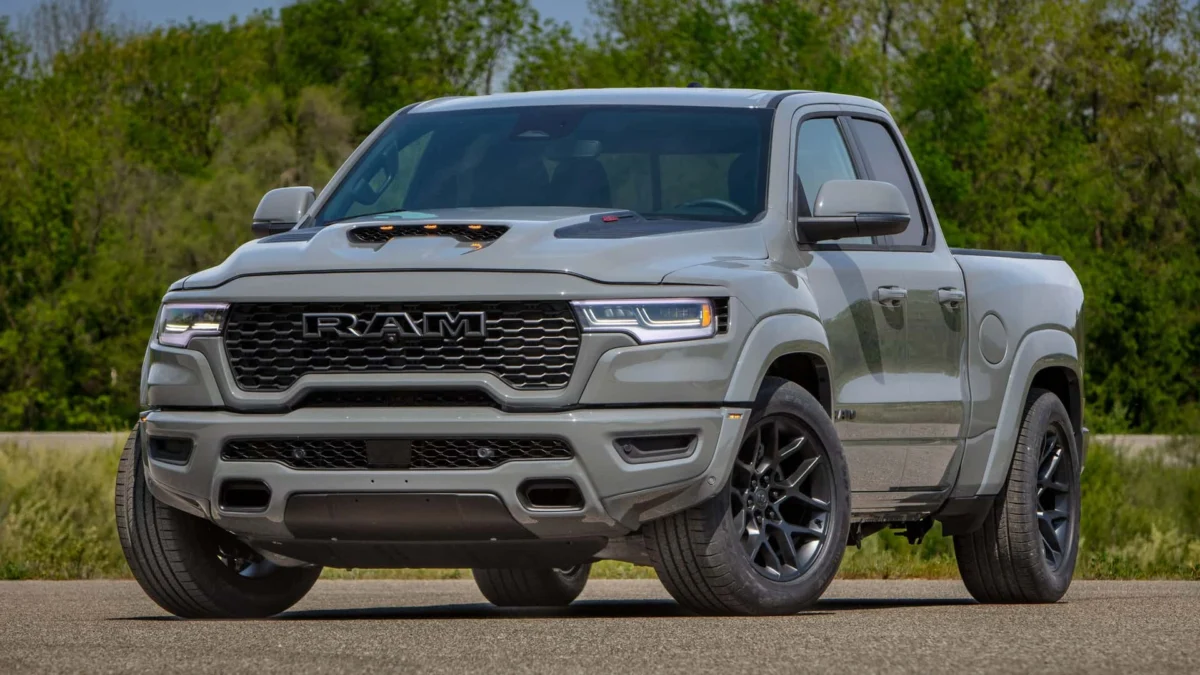
The automotive landscape is currently dominated by a relentless march toward electrification, software-defined vehicles, and the systematic downsizing of internal combustion engines. Yet, in a defiant act of mechanical nostalgia, Ram has resurrected one of its most storied nameplates: the Rumble Bee. If the frantic, record-breaking sell-out of the 2027 model is any indication, the market’s appetite for raw, unadulterated American muscle is far from sated.
In a stunning display of consumer demand, Ram confirmed that its entire available production allocation for the 2027 Rumble Bee through March 2027 was exhausted in a mere 24 hours. Even more impressive, the initial calendar-year allocation for 2026 vanished in just 90 minutes. For those who managed to secure a spot in the order queue, the message from the automaker is clear: your build is prioritized, and the chaos of the dealership lot will be bypassed in favor of a direct customer-order model.
The Return of a Muscle Truck Icon
The Rumble Bee nameplate, which first rose to prominence in the early 2000s as a vibrant, street-oriented performance truck, has returned to capture the "spirit of modern American muscle." By blending the legendary 5.7-liter Hemi V8 with a purposeful, street-focused design, Ram has tapped into a demographic that values the visceral experience of a traditional powertrain over the sterile efficiency of modern alternatives.
"The speed at which the Rumble Bee sold out speaks volumes about the passion our customers have for performance trucks," said Ram CEO Matt VanDyke. "By pairing legendary Hemi V8 power with Ram capability and a distinctive design, we’ve delivered a truck that captures the spirit of modern American muscle."
This is not merely a trim package; it is a statement of intent. At a base price of $62,790 (including destination), the Rumble Bee positions itself as an accessible entry point into the world of high-performance pickup trucks, offering a driving experience that feels increasingly rare in today’s regulatory environment.
Engineering the "Buzz": Technical Specifications
At the heart of the 2027 Rumble Bee lies the "Eagle" 5.7-liter Hemi V8 engine. It is a powerplant that feels like a relic from a more boisterous era, producing 395 horsepower and 410 lb-ft of torque. In terms of raw performance, the truck is capable of sprinting from 0 to 60 mph in 6.1 seconds, crossing the quarter-mile mark in 14.6 seconds at a trap speed of 93 mph.
Perhaps most significant to enthusiasts is what the Rumble Bee doesn’t have. In an era where mild-hybrid "eTorque" systems and aggressive auto-stop/start technologies are standard across almost every truck segment to eke out marginal fuel economy gains, the Rumble Bee eschews these features entirely. It is, by all definitions, an old-school muscle truck.
The powertrain is paired with an eight-speed automatic transmission that manages the delivery of power. While the truck features a full-time active four-wheel-drive system, it also includes a deliberate nod to enthusiasts: a button located adjacent to the console shifter that disconnects the front axle. This allows the driver to toggle the vehicle into a pure rear-wheel-drive mode—a prerequisite for the kind of "tail-happy" driving and rubber-burning that defined the original performance truck segment of the early 2000s.
Design Philosophy: Less is More
One of the most notable departures for the new Rumble Bee is its physical footprint. This iteration marks the first time that Ram has paired its Quad Cab configuration with a short bed, a move that required a significant structural revision. By removing 13 inches of frame between the axles, Ram’s engineering team provided the design studio with a more compact canvas.
"Removing 13 inches of frame between the axles provided additional freedom for designers to sketch a truck that belongs on a racetrack," the company noted in a press release.
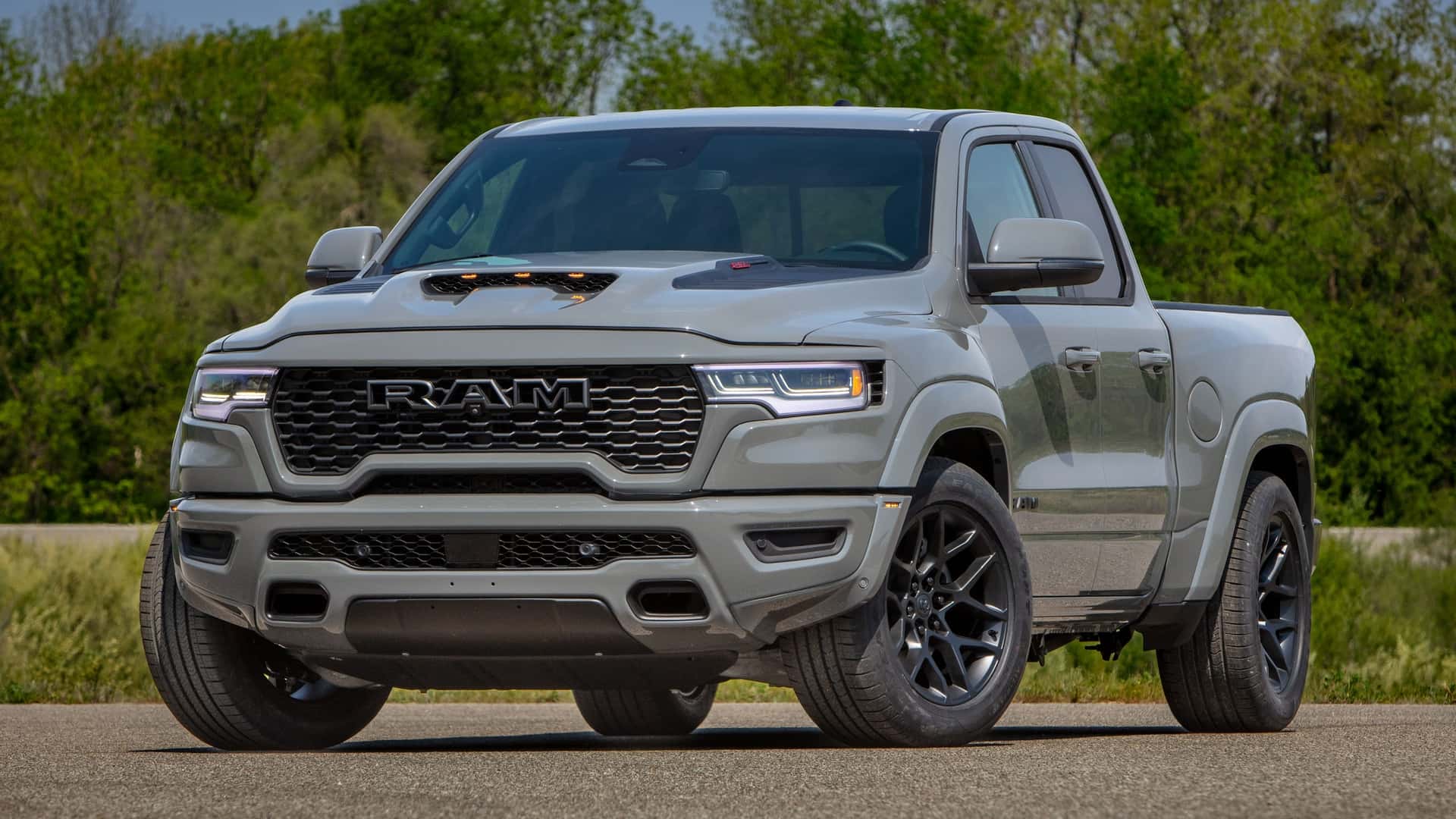
While the term "racetrack" might seem hyperbolic for a vehicle that still measures 219.5 inches (5.57 meters) in length, the aesthetic result is undeniable. The truck sits with a more aggressive, planted stance that differentiates it from the utility-focused Ram 1500 lineup. It is a design intended to evoke the classic aesthetic of the original Rumble Bee while maintaining the modern, high-tech interior amenities that contemporary buyers expect.
Market Implications: The Irony of Demand
The immediate sell-out of the Rumble Bee highlights a profound irony in the current automotive market. Despite record-high fuel costs and a cultural shift toward sustainability, there remains a massive, vocal, and financially capable segment of the population that is indifferent to fuel consumption in exchange for the "mechanical drama" of a V8 engine.
Automakers are currently pouring billions into the development of electric platforms, yet the rapid success of the Rumble Bee proves that "need" and "want" are two entirely different metrics. Buyers are not purchasing the Rumble Bee because it is a practical tool for hauling lumber or towing heavy equipment; they are buying it because it makes them feel something.
In this context, the $62,790 entry price is viewed by many as a bargain. When compared to the broader, more "unhinged" hierarchy of the Ram performance stable—which includes the 392-powered variants, the off-road specialized RHO, and the flagship TRX—the base Rumble Bee is almost positioned as the "sensible" performance option. It provides the signature Hemi exhaust note and the thrill of a performance-tuned chassis without the eye-watering price tag of the ultra-high-performance specialty models.
A Global Perspective on American Muscle
From a European perspective, the success of the Rumble Bee is often difficult to rationalize. In markets where infrastructure, parking, and fuel taxation are designed to penalize large-displacement vehicles, a 219-inch-long pickup with a thirsty V8 is an anomaly. However, the international appeal of the Rumble Bee lies precisely in its excess.
The truck represents a "forbidden fruit" for many global enthusiasts—a manifestation of American automotive culture that prioritizes character over compromise. By ignoring the trends toward electrification and downsizing, Ram has successfully created a product that feels like an artifact of a bygone age, yet features the build quality and performance metrics of a modern machine.
Looking Ahead: The Future of the Rumble Bee
The, shall we say, "electrifying" reception of the 2027 Rumble Bee raises questions about the future of the internal combustion engine within the Stellantis/Ram portfolio. As emissions standards tighten globally, the window for such unapologetic, V8-powered vehicles is narrowing.
The success of the Rumble Bee serves as a case study for manufacturers: if you build it with enough passion, history, and raw power, the market will find you. Whether this success will prompt Ram to expand the production numbers for future model years remains to be seen. For now, the limited allocation has ensured that the Rumble Bee remains an exclusive club.
As the industry pivots toward the 2030s, the Rumble Bee stands as a testament to the fact that the "old-school" way of building a performance vehicle still has significant weight. It is a reminder that, in a world of autonomous driving and electric silence, there is still a loud, burning, and very passionate demand for the sound of a Hemi engine under full throttle.
For those who missed out on the initial 24-hour frenzy, the secondary market for the 2027 Rumble Bee is already expected to be robust. As the first units begin to hit the streets, it is likely that the "buzz" will only grow louder, cementing this truck’s status as one of the final, great holdouts of the golden age of the American pickup.