Introduction: The Erosion of Accountability
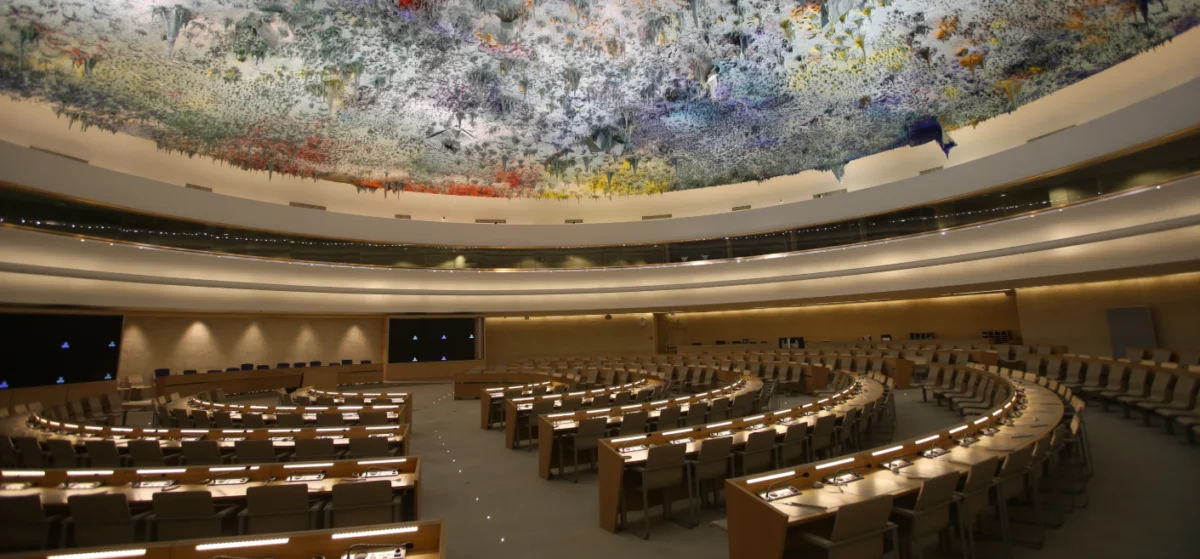
In a development that has drawn sharp condemnation from global civil society, Burundi is poised to secure re-election to the United Nations Human Rights Council (UNHRC) this week. Despite a documented history of systemic human rights abuses and a failure to implement substantive governance reforms, the Central African nation faces no competition for its seat.
On October 13, 2026, the UN General Assembly is set to finalize a slate of candidates that effectively guarantees a three-year term for Burundi, among others, regardless of their performance or human rights records. This procedural reality has ignited a fierce debate regarding the efficacy of the UN’s primary human rights watchdog and whether the organization’s structural design is fundamentally undermining the very values it was created to protect.
Main Facts: The Anatomy of a Non-Election
The controversy centers on the lack of competitive slates within the regional groups tasked with nominating candidates for the 47-nation Council. Human Rights Watch (HRW) has been at the forefront of the criticism, describing the current election process as an affront to the integrity of the UNHRC.
Louis Charbonneau, the UN Director at Human Rights Watch, minced no words in a recent press statement: "This uncompetitive vote makes a mockery of the word ‘election.’ UN member states should insist on competitive slates so they can reject candidates with poor human rights records. No one should have a seat on this crucial body handed to them on a silver platter."
The facts are stark:
- The Seat: Burundi is one of four African nations vying for four available seats in their regional grouping.
- The Lack of Choice: Because the number of candidates matches the number of available seats, the election is a mere formality.
- Global Scope: This phenomenon is not limited to Africa; regional slates for Western Europe, Latin America and the Caribbean, Central and Eastern Europe, and the Asia-Pacific groups are also entirely non-competitive.
- The Guarantee: All 15 candidates standing for election this year are guaranteed a three-year tenure starting January 1, 2027, effectively shielding them from any electoral accountability.
Chronology: A Trajectory of Unfulfilled Promises
To understand the gravity of Burundi’s re-election, one must examine the country’s recent history of human rights and the international community’s engagement with it.
2006: The Birth of the Council
The UN Human Rights Council was established by General Assembly Resolution 60/251 to replace the discredited Commission on Human Rights. The goal was to create a body whose members would uphold the "highest standards in the promotion and protection of human rights."
2025: The Year of Stagnation
Throughout 2025, various international bodies and NGOs, including HRW, repeatedly called upon the Burundian government to undertake meaningful reforms regarding justice, the rule of law, and civil liberties. Despite positive rhetoric from government officials, reports have consistently indicated that these promises remain unfulfilled. There has been little to no structural reform to address the underlying issues of state-sponsored violence and restricted civic space.
Late 2025 – 2026: The Humanitarian Crisis
The situation has been further complicated by external pressures. According to the UN Refugee Agency (UNHCR), an influx of over 84,000 people fleeing escalating conflict in the eastern Democratic Republic of Congo has crossed into Burundi since December 2025. This massive humanitarian challenge has not only stretched the country’s limited resources but has also exposed the fragility of its administrative and human rights infrastructure.
Supporting Data: Why Burundi’s Record Matters
The criteria for membership in the UNHRC are not merely geographic; they are moral and legal. Resolution 60/251 explicitly "urges member states to take into account the contribution of candidates to the promotion and protection of human rights."
Burundi’s candidacy stands in direct opposition to these guidelines. HRW notes that the government has failed to address long-standing concerns regarding:
- Accountability: A lack of independent judicial processes for state-led abuses.
- Governance: Continued suppression of opposition voices and civil society activists.
- Institutional Integrity: Persistent allegations of extrajudicial killings and arbitrary detentions that have yet to be investigated by credible, independent commissions.
The contrast between the UN’s stated requirements for Council members and the reality of the Burundian government’s actions is glaring. The "Universal Periodic Review" (UPR) mechanism, which is intended to hold states accountable for their human rights obligations, has proven insufficient to deter countries with poor records from seeking—and winning—seats on the Council.
Official Responses and Political Realities
The response from the international community has been fractured. While NGOs and some Western states express frustration, the "Clean Slate" system—a long-standing tradition within regional groups—is difficult to dismantle.
The Legal Framework: Recommendations vs. Mandates
It is vital to understand that UN General Assembly Resolution 60/251, while intended to govern the Council, is not legally binding. Under the UN Charter, resolutions of the General Assembly are recommendations. They carry immense political and moral weight, but they lack the enforcement power to mandate competitive slates.
This creates a "diplomatic loophole." Regional groups often prioritize internal consensus and "taking turns" over the competitive assessment of a candidate’s human rights record. For many UN member states, the stability of regional alliances often outweighs the desire to challenge a state with a questionable record.
The Diplomatic Defense
Proponents of the current system often argue that it ensures a geographical balance that is essential for the legitimacy of the Council. They contend that excluding nations from the Council would only serve to isolate them further, potentially making it harder to pressure them toward reform. However, critics argue that this "engagement" approach has failed to yield results for years, effectively rewarding abusive regimes with a seat at the table where they can influence—and often obstruct—the very policies meant to constrain them.
Implications: The Future of the UNHRC
The re-election of Burundi to the UN Human Rights Council carries profound implications for the credibility of the United Nations.
The Dilution of Standards
If the UNHRC continues to admit states with poor human rights records through non-competitive, "rubber-stamp" elections, the Council risks following in the footsteps of its predecessor, the Commission on Human Rights, which was disbanded due to its perceived lack of moral authority. When the "premier" body for human rights protections is perceived as a sanctuary for rights violators, its ability to influence global norms is significantly weakened.
A Call for Structural Reform
The current crisis has prompted calls for a fundamental rethink of how Council members are selected. Proposals often include:
- Requiring Competition: Changing the rules to mandate that the number of candidates must exceed the number of seats available.
- Binding Qualifications: Implementing a mechanism that allows for the disqualification of candidates who fail to meet basic, objective human rights benchmarks.
- Increased Transparency: Encouraging individual UN member states to publicize their voting rationale, making them more accountable to their own domestic constituencies.
Conclusion
As Burundi prepares to take its seat for another three-year term, the international community remains at a crossroads. The situation is a poignant reminder that the UN is only as effective as its member states allow it to be.
Without a departure from the "clean slate" culture and a renewed commitment to the principles of merit-based election, the UN Human Rights Council will continue to face criticism that it is an institution where politics routinely trumps the protection of the vulnerable. The upcoming vote is more than a procedural requirement; it is a test of whether the United Nations is capable of prioritizing human rights over the comfort of diplomatic consensus. For the victims of human rights abuses in Burundi and beyond, the message being sent by this unopposed election is, unfortunately, a disheartening one.