The history of life on Earth is often viewed through the lens of the "Cambrian Explosion"—a period roughly 540 million years ago when, in a geological blink of an eye, the oceans were suddenly teeming with complex, multicellular animal life. For decades, paleontologists have relied on the fossil record as the definitive ledger of this emergence. However, a groundbreaking study published on October 2 in Science Advances has fundamentally challenged the assumptions that define this timeline, suggesting that the animal kingdom may have begun its journey up to 200 million years earlier than previously believed.
Led by researchers at the University of Oxford, in collaboration with an international team from UC Berkeley, ETH Zürich, and Yale University, the study argues that our reliance on the "absence of evidence" as "evidence of absence" in the fossil record has created a blind spot in our evolutionary narrative. By re-evaluating key fossil sites and employing advanced molecular clock dating, scientists are now forced to consider the possibility that the ancestors of modern animals were living, evolving, and perhaps even surviving global cataclysms long before the dawn of the Cambrian.
A Chronology of Uncertainty
To understand the magnitude of this discovery, one must look at how science has historically dated the origin of animals. Traditionally, the "Ediacaran" period—which preceded the Cambrian—served as a reliable benchmark. Sites like the Weng’an Biota in China, dated to approximately 590 million years ago, are world-renowned for their exceptional preservation. These rocks have yielded microscopic organisms captured in stunning detail, yet they are conspicuously devoid of definitive animal remains.
For years, the scientific consensus was anchored by a logical syllogism: If animals had existed 590 million years ago, a site as well-preserved as the Weng’an Biota would surely have captured them. Because they were absent, scientists concluded that animals simply had not yet evolved. This "maximum age" assumption became a cornerstone of paleontology, effectively drawing a line in the sand beyond which researchers felt confident stating that animal life did not exist.
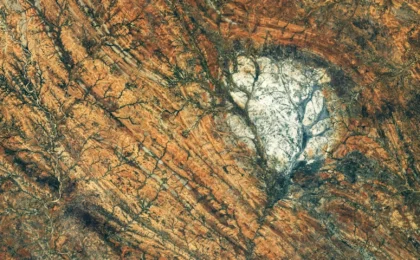
The new study, however, shatters this premise. The research team turned their attention to the Kheseen Biota in Mongolia, a fossil assemblage approximately 40 million years younger than the Weng’an. Crucially, by the time the Kheseen Biota was formed, we know with certainty that animals existed elsewhere on the planet, as evidenced by fossil discoveries in Namibia and South China.
Through the use of high-resolution scanning electron microscopy, the team analyzed over 140 samples from the Kheseen site. They uncovered a treasure trove of microfossils, including complex acritarchs—spherical organisms adorned with intricate spines and branches—and embryo-like fossils containing internal cells. Despite this extraordinary level of preservation, the team found no evidence of animal life. This discovery serves as a vital control: if a site with the same exquisite preservation as Weng’an fails to capture animals, even when we know they were present on Earth, then the absence of animals in older rocks cannot be used to prove they hadn’t yet evolved.
Supporting Data: The Molecular Clock Re-calibrated
The implications of the Kheseen findings sent the researchers back to the drawing board regarding the timeline of animal evolution. If the absence of fossils in 590-million-year-old rock is no longer a valid barrier, how far back could the animal kingdom actually stretch?
The team utilized "molecular clock" analysis, a sophisticated method that compares genetic mutations between living species. By mapping these genetic "ticks" against known fossil dates and estimated rates of evolutionary change, scientists can calculate the approximate time when common ancestors diverged.
Previously, when these calculations were constrained by the 590-million-year-old Weng’an site, the results were artificially skewed toward a later start date. By replacing those constraints with much older, yet potentially fertile, fossil deposits—such as the Svanbergfjellet Formation in Norway, the Bitter Springs Group in Australia, and the Chuar Group in Arizona—the timeline shifted dramatically. These older sites, ranging from 850 to 730 million years old, have historically been considered "animal-free" zones. However, when these dates were integrated into the molecular models, the origin of animals was pushed back by roughly 200 million years, placing the emergence of the first animals in a window between 800 and 700 million years ago.
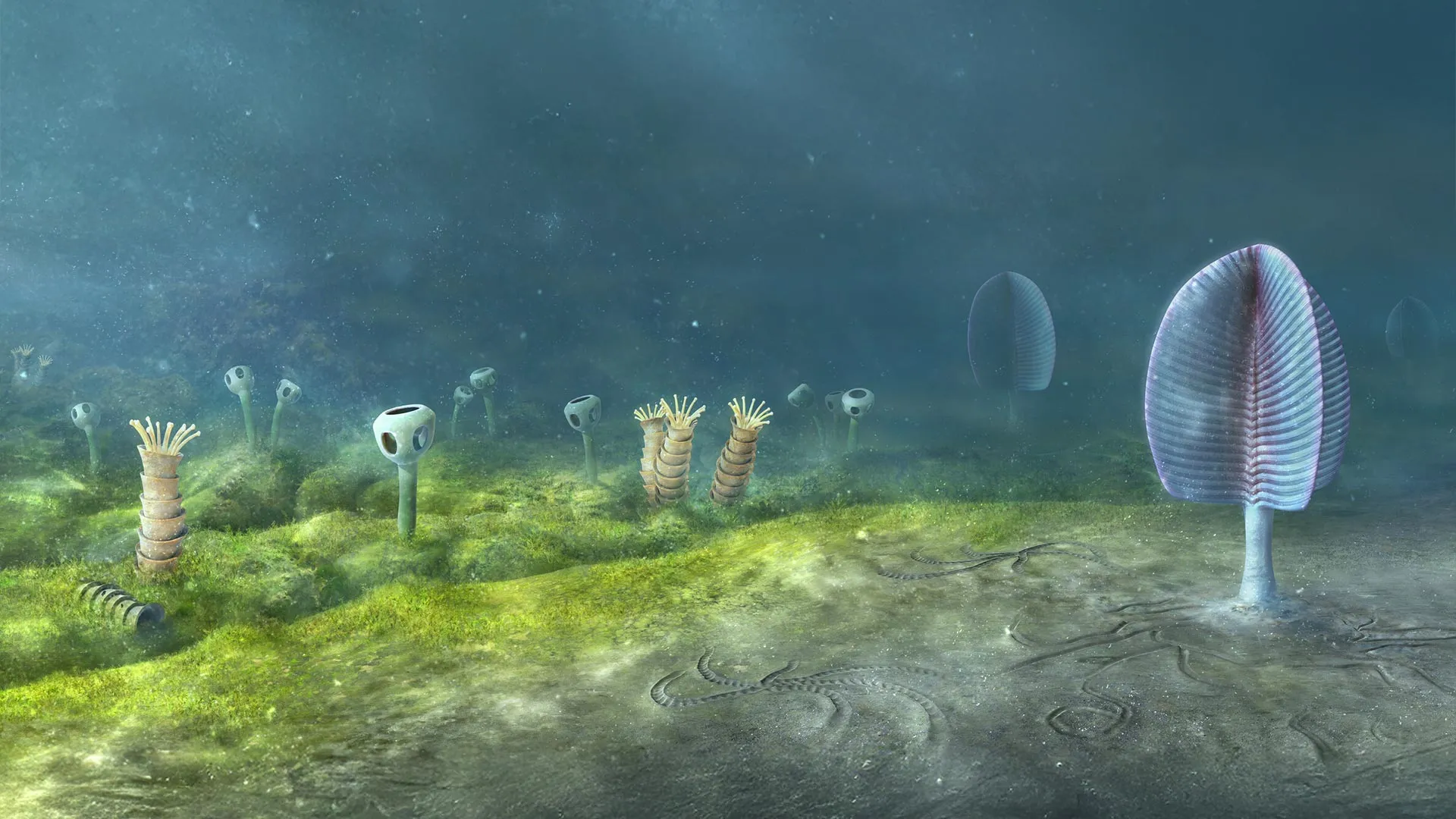
This genetic evidence is bolstered by the presence of chemical fossils, or biomarkers. Preserved in ancient rock layers, these organic signatures suggest that sponges—the simplest of animals—may have been present at least 650 million years ago. These findings collectively paint a picture of a "hidden" history, where the earliest animals, likely soft-bodied and microscopic, left behind only the faintest whispers of their existence in the geological record.
Official Responses and Scientific Perspective
The lead authors of the study have been careful to temper the excitement of these findings with scientific rigor. Senior author Associate Professor Ross Anderson of the Oxford University Museum of Natural History emphasized the significance of the Kheseen Biota as a "debunking" tool.
"The Kheseen Biota breaks the argument that the exceptional microfossils of Weng’an mean we would have seen animal fossils in the assemblage had they existed at the time," Anderson noted. "The Kheseen microfossils are just as well-preserved, yet animals continue to be absent—despite the fact we know at that point they existed."
Orin Lole Durbin, the study’s first author, who conducted the research as an undergraduate at Oxford before moving to Virginia Tech, underscored the cautious nature of the discovery. "Pre-Ediacaran animal body fossils still elude us, and this analysis does not prove that animals existed 800 million years ago," Durbin stated. "However, our new fossil evidence from Mongolia undermines one of the main arguments for restricting animal origins to the Ediacaran interval. Meanwhile, our molecular-clock analyses show how much further back their evolutionary history could extend."
Implications: Surviving the "Snowball Earth"
The possibility that animal life emerged between 800 and 700 million years ago opens a tantalizing, albeit controversial, door: Did the first animals evolve before or during the "Snowball Earth" events?
The Cryogenian Period, which began around 720 million years ago, saw Earth encased in massive glaciers, with ice sheets potentially reaching the equator. If animal life had already taken hold prior to this, these creatures would have had to survive some of the most extreme environmental fluctuations in planetary history. Alternatively, the pressure of such a harsh, frozen environment might have acted as an evolutionary crucible, accelerating the development of the first complex life forms.
This re-opens the long-standing debate regarding the environmental triggers of evolution. Was the "Cambrian Explosion" a sudden spark of life, or was it merely the moment when animals finally gained the biological traits—such as hard shells or skeletons—that allowed them to be fossilized more easily? The research suggests that the latter is highly probable. The soft-bodied creatures that likely comprised the earliest animal communities would have been exceptionally difficult to preserve. Their survival depended on a rare, fleeting intersection of specific chemical conditions and environmental stability, which may explain why they remained hidden from our view for so long.
A Future of Discovery
The research team advocates for a more nuanced approach to searching for the origins of life. Moving forward, paleontologists must look beyond the "usual suspects" of well-preserved fossil beds. The search must expand to include a broader diversity of environments and a more integrated use of chemical biomarkers, trace fossils, and molecular phylogenetics.
As Professor Anderson concluded, "Until that evidence becomes available, the precise birth date of the animal kingdom remains uncertain."
For now, the study stands as a profound reminder that our understanding of Earth’s history is a work in progress. By challenging the assumptions of the past, science is gradually uncovering a much deeper, more complex story—one in which the ancestors of all living animals were quietly navigating the ancient, frigid oceans of a younger planet, long before they ever left a mark on the rocks we study today. The "Cambrian Explosion," while still a pivotal moment in biological history, may now be viewed not as the birth of animals, but as their grand entrance onto the stage of fossilization.