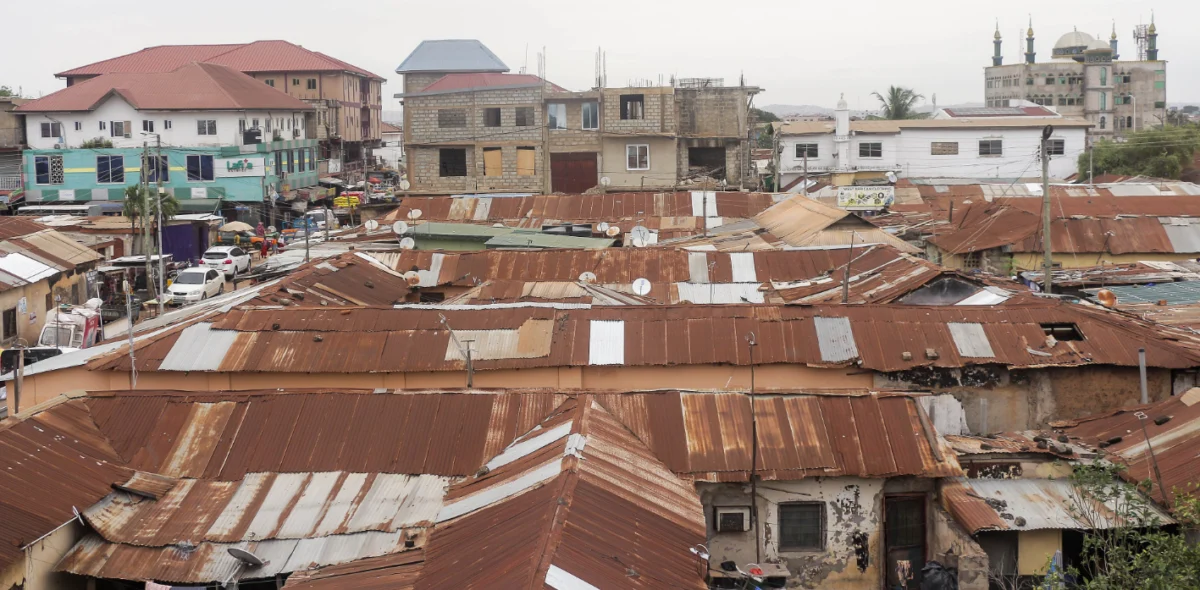
Introduction: A Nation at a Housing Crossroads
Ghana is currently navigating a profound socio-economic paradox. While the skylines of Accra are increasingly defined by high-rise luxury apartments and glass-fronted commercial complexes, a staggering 1.8-million-unit housing deficit continues to cripple the livelihoods of millions of its citizens. This disconnect between real estate speculation and the basic human need for shelter has reached a boiling point, drawing the urgent attention of the United Nations.
Koldo Casla, the UN Special Rapporteur on the right to adequate housing, concluded a 12-day fact-finding mission to Ghana this past week with a scathing critique of the country’s current trajectory. In his end-of-mission statement, Casla warned that Ghana’s reliance on market-led, commercially driven construction is fundamentally failing its most vulnerable citizens. As he prepares to present his formal recommendations to the UN Human Rights Council in March 2027, his message to the Ghanaian government is clear: the state must pivot from being a facilitator of luxury investment to an active provider of affordable, dignified housing.
The Core Conflict: Profit vs. People
At the heart of the UN expert’s report is the assertion that "affordable housing" in Ghana has become a misnomer. The current housing ecosystem is dominated by private developers who prioritize high-yield investments—luxury condominiums and gated communities—that cater to the elite and the diaspora, while the working class is effectively priced out of the formal market.
Casla’s findings underscore that this trend is not merely a failure of supply and demand, but a failure of policy. By leaving the housing sector entirely to the mercy of market forces, the state has allowed a speculative bubble to flourish in urban centers. Meanwhile, the average Ghanaian worker, unable to afford formal housing, is forced into a cycle of precarious tenancy or informal, unregulated settlements.
The Rapporteur explicitly condemned the government’s reliance on private developers as the primary vehicle for housing delivery, urging the administration to reclaim its constitutional and international mandate to ensure that the "hard-working people" of Ghana are housed before speculative capital is satisfied.
Chronology: A Decade of Displacement and Unmet Promises
To understand the urgency of the current situation, one must look at the timeline of urban development and housing policy in Ghana over the last decade:
- 2015–2018: Accelerated urbanization in the Greater Accra Region leads to an explosion in land value. Developers shift focus toward commercial hubs, leading to the first waves of large-scale, state-backed clearances in informal settlements to make way for "modernization" projects.
- 2020: The global pandemic exacerbates housing insecurity, highlighting the lack of basic sanitation and water infrastructure in dense, informal urban areas.
- 2023: Research from the Centre for Affordable Housing Finance in Africa (CAHF) confirms that housing supply is failing to keep pace with rapid population growth, with formal construction targeting less than 5% of the actual income demographic.
- October 2026: Koldo Casla conducts his official UN mission. During his visit, he documents the systematic "spray-painting" of eviction notices on homes in neighborhoods like Old Fadama and Peace Village (Jamestown).
- October 9, 2026: The conclusion of the mission results in a formal statement condemning forced evictions and calling for a moratorium on demolitions until a human-rights-based housing policy is enacted.
- March 2027 (Upcoming): Casla is scheduled to submit his full report to the UN Human Rights Council, which will likely serve as the catalyst for international pressure on the Ghanaian government to revise its housing legislation.
Supporting Data: Mapping the Deficit
The severity of the crisis is supported by robust data from both international bodies and academic institutions.
The Numbers Behind the Crisis
- 1.8 Million Units: The current estimated national housing deficit, a figure that continues to climb as urban migration accelerates.
- 925,335 Rooms: The deficit specific to the Greater Accra region, as identified by UN-Habitat. This number represents more than half of the national shortfall, indicating that the capital is the epicenter of the crisis.
- 31 Percent: The proportion of Ghana’s total urban population currently living in informal settlements. These individuals exist in a state of legal limbo, often lacking access to basic utilities like clean water and reliable electricity.
A policy brief released by the London School of Economics (LSE) further illustrates that formal housing supply is highly concentrated. By focusing on high-income buyers, the construction sector creates a surplus of "investment assets"—properties that sit vacant for years as speculative vehicles—while families remain in cramped, unsafe, or makeshift dwellings.
The Human Cost: Evictions and International Law
Perhaps the most harrowing aspect of Casla’s findings is the treatment of those living in informal settlements. In his report, the Special Rapporteur noted that forced demolitions are being carried out without consultation, transparency, or adequate compensation.
Violation of Rights
Under Article 11(1) of the International Covenant on Economic, Social and Cultural Rights (ICESCR), to which Ghana is a party, states are obligated to ensure the right of everyone to an adequate standard of living, including housing. The UN expert emphasized that:
- Forced evictions are a prima facie violation of international human rights law.
- In-situ upgrading (improving existing settlements) is a far more sustainable and humane alternative to the displacement of communities.
- Basic services such as water and sanitation are fundamental human rights that the state must provide, regardless of the land tenure status of a community.
The sight of "eviction notices" painted onto the walls of homes in Old Fadama has become a symbol of the government’s disregard for its most vulnerable residents. Casla has called for an immediate halt to these clearances, demanding that the state stop treating its citizens as obstacles to "urban beautification."
Implications: What Comes Next for Ghana?
The findings of the UN Special Rapporteur represent a major diplomatic and policy challenge for the Ghanaian government.
The Path Toward Reform
For the state to move forward, experts suggest three critical shifts:
- Reclaiming State Authority: The government must move away from the "private-sector-only" model. This includes investing in social housing projects and utilizing public land for the benefit of low-income workers rather than auctioning it to private developers.
- Legal Protections for Tenants: Strengthening tenancy laws to prevent arbitrary rent hikes and illegal evictions is essential for the 31% of the population living in the informal sector.
- Infrastructure Prioritization: Rather than demolishing settlements, the government should invest in the "in-situ" upgrades advocated by the UN, ensuring that informal areas are integrated into the city’s municipal grid for water, electricity, and sewage.
Political and Economic Consequences
Failure to address these concerns will not only result in continued international scrutiny but could also lead to long-term social instability. As inequality deepens, the pressure on the state to provide basic services will become more vocal. Furthermore, if the Ghanaian government continues to prioritize luxury real estate, it risks alienating the very workforce that powers its economy.
The upcoming March 2027 presentation to the UN Human Rights Council will be a turning point. If the government fails to demonstrate a commitment to policy reform before then, it faces the prospect of formal UN censure, which could impact international aid and cooperation agreements.
Conclusion: A Call for Dignity
Ghana stands at a crossroads between becoming a model of equitable urban development or succumbing to a divided, exclusionary city structure. As Koldo Casla noted in his parting remarks, the construction of buildings must serve the needs of the "hard-working people" first. By shifting the focus from the profit-driven speculation of the few to the fundamental human rights of the many, Ghana has the opportunity to transform its housing sector into a source of stability, dignity, and sustainable growth. The world will be watching in 2027 to see if the state chooses its people over the allure of a luxury skyline.